As gardens get smaller and land prices continue to rise, outdoor space has become an increasingly precious commodity. Creative thinkers show how to make the most of the smallest green spots.
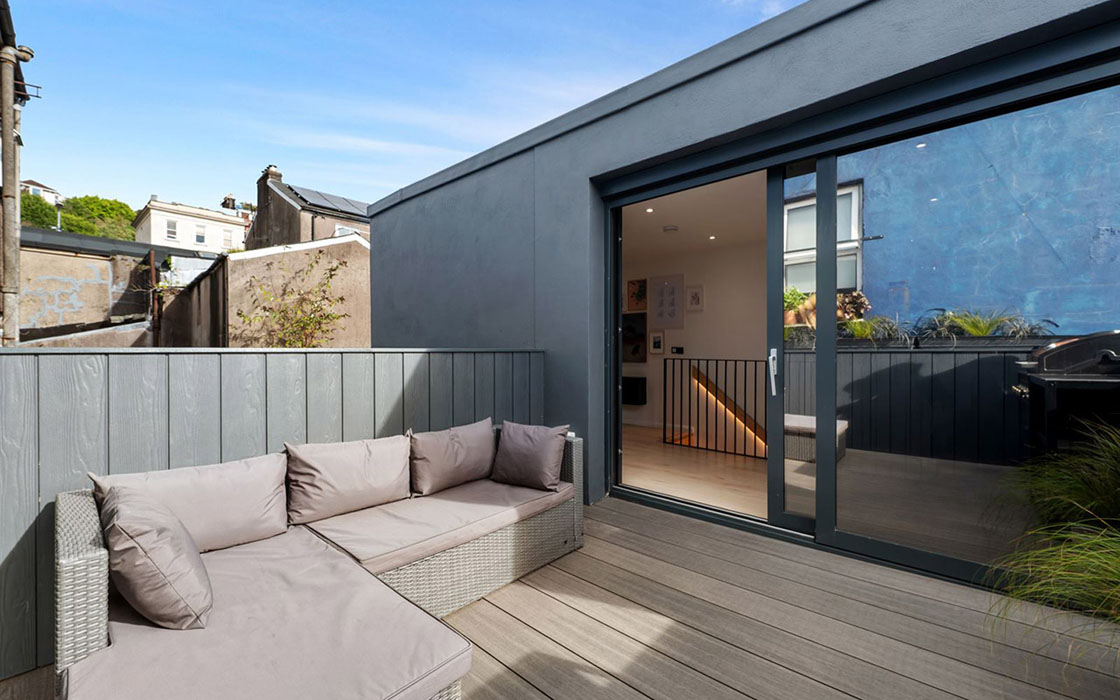
Lead image: Peter Clarke for Melbourne Design Studios
Access to green spaces is essential for well-being and to be able to take a pause from busy life.
But with space at an all-time premium, we see the rise of the pocket garden, a small outside space that lets you escape the indoors and commune with nature.
Robert Bourke Architects (RBA) is a practice well versed in working on tight urban sites and believes that outdoor space is just as important as the carefully crafted interiors.
“When reconfiguring an existing house layout or designing a new home, we always consider the connection to the outdoors, and how the sun will reach these spaces throughout the day,” he explains.
By treating a pocket garden as an outdoor room, the practice considers how you might move through it.
Is it a courtyard that connects different parts of the home, for example, and is there space to accommodate a table and seating?
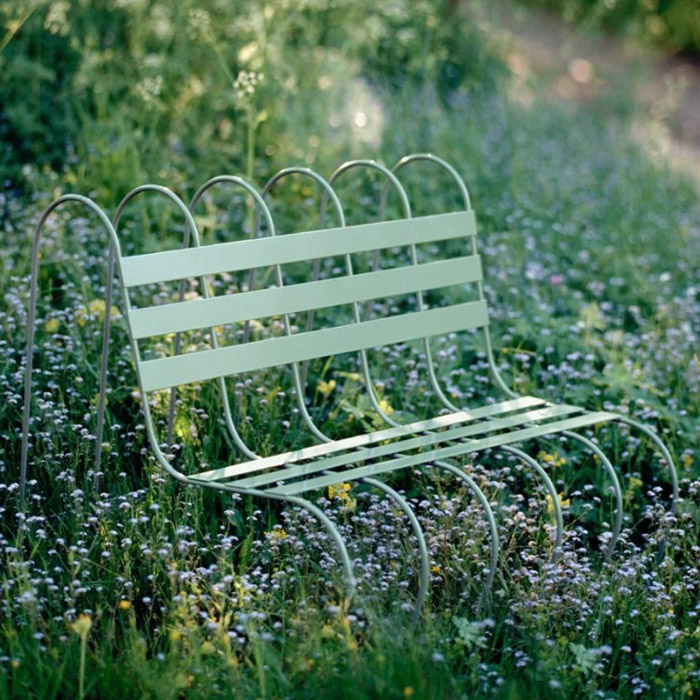
In some instances, the planting should become part of the furniture, as the gardener’s sofa from Design House Stockholm, from €895 at Nordic Elements, below, demonstrates.
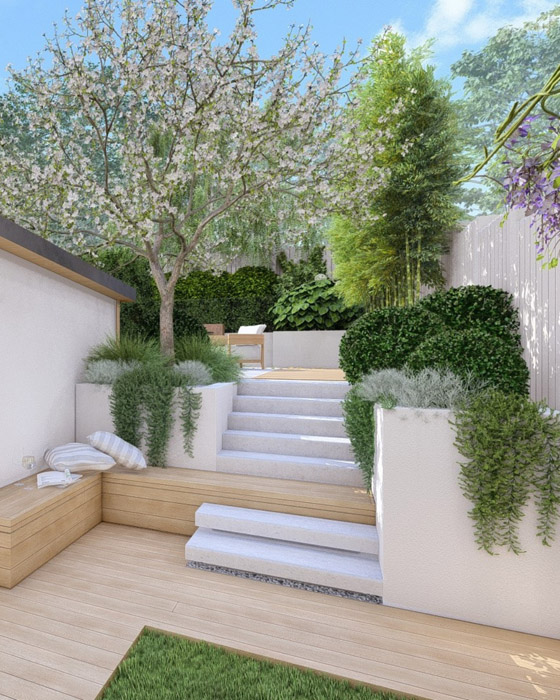
Staggering levels to create different depths of field, along with the right planting, as the Caragh Nurseries schematic above shows, is another approach.
Find a suntrap
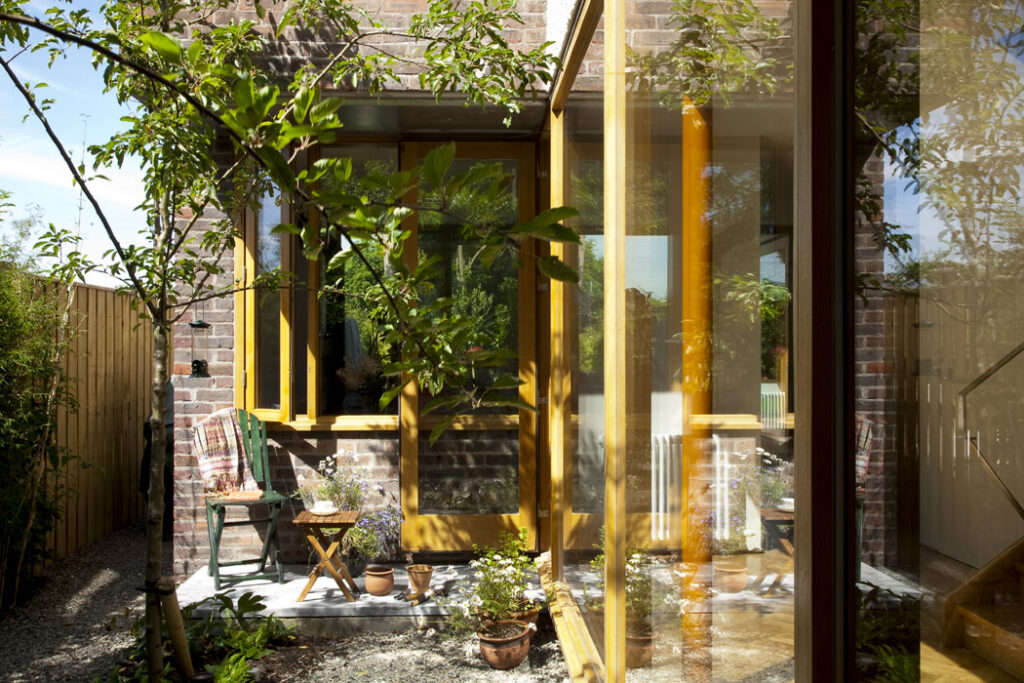
In an early project, RBA reconfigured a house in Ballybrack by adding three brick extensions. Although the front and back gardens were generous, the sunniest part of the plot lay along a narrow, unused strip to the side.
The architects framed a portion of this space between two of the new brick volumes, creating a sheltered suntrap.
The small terrace has a Carlow limestone base and is just big enough for a table and chair.
It has become a quiet nook for a morning coffee.
The practice tries to work in tandem with a landscaper to ensure a holistic approach.
In this instance, the planting scheme, designed by Tig Mays of Howbert and Mays, includes two mulberry trees that provide height and seasonal interest, while ferns occupy the shadier ground plane.
Gravel completes the space, offering a permeable, low-maintenance surface.
In another project in The Tenters, Dublin 8, corten steel planters and smooth concrete paving are softened by ferns and grasses, selected by landscape designer and florist Mark Grehan of The Garden.
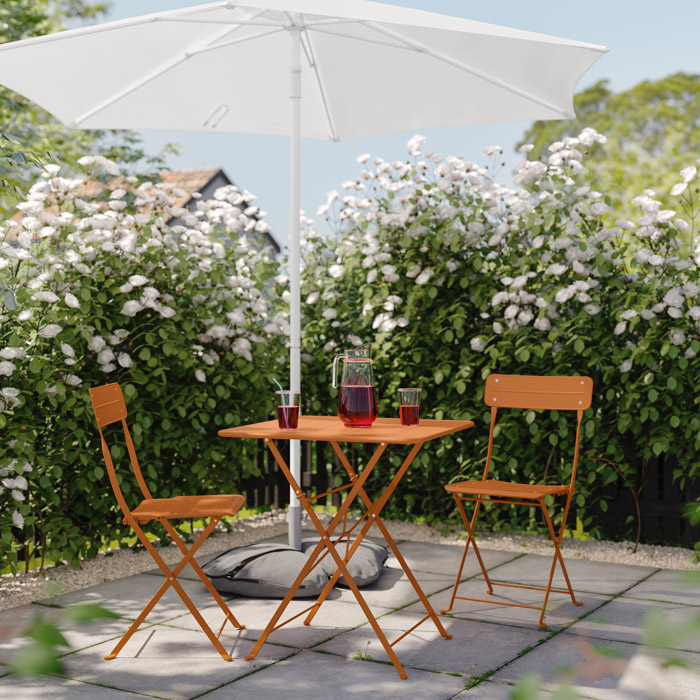
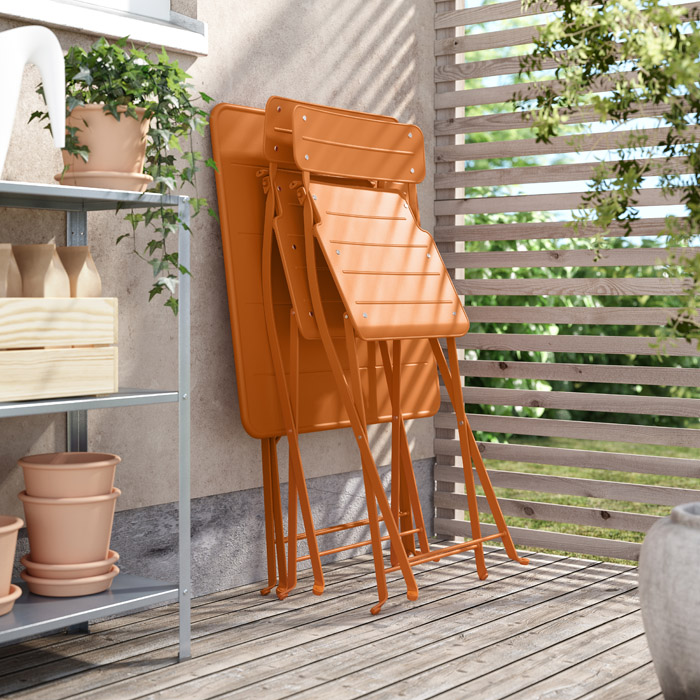
Small foldable furniture, such as this foldable Sundso bistro range from Ikea, includes a round table for two, €40 and chairs, €30 each, that can be easily wall-hung to store away in winter. It will bring a pop of colour to balconies and terraces.
In small spaces that you might rent rather than own, planters can be a smart way of bringing in greenery that is portable.
One beautiful piece can instantly soften concrete and other hard materials.
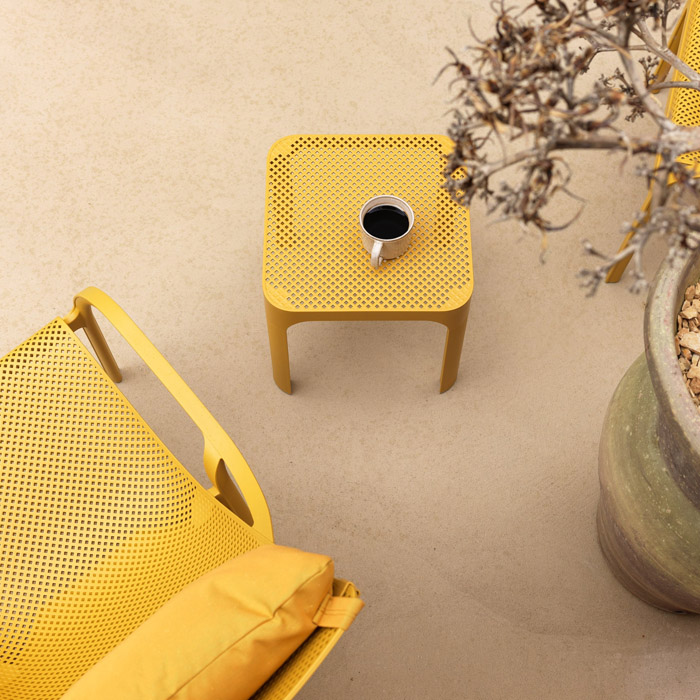
This planter, below, shown alongside Nardi’s Net range of outdoor lounge chairs, €170, and side tables, €59, available at Pieces, i.e., is a simple way to bring texture in.
The saturated colour of the garden furniture already brings the place to life.
Keep it simple
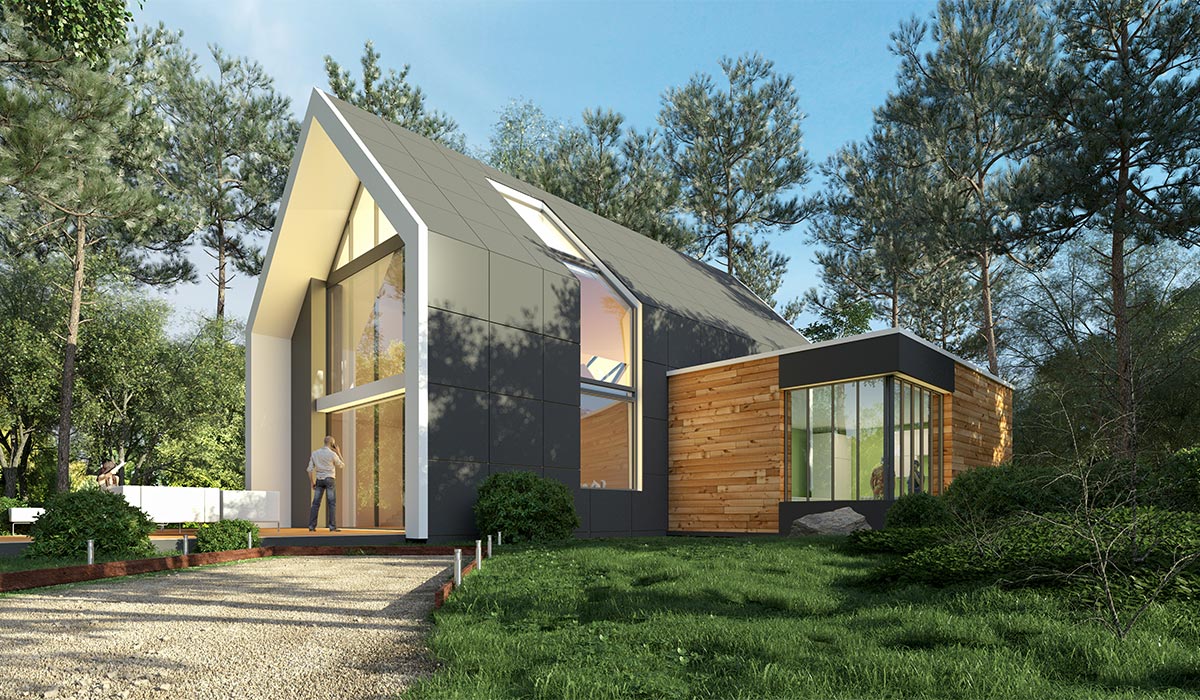
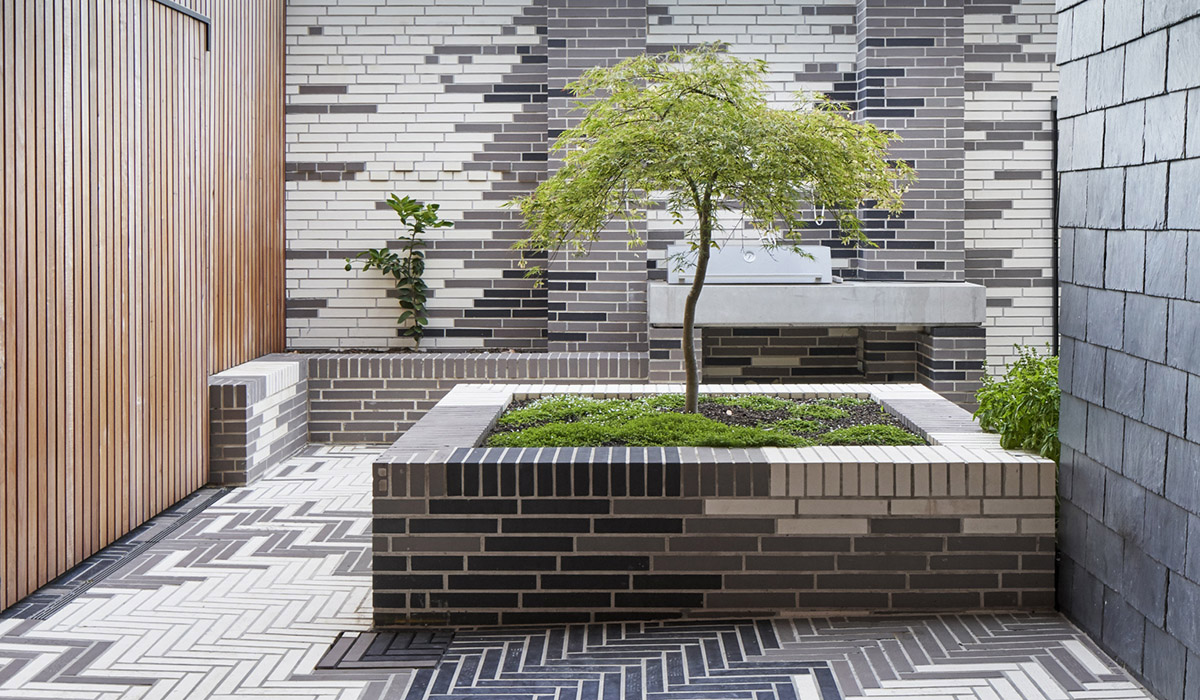
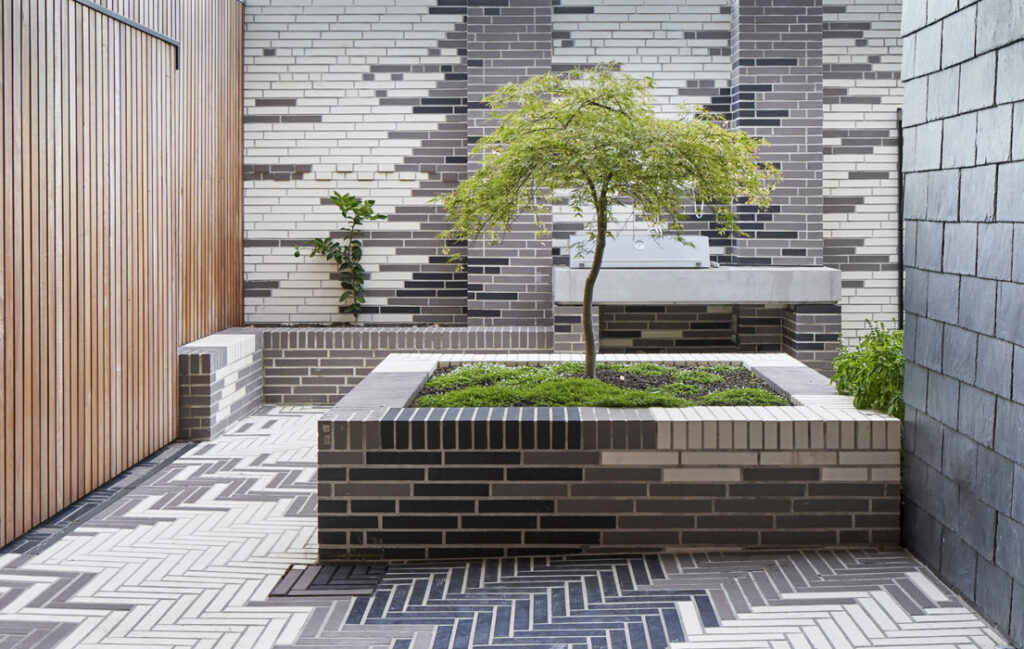
In a suburban project in Melbourne, Australia, architect Marc Bernstein - Hussmann, MD and principal architect at Melbourne Design Studio, installed a very smart and low-maintenance courtyard within a contemporary property whose slate-clad roof and sides were inspired by his time in Dublin, working for Odos Architects.
It is the use of geometric pattern play on the ground, wall and integrated planter that makes this a work of art.
The limited palette of slate, buff and slate coloured brick and timber cladding makes a strong architectural statement that is softened by the minimal planting and use of mosses.
Burke agrees. “Avoid overly slick or flashy finishes,” he counsels.
“Salvaged stone or brick can create a stronger connection to place. If using new materials, avoid imported exotic stone; simple concrete pavers can be elegant when paired with rich planting.”
Considerations:
Design with nature:
Plant selection should respond to the brief, be it privacy, shade, or year-round interest.
Work with what’s there:
Existing features, such as a stone wall or a distant view, can anchor a design and give a small garden a distinct identity.
Borrow views:
Framing trees or greenery beyond your boundary can visually extend your garden and make it feel bigger.
Enhance biodiversity:
Plant native, pollinator-friendly species to support local ecosystems. Harvest rainwater using butts or rain gardens and avoid excessive paving. Designing your garden as a permeable ‘sponge’ can help reduce pressure on drainage systems during extreme weather.
For more, visit Robert Burke Architects; howbertandmays.ie; thegarden.ie; Melbourne Design Studios; Caragh Nurseries