Beaming bright: Douglas Wallace Architects, the firm co-founded by the late Hugh Wallace, is doing exactly what the talented TV presenter would have wanted – pushing the business forward, says its co-owner Adrian Lambe.
Douglas Wallace Architects have been at the forefront of Irish architecture and much of the theatre of retail that we now take for granted.
The late Hugh Wallace, who fronted RTE's Home of the Year and The Great House Revival, set up Douglas Wallace Architects with his Bolton Street contemporary, Alan Douglas, having just graduated from college in the early 1980s.
It was said that he got Alan to help him with his thesis, Adrian Lambe, its MD and co-owner, explains.
The firm rode all the waves from the expansion of retail through the 1990s and the boom era years with its hip hotels.
It even navigated the bust when the company was liquidated. It was devastating, but again, Wallace reinvented.
“He was great at being able to look, see what we can do and turn it to our advantage,” Lambe says.
Hugh’s passing has been devastating, and the staff continue to grieve his loss.
But thanks to clever succession planning, he has left a legacy that continues to thrive.
In the last few years, the firm has carved a niche out for itself, servicing medium-sized developers outside the Pale who have decided there is money to be made in provincial towns as well as in the capital.
Some of these projects are senior living developments, low-rise blocks of apartments with a nursing home on site, for those who may need to make that transition at a later stage.
This part of the business accounts for about 35 to 40 per cent of its revenue, Lambe says.
Much of the balance is in reimagining hotels, restaurants and bars for the hospitality sector.
This is an area Hugh cornered from the inception of the boutique hotel boom.
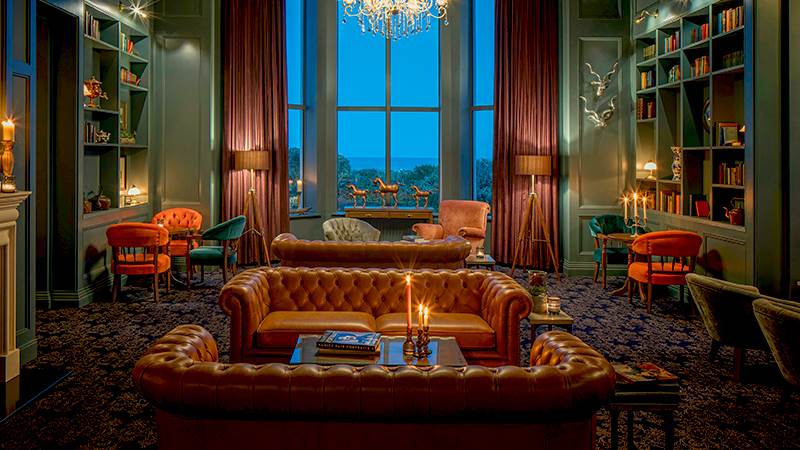
The firm was instrumental in creating such short-break playgrounds as The Morrison, in collaboration with retired fashion designer John Rocha, father of London-based Simone Rocha, on Dublin’s Ormond Quay Lower and The G in Galway, in partnership with milliner to royalty and rock stars, Philip Treacy.
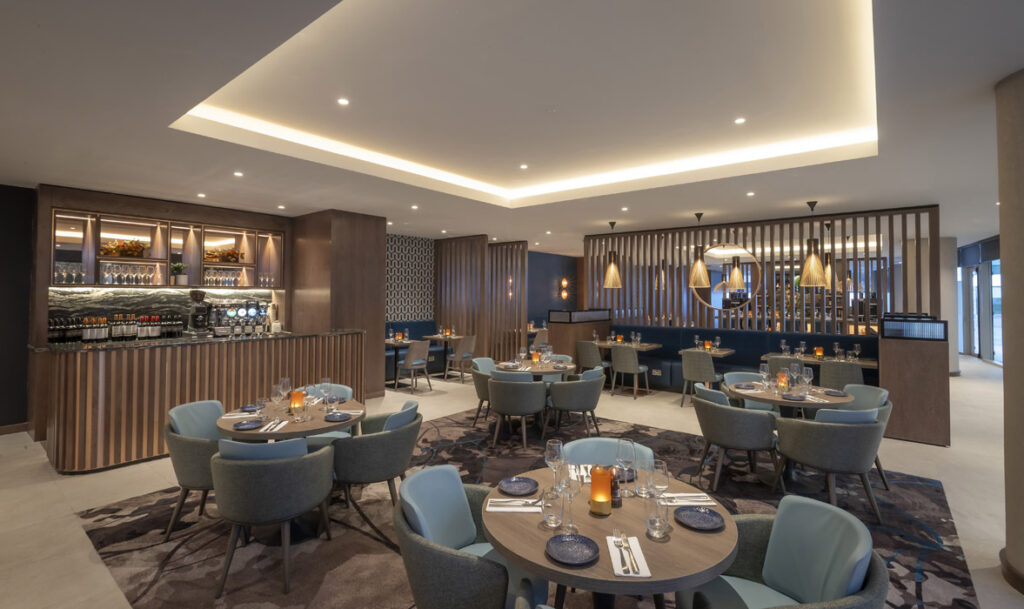
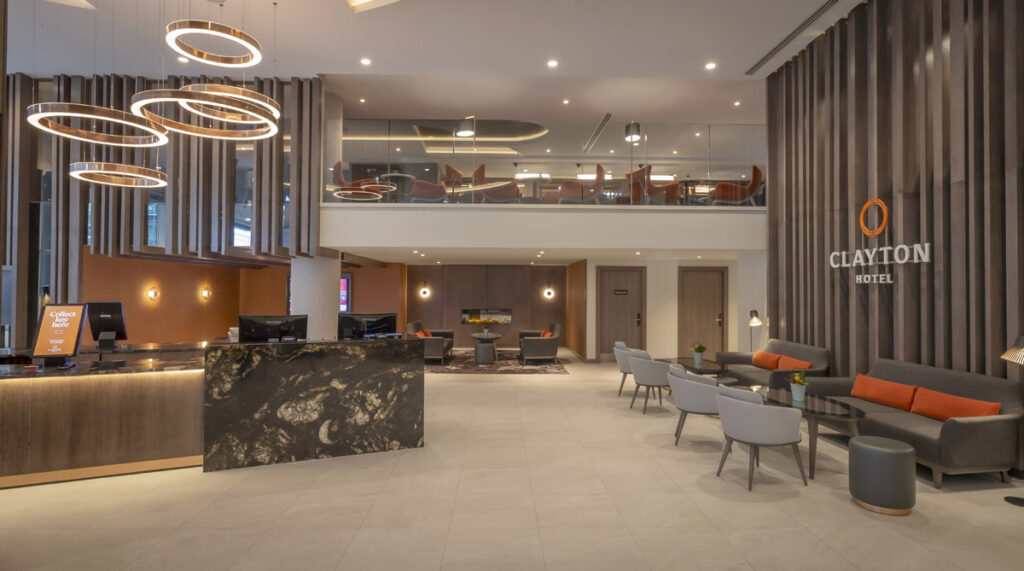
Dalata’s Clayton Hotels is another such client. The company is nearing completion on a bedroom extension, along with food and beverage refurbishments at one of its busiest properties, Cardiff Lane.
All the work has to be done while the hotel continues to trade in a sector that has changed its business model.
There’s a brand book to adhere to, and the ebb and flow of guests has changed.
This establishment gets coachloads of guests, all arriving at the same time, as well as business clients.
All want to check in quickly, pick up their key and go to their room, so a new curved reception desk in the middle of the space has been fitted with self-service terminals, which have now been fitted into what has been redeveloped as an atrium lobby, so that there’s a feeling of space no matter the numbers arriving.
Above the ground floor, the practice managed to create additional space in a mezzanine area for breakfast and lounging.
The works added 112 rooms, which could mean up to an additional 224 guests arriving down for breakfast – generally all at the same time. It now includes high-top tables for those who want to dine and dash.
Business breakfasts are now also a thing. Dinner less so, Lambe says, for it is acknowledged that guests in most city hotel stays go out to eat.
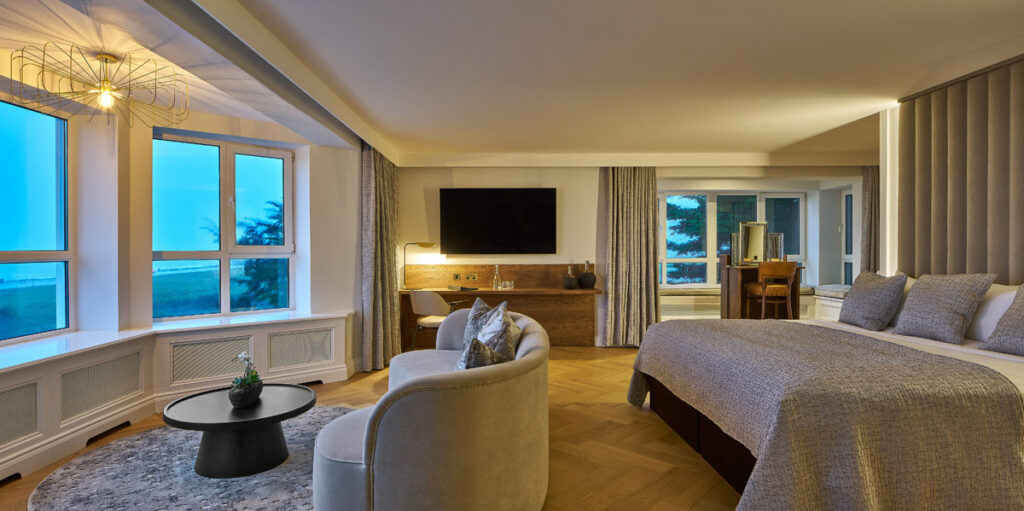
Another ongoing project is the Garryvoe Hotel in east Cork, which looks out over Ballycotton Bay and the lighthouse.
The firm started by reimagining its food and beverage areas, then its ballroom and bedrooms and has just completed the bridal suite.
There are nuanced references to the seaside setting. Yes, there’s a bit of sailing ships in the windows, Lambe says.
But there’s also the knowledge that sometimes you need to turn up the wattage.
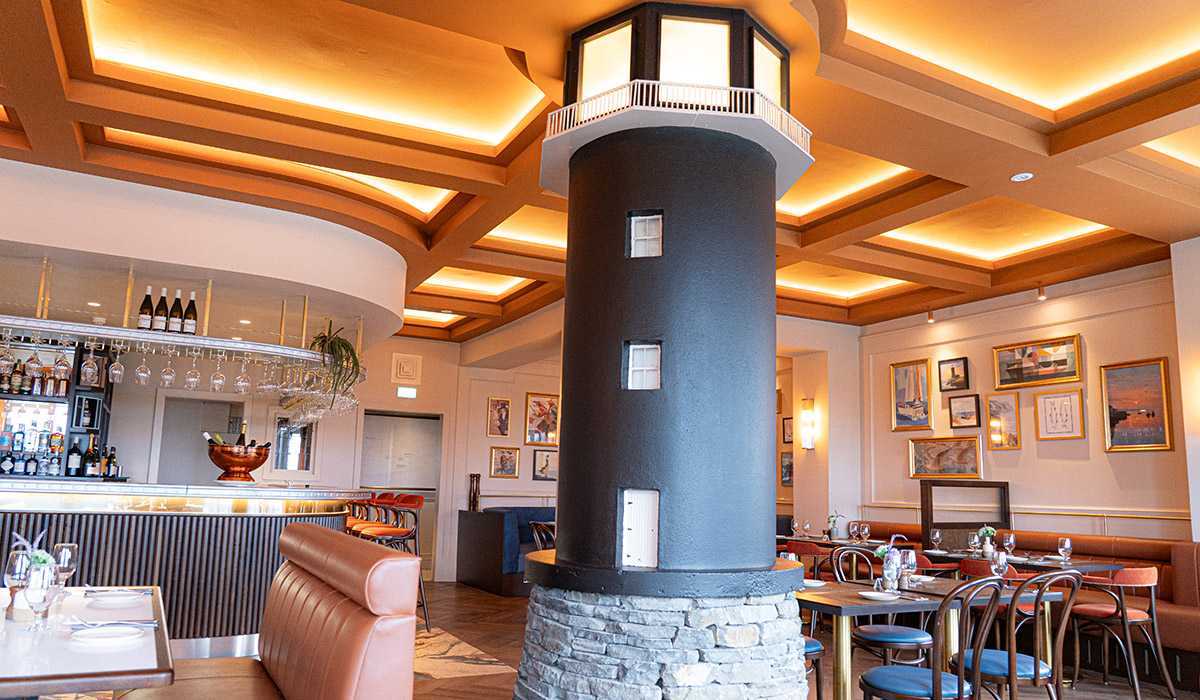
“There’s a near life-size lighthouse in the Lighthouse bistro that the owner had already built but didn’t make enough of it, so we added lights to it.”
With guests moving away from formal dining at country hotels, they adopted a bistro slant to the restaurant, making it “a little French and a bit seasidey.”
The bar has a zinc counter, fabricated in Co Wexford. with a suspended shelf above where stemware is suspended. The timber slats on its front are meant to evoke driftwood.
In putting the look together, the team collected pebbles from the strand, washed them, let them dry, and noted the colours, also reviewing the colours when washed by the tide, to establish its colour palette.
This is how they brought in a soft coral colour to the coffered ceiling and deep blues in the seating.
“It’s about not having too much, but that it would be visually appealing and catch your eye,” Lambe explains.
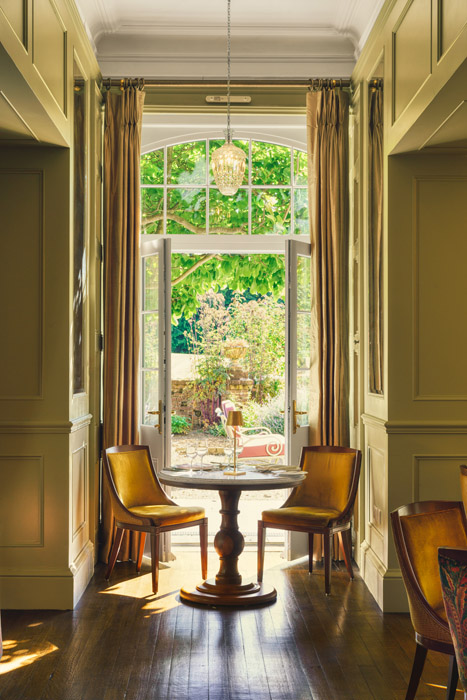
The company uses AI and a modelling system to map out schematics. It helps clients view the ideas spatially.
Previously, this took a huge amount of man-hours, about a week’s work, in half the time. That saving can be implemented in other aspects of the project.
Hairdressing chain Peter Mark is one of the firm’s longstanding clients. It recently reconfigured the Pavilion's Swords salon to keep it ever-fashion-forward.
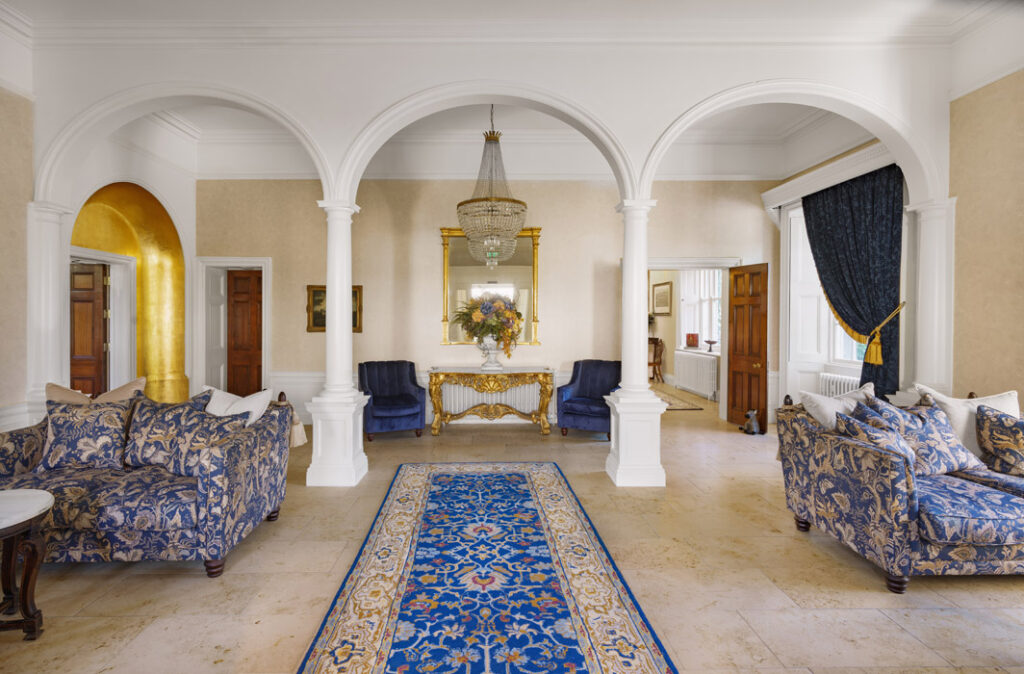
Dunbrody House is another. They refreshed the Georgian country manor, which is set in parkland and gardens on the Hook Peninsula.
The protected structure has lovely inner architecture with aspects opening out to beautiful gardens.
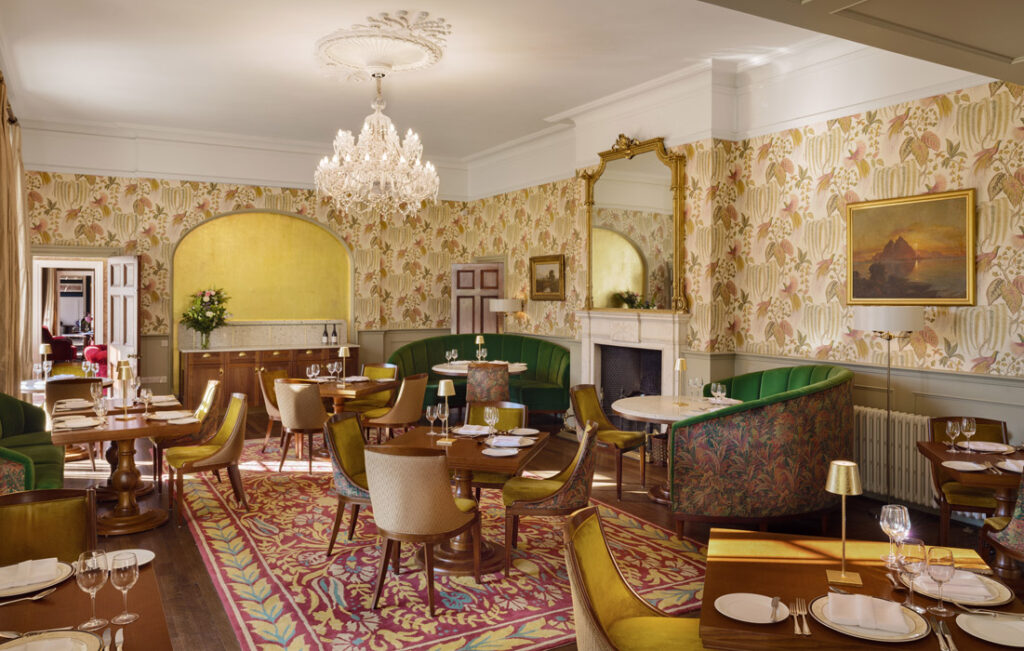
Bold colours with the use of pattern to the point where they clashed, rugs woven in Turkey for the job and new seating by McGuigan in Co Monaghan, have added panache.
The team created an elegant and understated reception area that made more of a feature of its arcade. The use of gold leaf used under the arch is a subtle detail that adds a luxurious touch.
The red dining room, a traditional colour for such a space, was lightened up. The heavy curtains were switched out.
The tweakments continue to gently evolve the destination dining spot.
The practice continues to evolve, too.
The younger members of its team especially miss Hugh’s mentoring but are also consoled by the fact that under Lambe, the good ship Douglas Wallace has chartered a course to navigate the future.