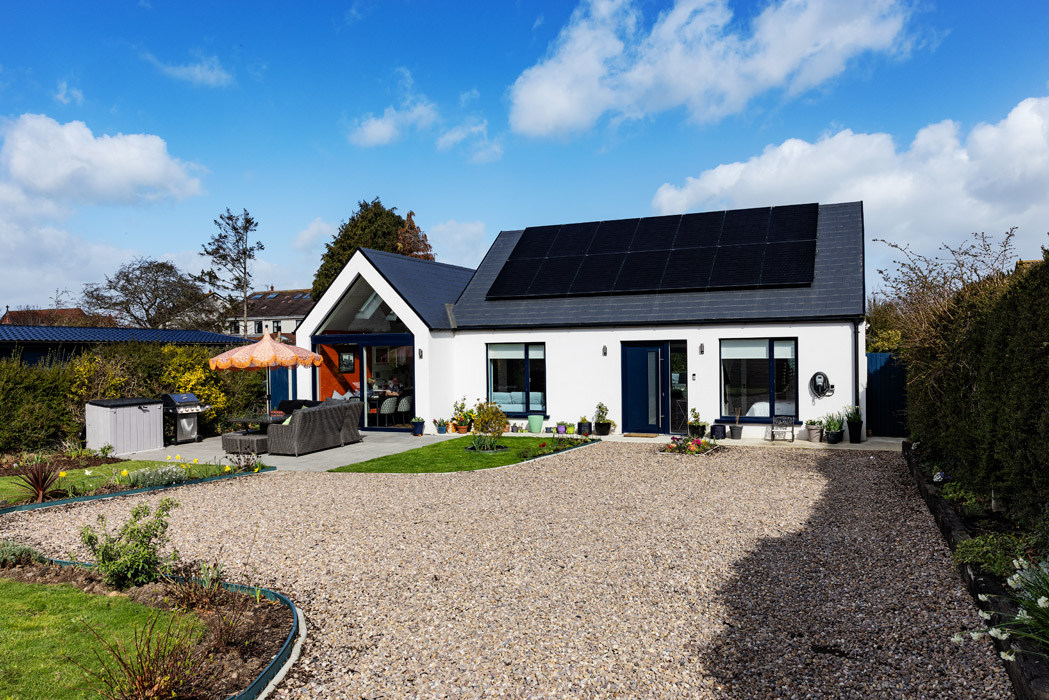
By reimaging the layout of her 158 square metre, four-bedroom detached house in Ballinteer, a spatial designer gained 22 square metres of space – without having to extend. Here’s her 12-point plan.
Building works are at an all-time high, so more and more of us are having to rethink big, swanky extension plans.
Spatial interior designer Eleanor Clarke of Cobelis Design has spent years reimagining spaces to maximise volume.

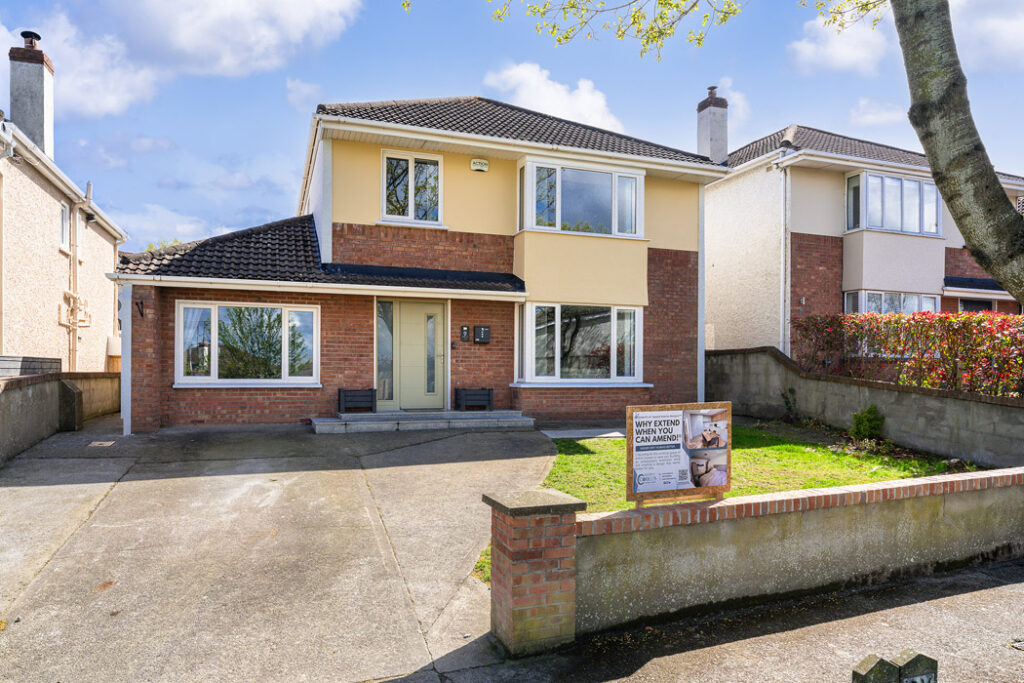
When she first viewed her four-bedroom, detached house in Ballinteer, she knew exactly how she might reconfigure it.
The budget didn't stretch to an extension, but she wanted to put her stamp on it.
The house, which was about 40 years old, also needed retrofitting.
Having gained a BA in interior design, she started her working life in architectural practice Traynor O’Toole (TOT), and when the bust happened, she got a job in a kitchen design company.
It led to a decade of drafting ideas in 3D to illustrate exactly how much space a client had in the hardest-working room in their house.
Many were disappointed by the first interpretations.
This was because they couldn't visualise the 2D drawings furnished by their architects.
When they saw the 3D iterations, they often didn’t have enough room for all that they wanted.
As she suggested solutions, she spotted a gap in the market and set up Cobelis Design. Its tag line is, ‘Why extend when you can amend?’
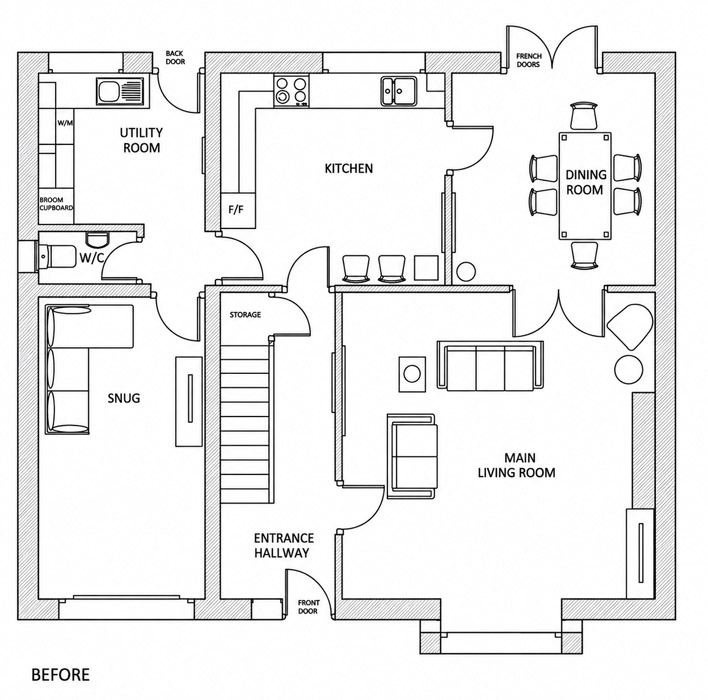
She set about rejigging the 158-square-metre layout in seemingly small but very effective ways.
The problem
The house was of a vintage that it had a separate dining room and kitchen.
The kitchen was the smaller of the two spaces and had three doors opening from it, so there was no place for anyone to casually hang out. It was, in effect, a very large corridor.
She and her husband spent time in the lounge while the kids gravitated towards the family room, a space she said “was isolated” from the rest of the house.
Originally, it had been a garage that had been converted, but access to it was from the back of the house only.
“I have three children aged 13, 11 and 9. Nobody was hanging out in the kitchen. The family was divided.
"I wanted the ground floor to be more broken plan, where from the kitchen I could see into the lounge and on into the family room,” she says.
A dozen changes
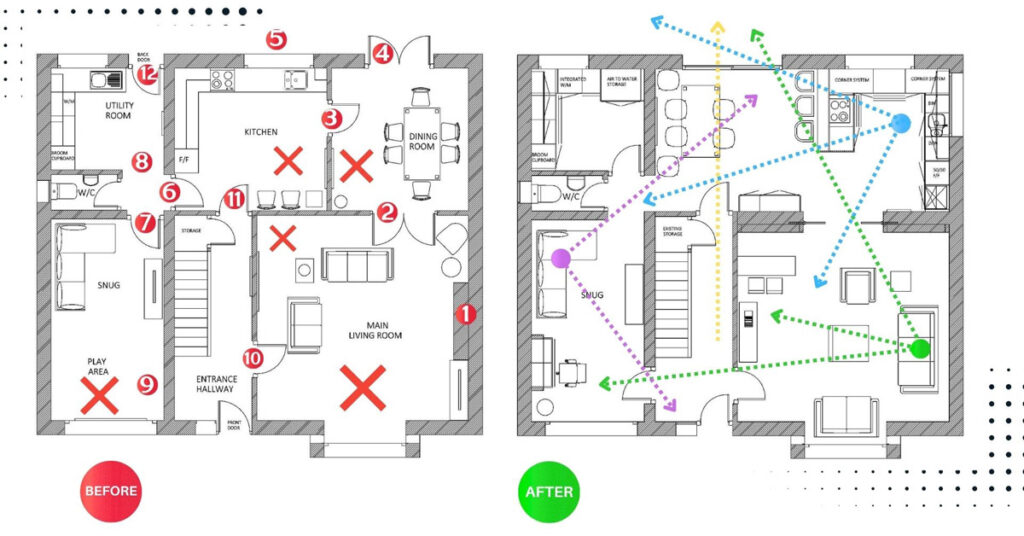
Her 12-point plan completely changed the flow and made the house work for modern family life.
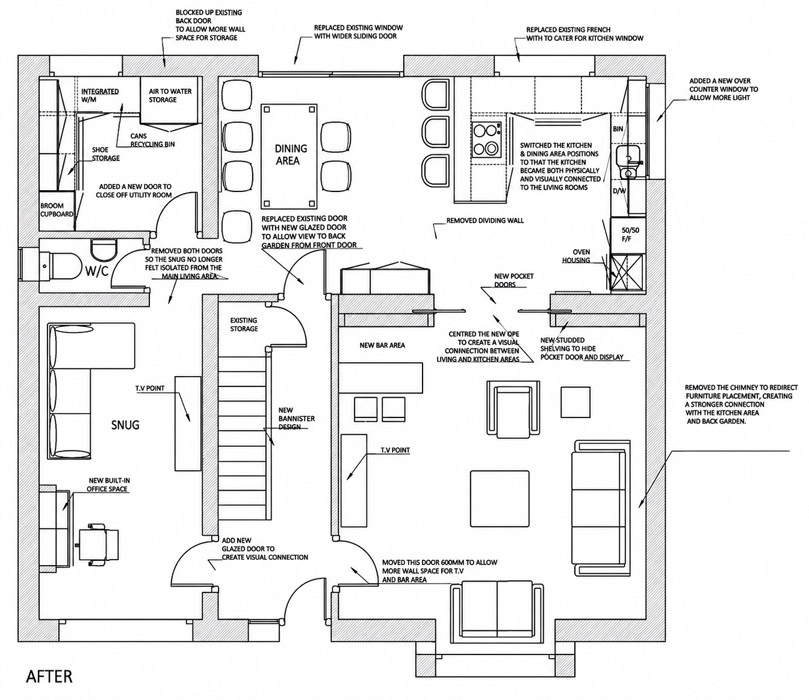
1. Removed the chimney breast, giving about 2 square metres of additional floor space.
2. Moved the opening from the lounge to centre it and installed pocket doors instead of swing doors.
3. Took down the wall between the original dining room and kitchen to make it an open plan.
4. Closed dining room French doors and replaced them with a window, giving more counterspace.
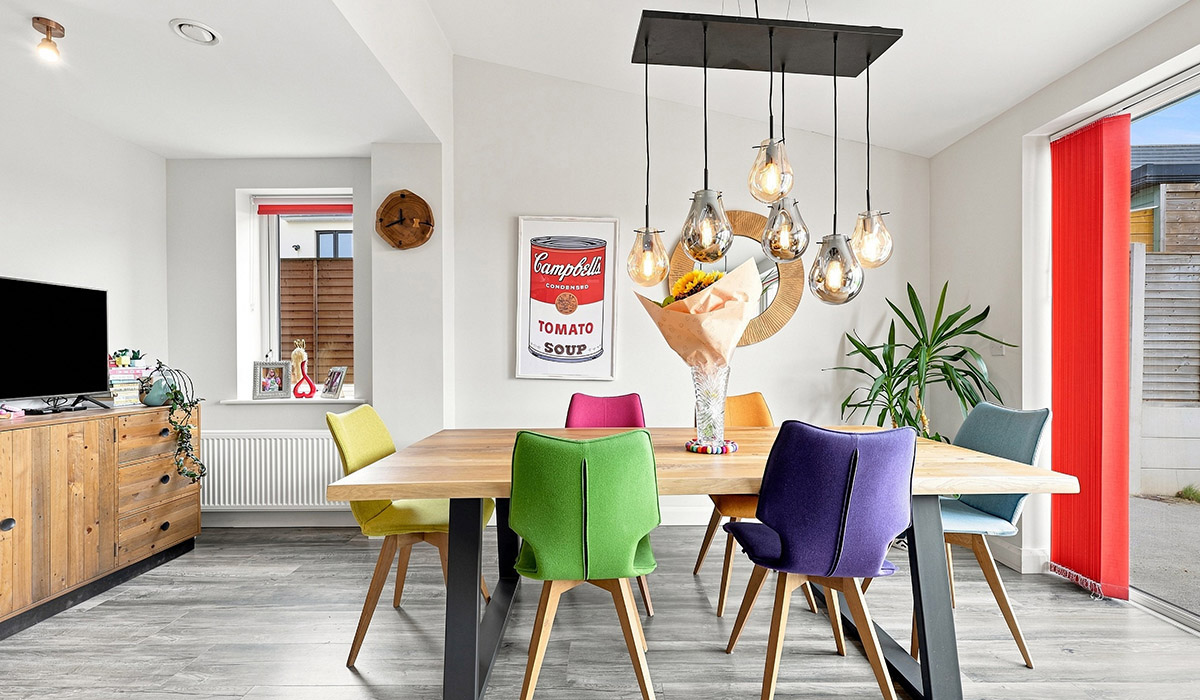
5. Installed French doors in the original kitchen, now the dining area.
6. Removed the door from the kitchen to the utility lobby. Retained the opening.
7. Removed the door from the utility lobby to the family room. Retained the opening.
8. Removed the door from the utility to the lobby. Retained the opening.
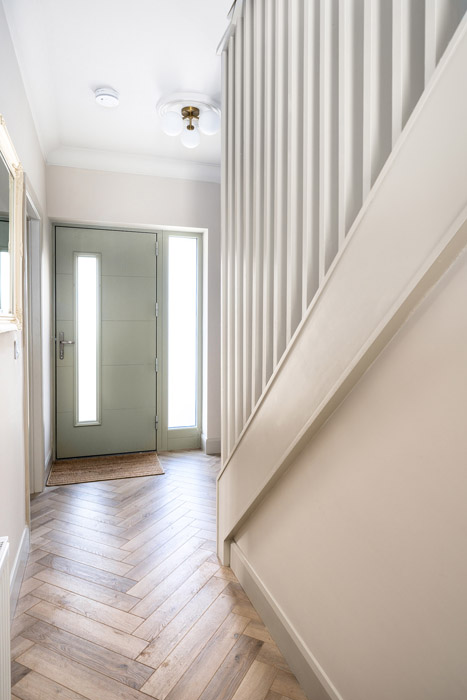
9. Installed a door in the family room from the entrance hallway.
10. Moved the position of the door from the entrance hallway to the living room. Also flipped the direction that it opened into the room.
11. Removed the door from the entrance hallway to the kitchen. Retained the opening.
12. Blocked up the back door in the utility. There was access to the garden from the kitchen. The single door was replaced by a window.
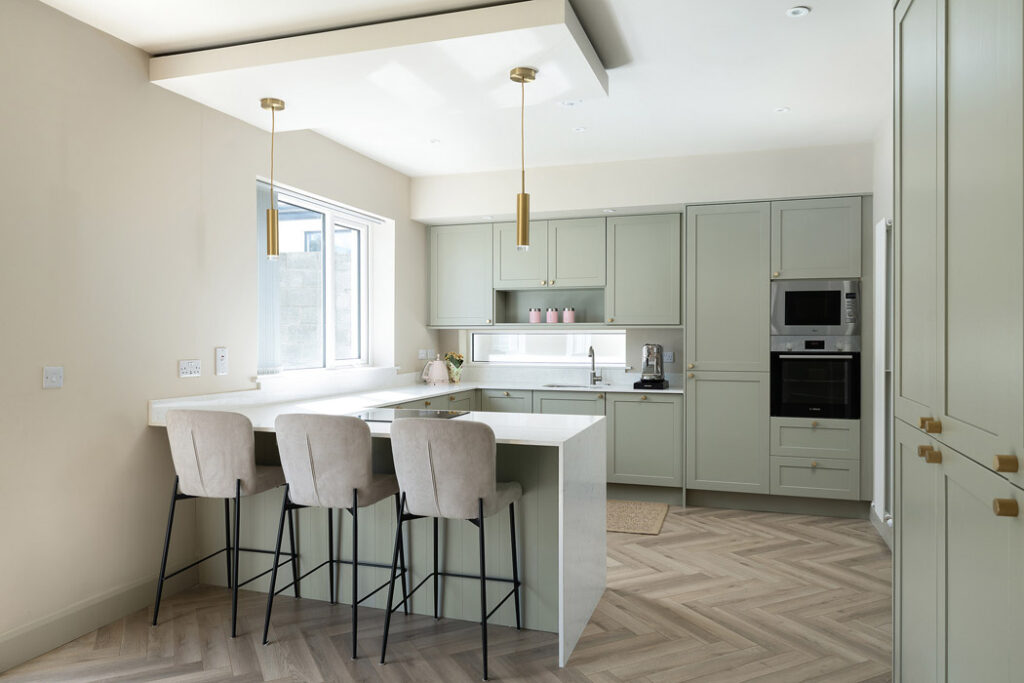
Kitchen
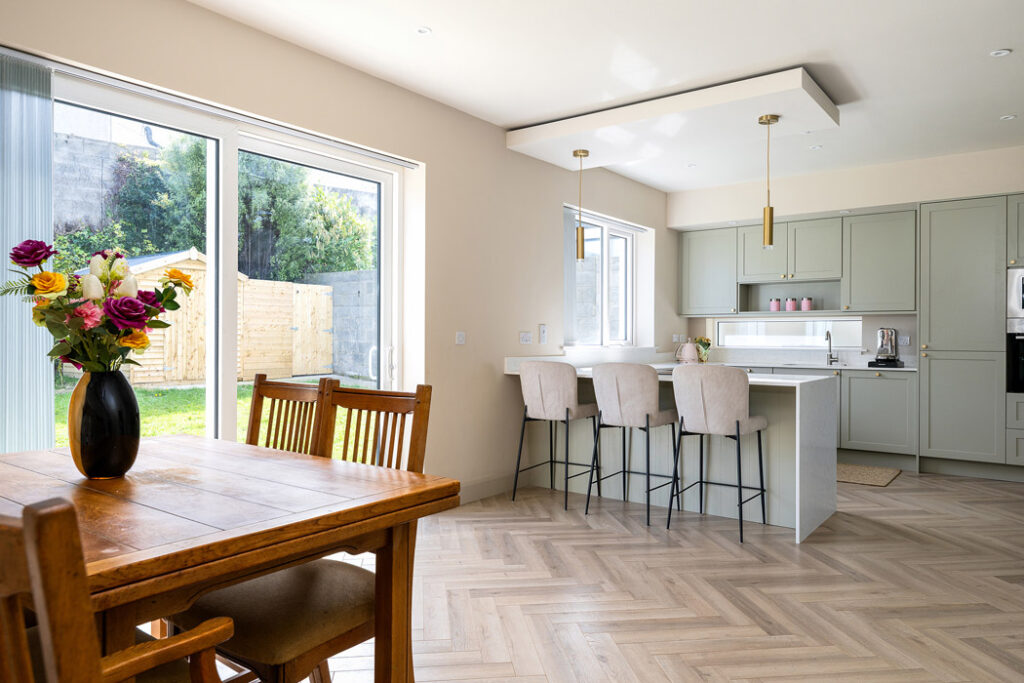
She flipped the room layout, installing the kitchen cabinetry in what had been the dining room and breaking down the wall between the two.
The old kitchen was 3.27 square metres in size. The new one is 5.83 square metres.
The reconfiguration has given her almost three more metres of storage volume.
The location of the French doors was moved to the dining area while the original opening was closed. A window was installed here instead.
Above and below counter units run along one outside wall.
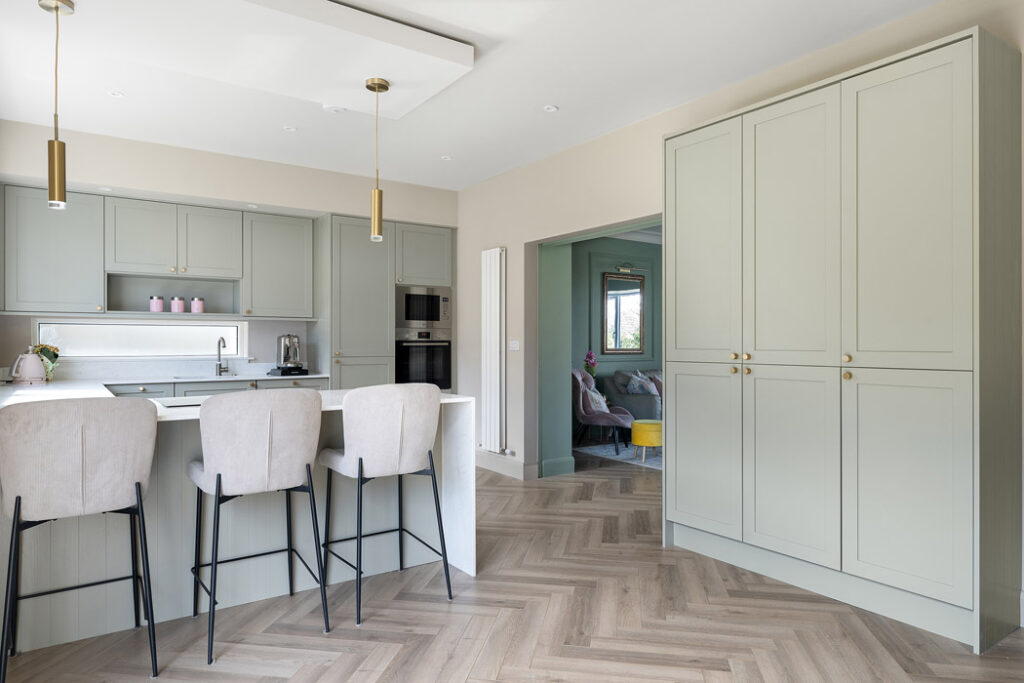
An above-counter window brings additional light to the sink.
The storage was more accessible with corner and pull-out units, she explains.
The cabinets are set in a C-shape, which gave her space for a peninsula – a place where the three kids could perch.
Have the same number of stools as you do children, she counsels.
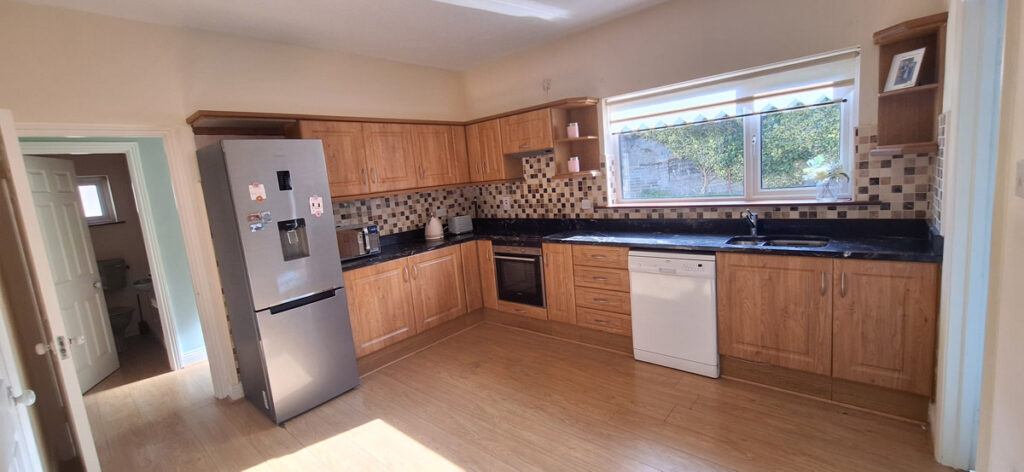
The units above the counter house cups and glasses, along with bins and a dishwasher. Full-height units house the double oven and the fridge-freezer.
There are also pantry units on the far wall.
Deep drawers store the saucepans and cutlery along with plates.
There’s also a clutter drawer.
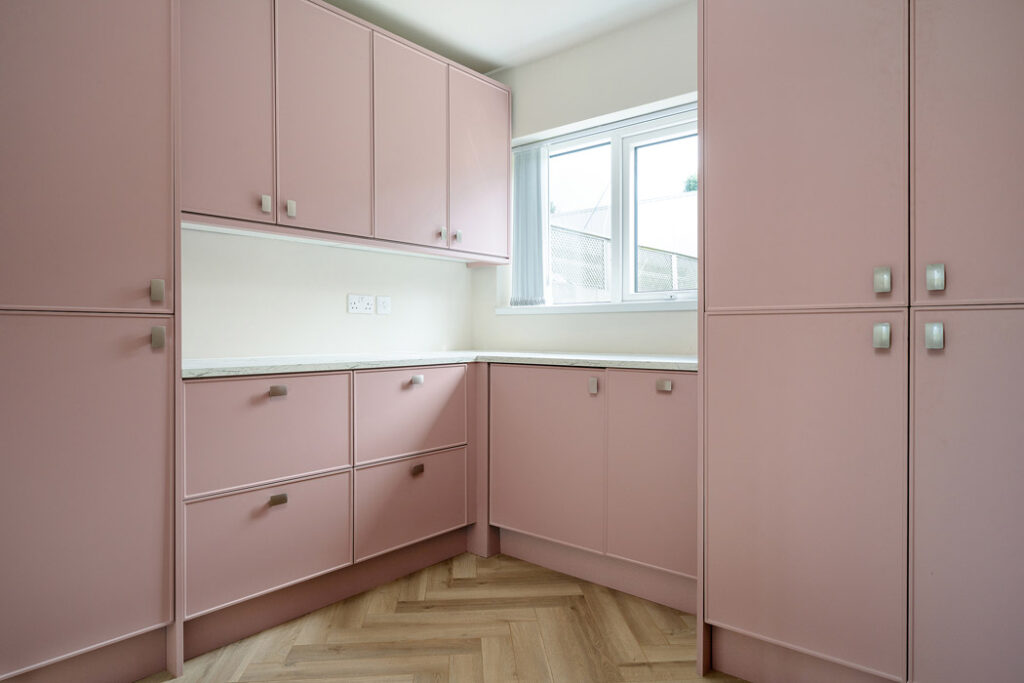
Utility room
The utility had a back door opening out to the garden.
She closed it up because she already had access to the garden from the kitchen, via French doors.
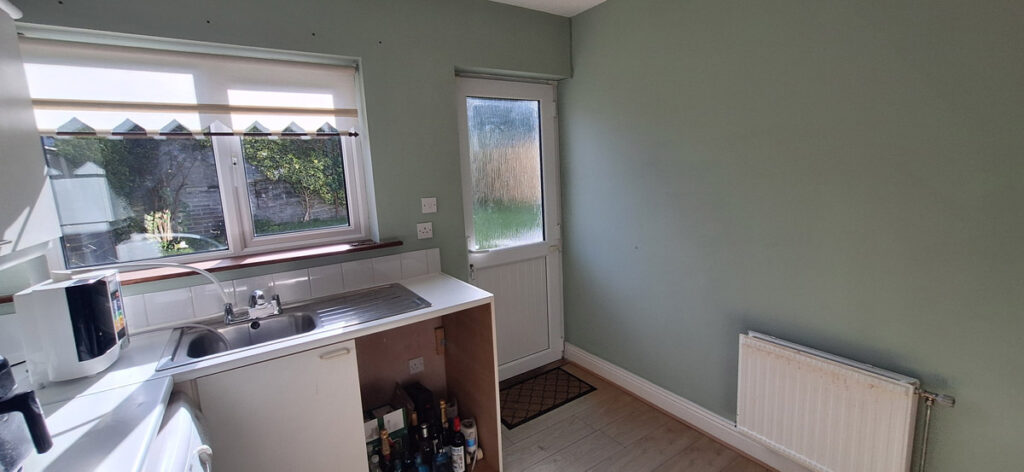
By removing the door, she gained additional above- and below-counter space, along with room for the pump in their air-to-water system.
She removed a sink, too.
When drying clothes, the clothes horse lives here. The units here are a pretty pink.
Family room
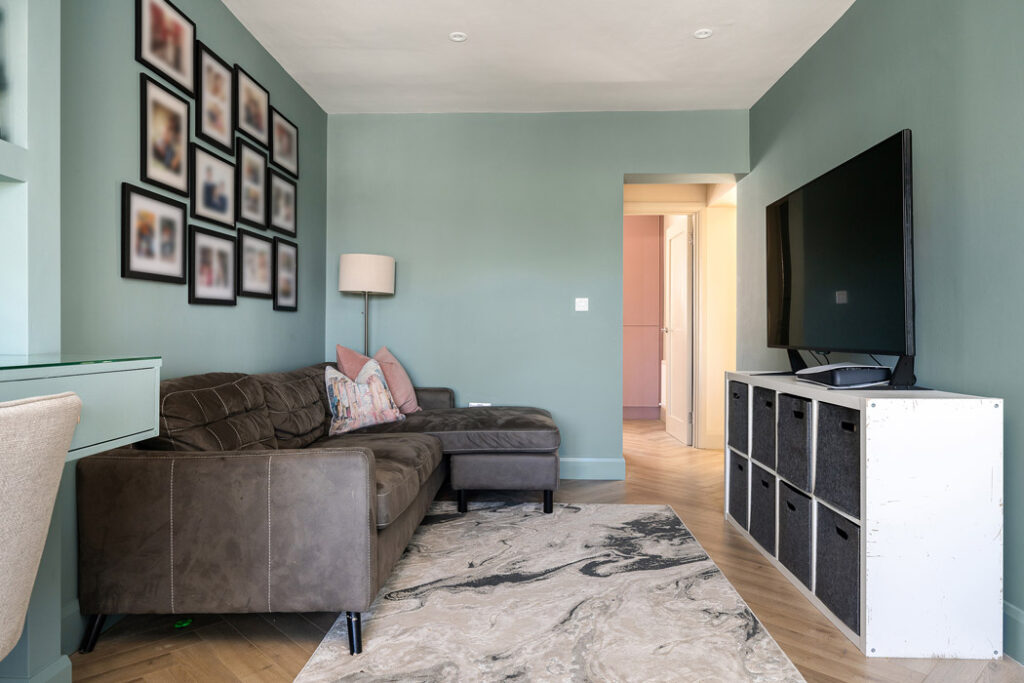
By adding a second access point to the family room from the hall and installing a glass door here, she could keep an eye on the kids without them feeling surveilled.
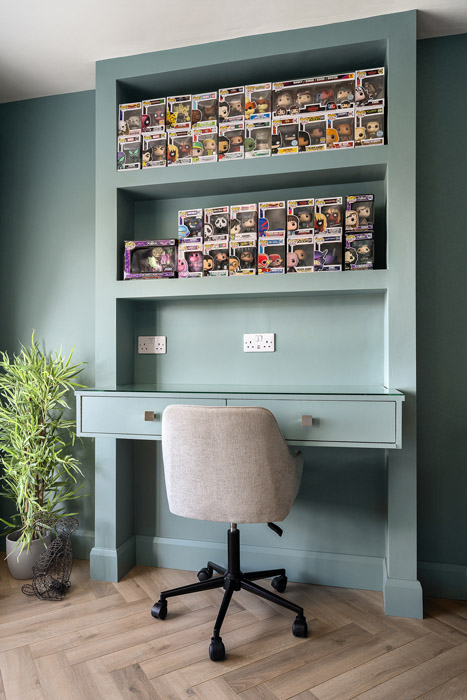
The original entrance to the room was via a lobby at the back of the house.
She kept this opening but removed the door and commissioned a built-in desk area.
Living room
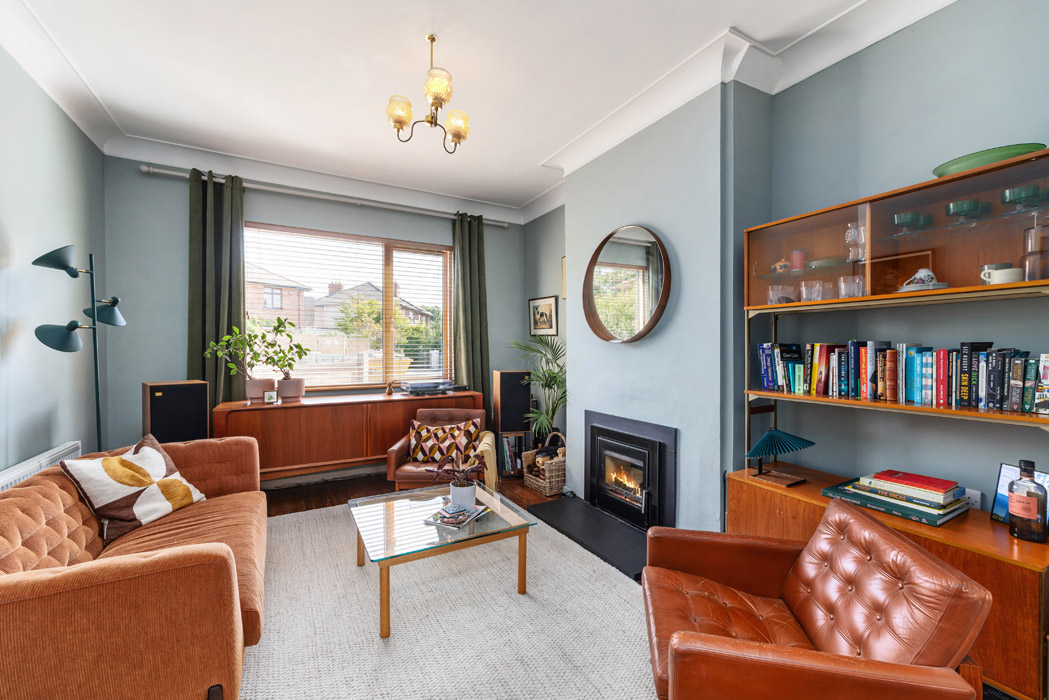
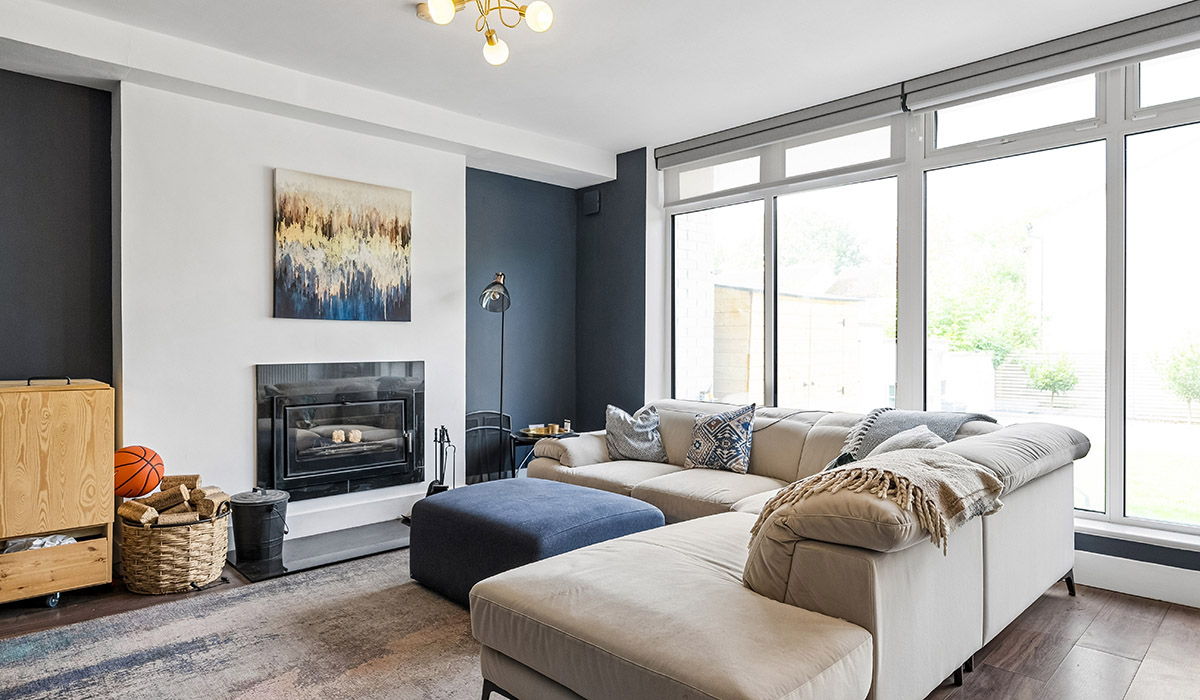
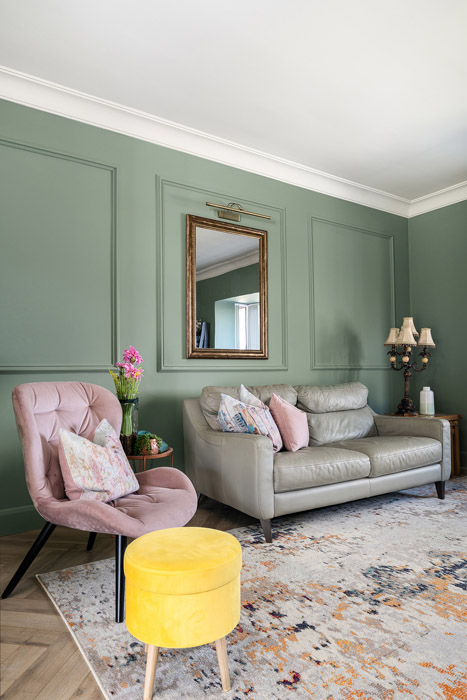
The box-bay-fronted living room had two entrances and an open fireplace with alcoves. She took down the chimney breast altogether, freeing up an entire wall.
Double doors led through to the kitchen.
Another door also made it accessible from the hall. She shifted the location of each doorway to create a better sense of flow.
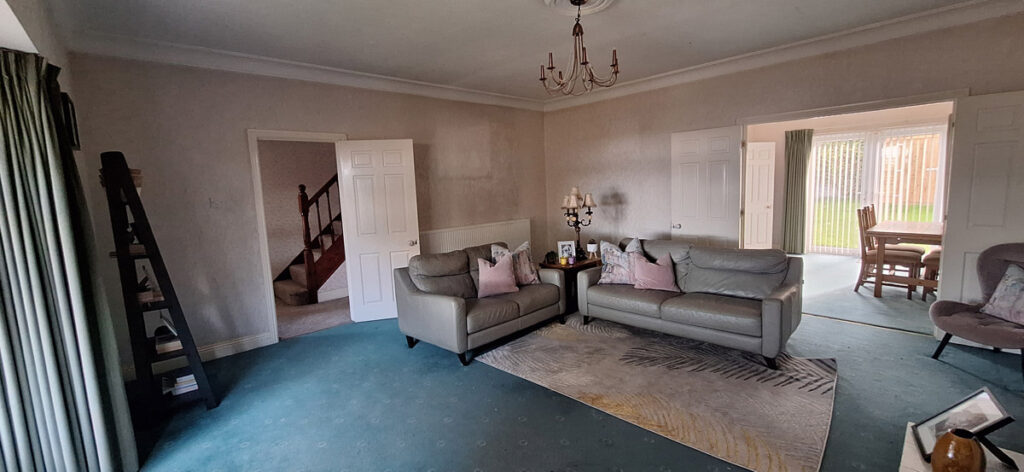
The door to the hall was moved, down towards the front exterior wall. The way it opened was also flipped so that it now opens towards the outside wall.
This also freed up more wall space on this side of the room.
“I wanted to be able to see into the garden from the living room.” Now she can.
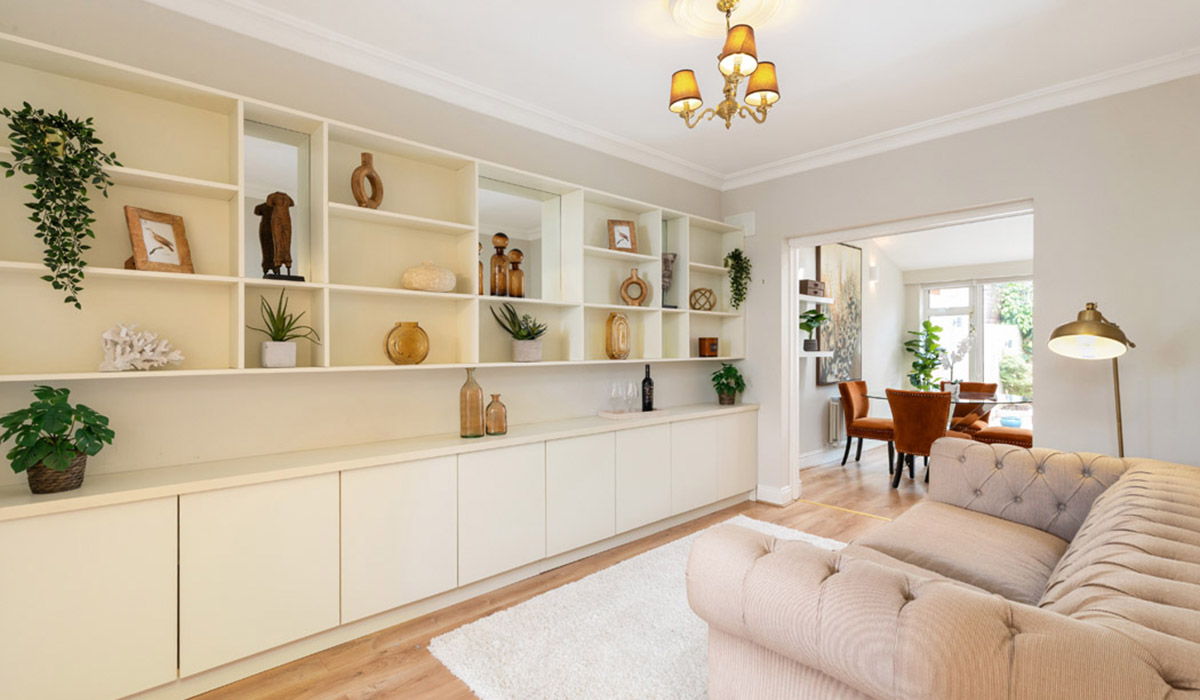
There’s a large three-seat sofa against the wall where the chimney breast was. A second sofa fits perfectly into the box bay window alcove.
The TV hangs on the wall that abounds the hall.
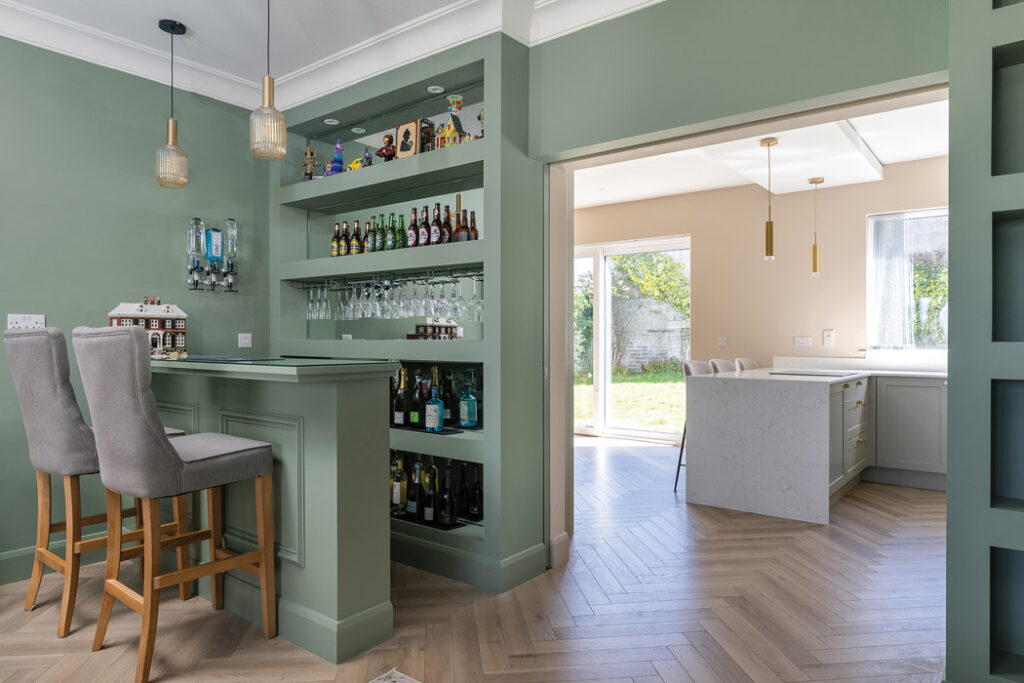
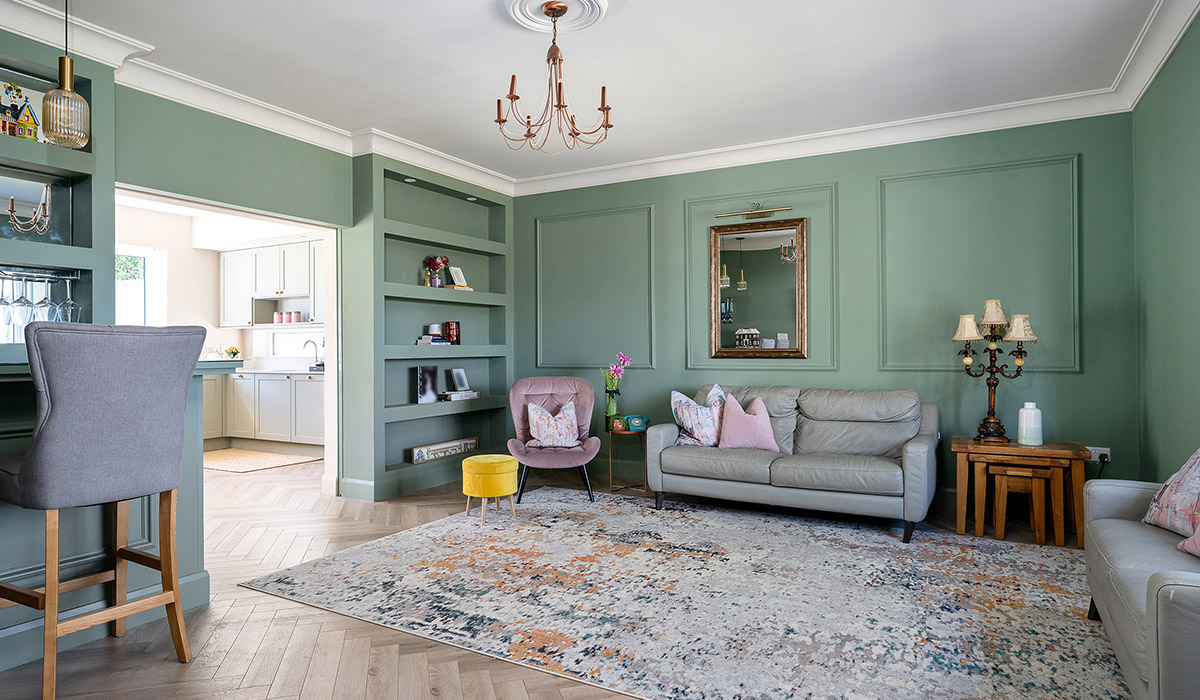
She added shelving for her boys to show off their Lego collection.
Pocket sliding doors, 160 cm wide, open and close the living room from the kitchen.
The reconfiguration means that there’s room for a fully stocked bar that includes glass hangers and optics.
She likes a G&T, served in a slim Jim glass with a slice of grapefruit.
Space gained
In its original layout, there was underutilised space in the lounge, the dining room and the kitchen.
Having consulted her drawings, she says this amounts to 22 square metres of space that is now better utilised and no longer dead space.
Costings
Clarke’s own home cost €133,000 to deliver it as shown using RJ Pollard Construction. This includes work on the first floor.
What Clarke offers is a reconfiguration review of your existing home. She describes it as a strategic pre-design diagnosis. It doesn’t cover drawings but demonstrates what is possible and offers diagnoses that include real-time costings to implement the work.
“It’s a report that you get that focuses on priorities and solutions,” she says, before homeowners commit to significant renovation or extension works. It costs €2,500.
Drawings, which may include planning, will cost between €10,000 and €25,000. Clarke doesn’t work with listed buildings.
It is also worth noting that she retrofitted the house at the same time, bringing it from a D2 BER rating to an A2 BER rating. This brought the overall cost to €243,000.
Improving the property’s airtightness to this degree allows for the removal of multiple internal doors.
To book a reconfiguration review with Eleanor Clarke of Cobelis Design, click here.