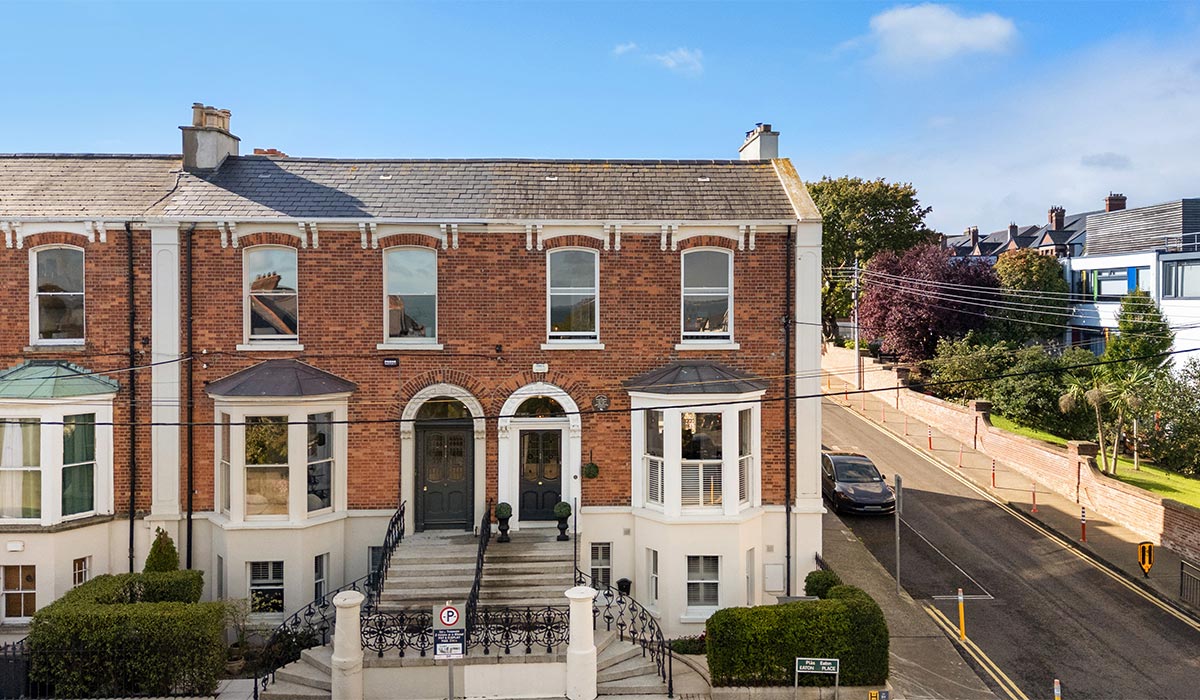
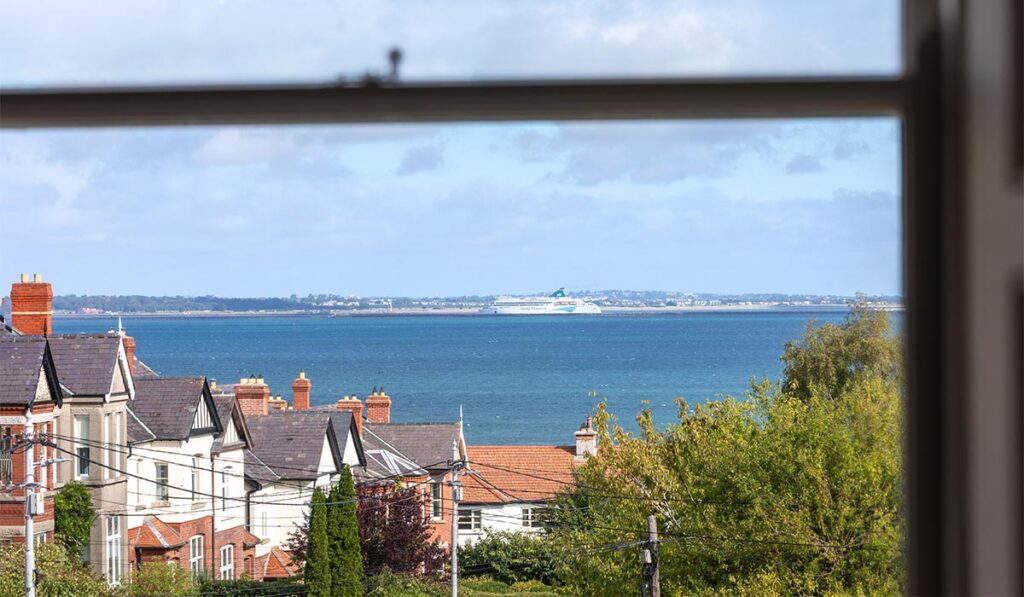
An end-of-terrace period house at the corner of Eaton Place and Belgrave Road in Monkstown, with views of Dublin Bay; no telescope required
Monkstown’s Victorian terraces and squares were built largely in the decades after the railway arrived in 1837.
The village became one of Dublin’s earliest commuter suburbs where houses heve tended to stay in the same hands for a long time.
This one, No 1 Eaton Place, is an end-of-terrace redbrick at the junction with Belgrave Road and it’s for sale for €2.95m.
Address: 1 Eaton Place, Monkstown, Co Dublin, A94 D893
Asking price: €2,950,000
Agent: Lisney / Sotheby’s
If you are in need of 312sq m of living accommodation over three storeys and a basement, which is large even for this terrace, then this might be where you want to point your Burberry binoculars.
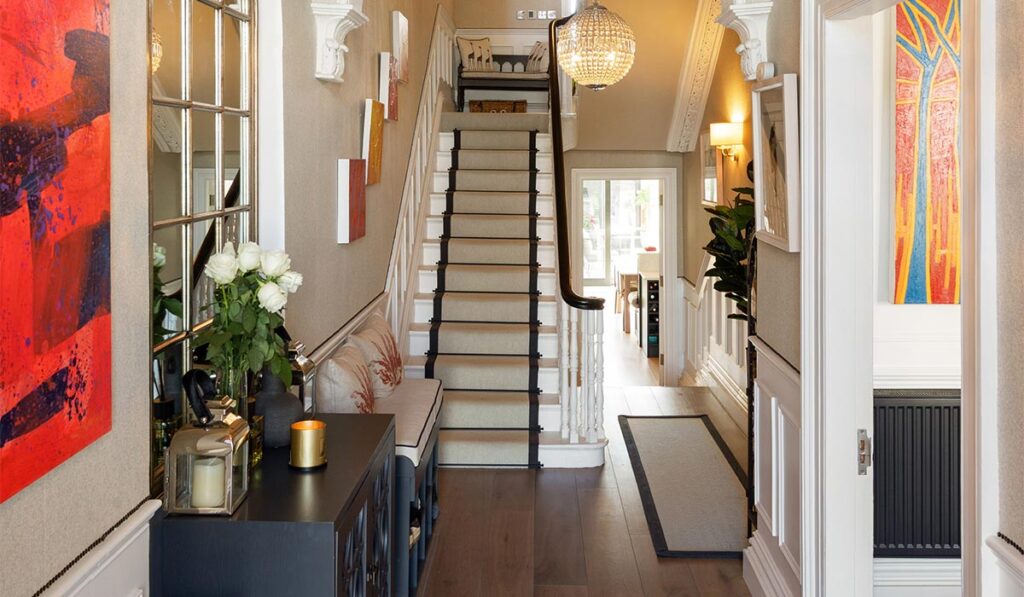
A flight of granite steps takes you to the hall door, which opens into a 10m-long reception hall with oak floors, timber panelling and cornicing.
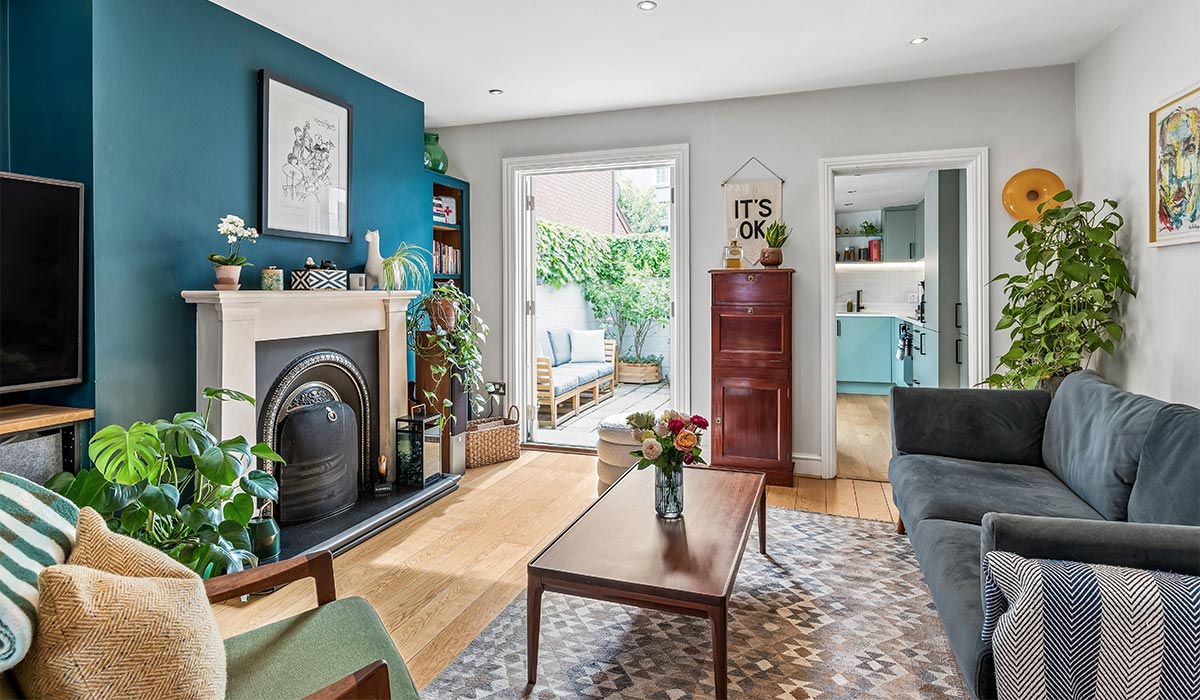
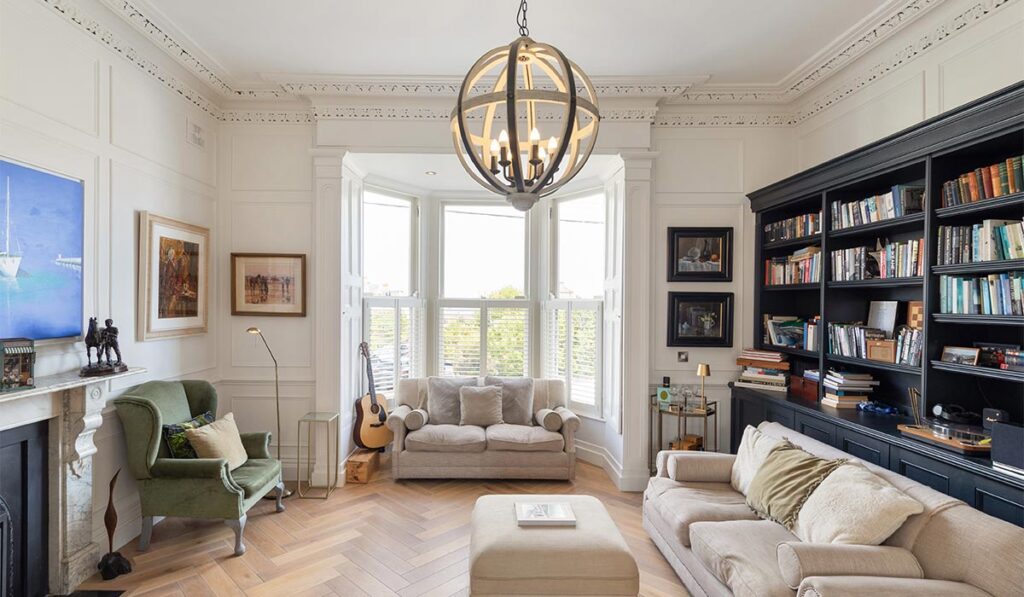
The drawing room at the front has a bay window that faces an actual bay, a herringbone oak floor and a marble fireplace fitted with a wood-burning stove.
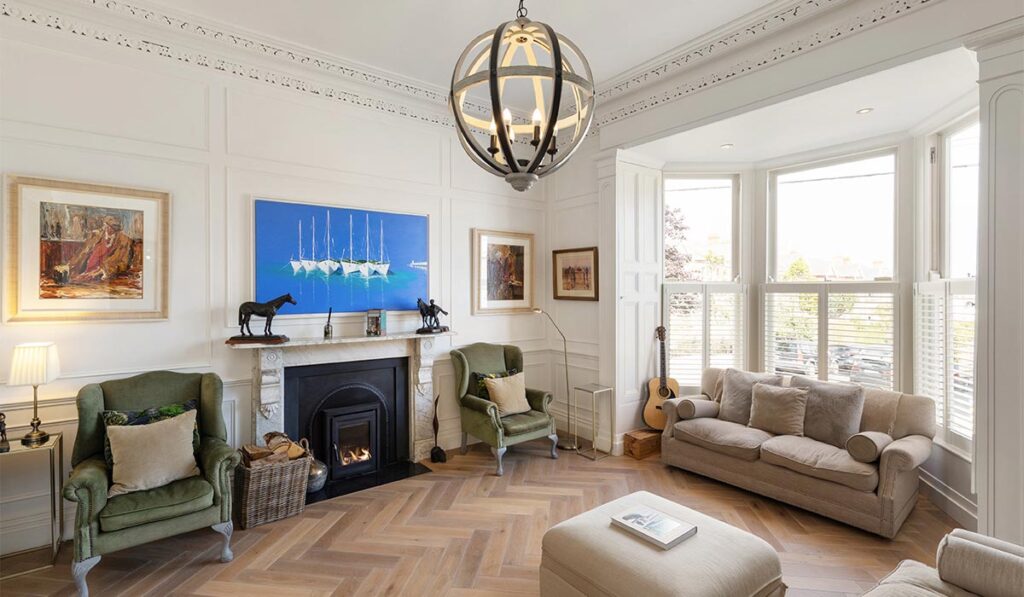
Folding double doors connect it to a living room of similar size behind, which also has a marble fireplace and stove.
Steps lead down from here to the kitchen/breakfast room at the rear.
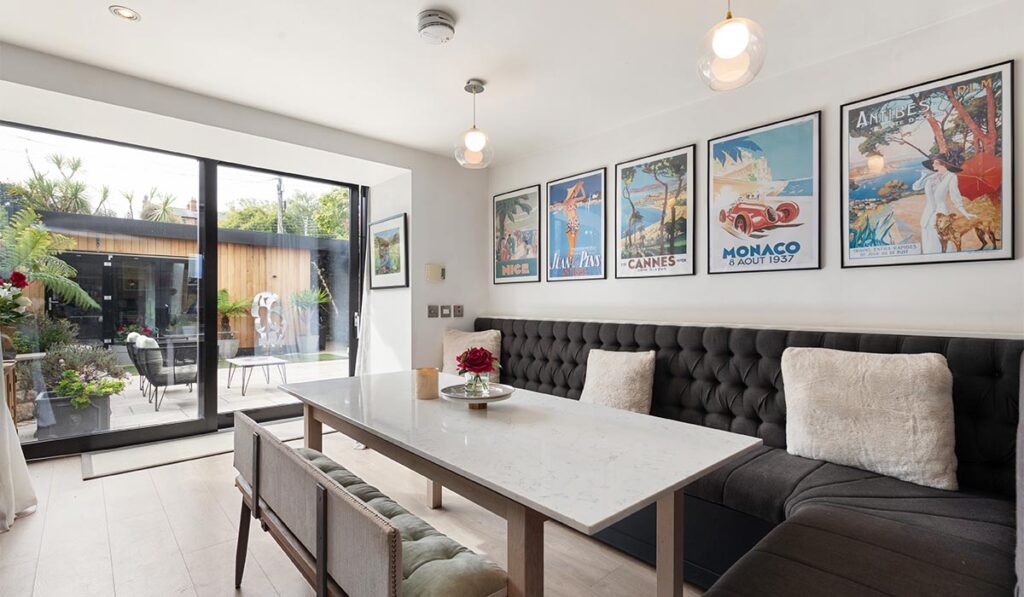
This has hand-painted units, quartz worktops, built-in seating and floor-to-ceiling sliding doors to the garden.
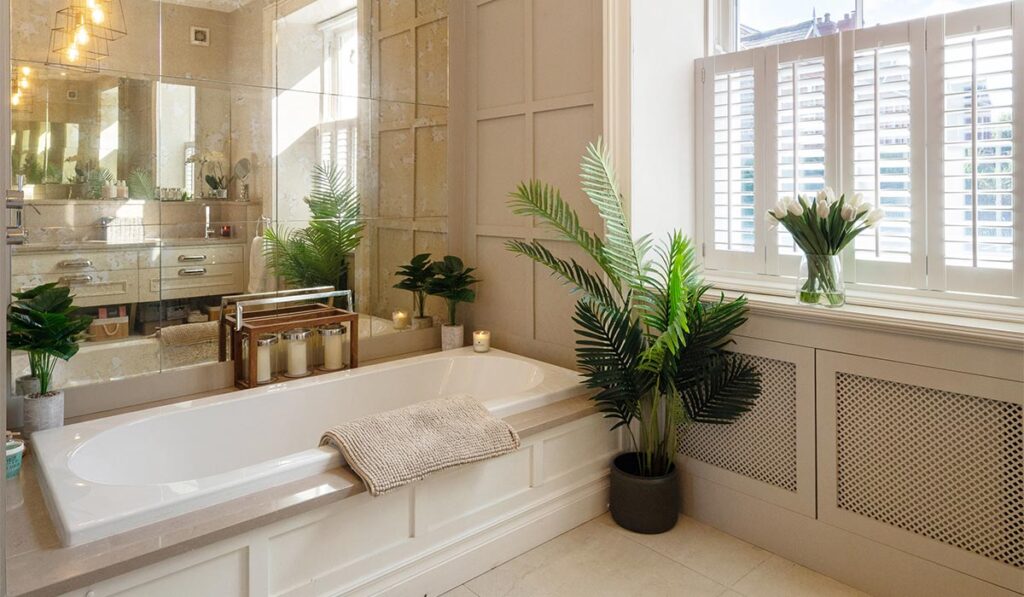
On the first-floor return is a utility room, a guest bathroom and the family bathroom. The first floor has two bedrooms.
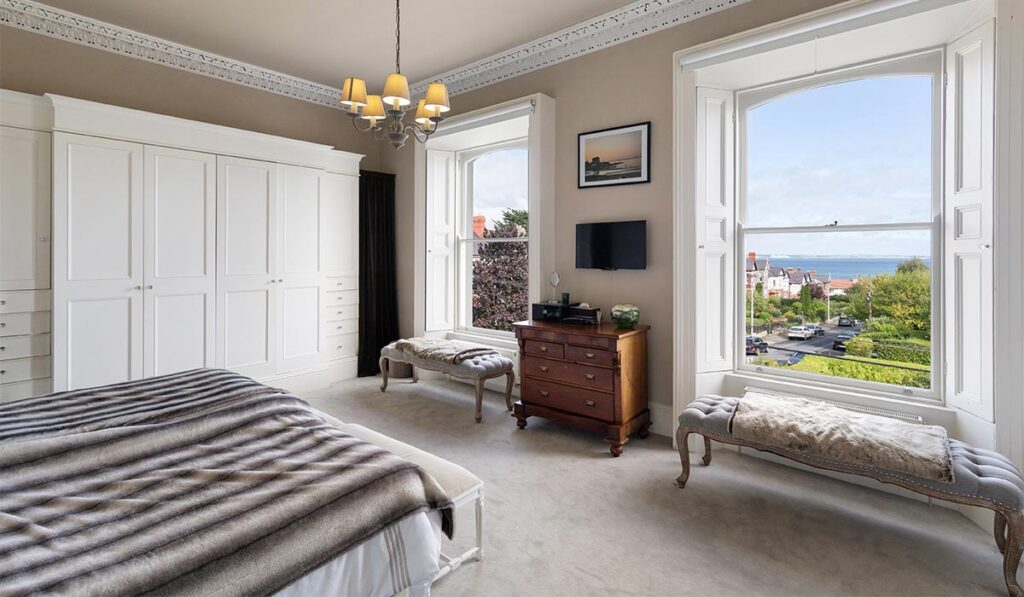
The main bedroom takes up the full width of the front of the house and has two sash windows looking out at water.
A third bedroom, with an ensuite, is on the second-floor return.
If you need to accommodate granny, the basement has its own front door and is laid out as a separate unit. It has two bedrooms, one with an ensuite, a bathroom, a living room, a kitchen and a small courtyard.
If you’re operating at this end of the market, you’ll be used to creature comforts, and this isn’t exactly uncomfortable with a C energy rating, not bad for a house that predates the telephone.
Replacement double glazing has helped here.
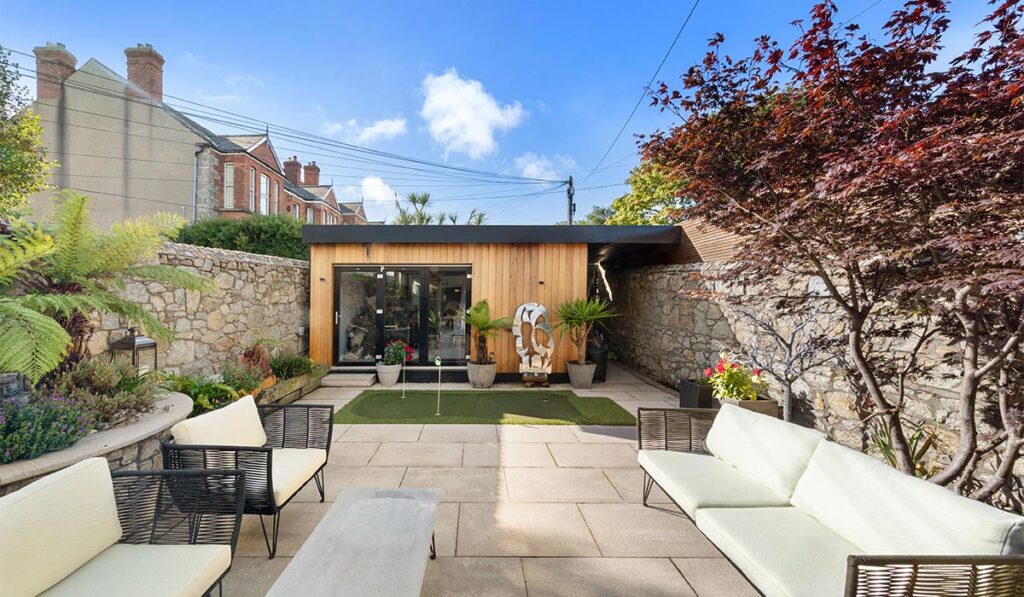
The back garden faces south. It’s paved in granite, planted against the original stone boundary walls, and there is a pedestrian gate to the rear.
At the end of the garden there is a Shomera, which is currently used as a home office and gym.
A Dublin Tourism plaque on the front of the house that marks it as the final residence of William Parsons, 3rd Earl of Rosse and builder of the famous Leviathan of Parsonstown, the James Webb telescope of its day.
It remained the largest in the world by aperture until the early 20th century. His wife Mary was a pioneering photographer, and their youngest son, Charles, went on to invent the steam turbine.
Rosse’s health began to fail in the 1860s, and he took a house by the sea at Monkstown to recuperate.
He died there on October 31, 1867.
Lisney and Sotheby’s are seeking offers of around €2.95m.