The latest episode of RTE’s Great House Revival was an example of genuine real-life reality TV. It showed how a New Ross family took on a Georgian merchant house and lived to tell the tale and, by doing a lot of the dirty work themselves, saved enough to make it habitable, but there is still work to do.
Photography: Kelan Molloy
Buying a listed property, in its original condition, has pros and cons. You need funds, true grit and determination to get the work done. If you manage to do it, the property’s period charm will reward you for as long as you want to live in it.
Builders hate them. And it’s easy to understand why. Heritage homes cost roughly 25 per cent more to refurbish than modern builds. There are period features to restore and retain, and all manner of unpleasant surprises present themselves once you strip them back to their bare bones.
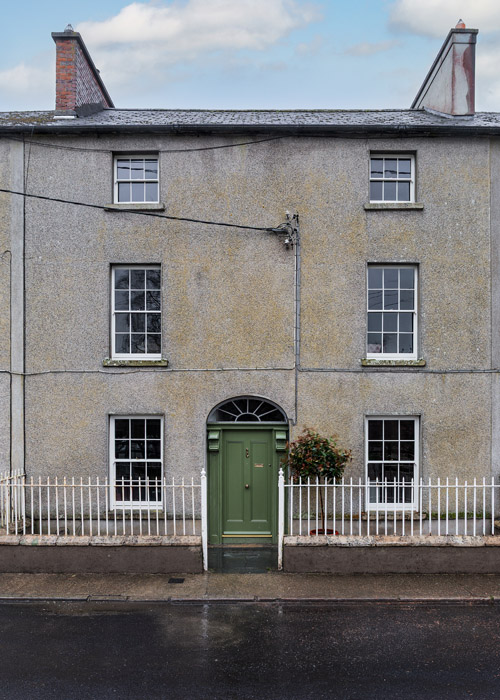
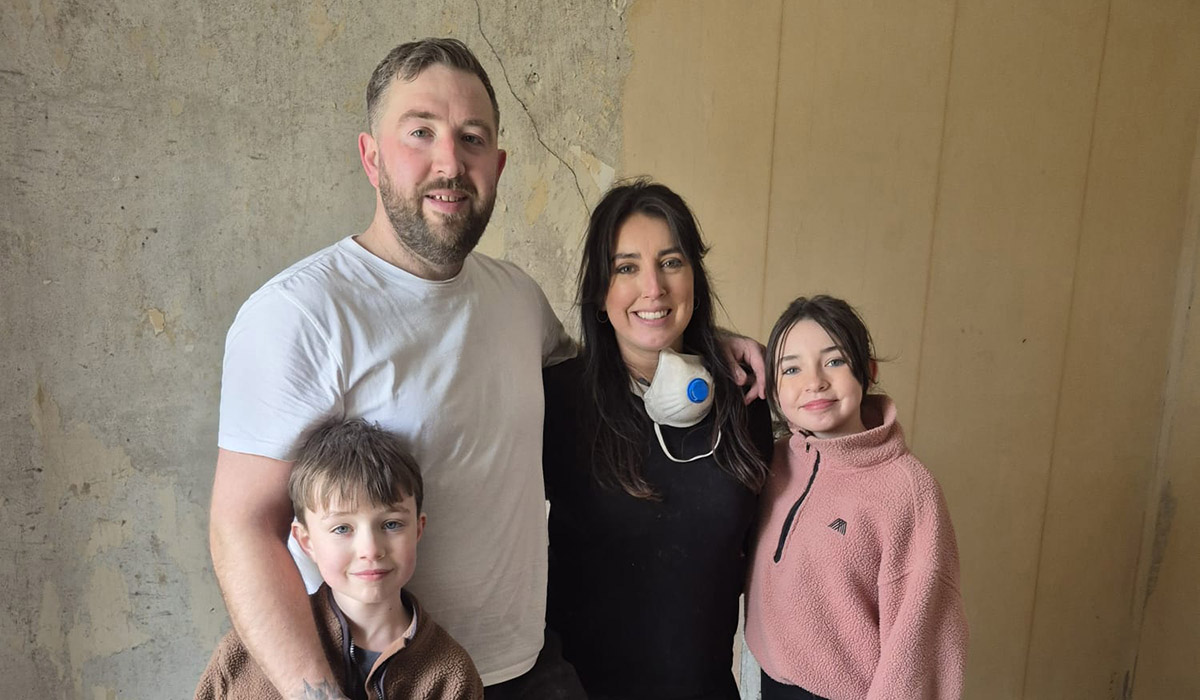
Retail workers Aileen O’Neill and Arron Deegan sold their home to trade up to a double-fronted late Georgian merchant house overlooking the River Barrow in New Ross, where the Small Things, starring Cillian Murphy, was filmed about two years ago.
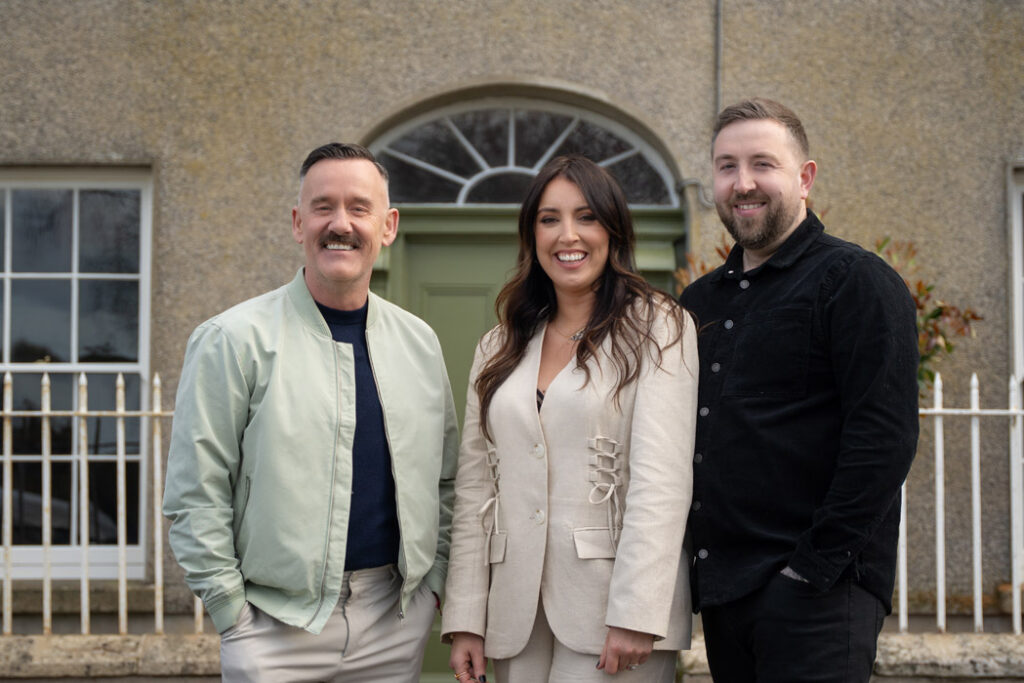
Unmodernised, with many of its period features intact, presenter Hugh Wallace was impressed with its condition when he first visited.
He was less impressed by the couple’s suggestion that they planned to replace the original six-over-six timber sliding sash windows with uPVC replicas. Sagely, he asked if the house was listed.
The couple didn’t believe it was.
It was listed, which placed constraints on what they could and couldn’t do.
The windows, the eyes of the three-story property, many still with their original glass, had to stay.
They were advised to take down the ceilings to simplify the rewiring and replumbing, but with all the rooms on the ground floor still possessing their original coving, Hugh convinced them to take up flooring instead.
They had a budget of 150,000.
This included €50,000 from the vacant home grant.
He felt it would cost more like €250,000 and suggested they do as much of the dirty, time-consuming labouring work themselves.
“A lot costs an awful lot of money because they’re filthy jobs,” he counselled.
Theirs is an intergenerational living home.
The house layout sees Arron’s mother, Joan, accommodated with her own bedroom and sitting room on the first floor, where there is also a family room.
The parents and the bedrooms of their two kids, Olivia, age 13, and Oscar, age 8, are on the second floor.
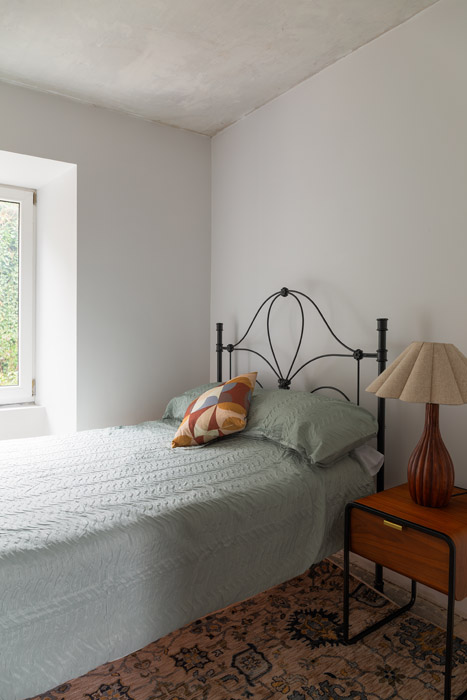
This is still a work in progress, and the family were all sleeping in Joan’s sitting room.
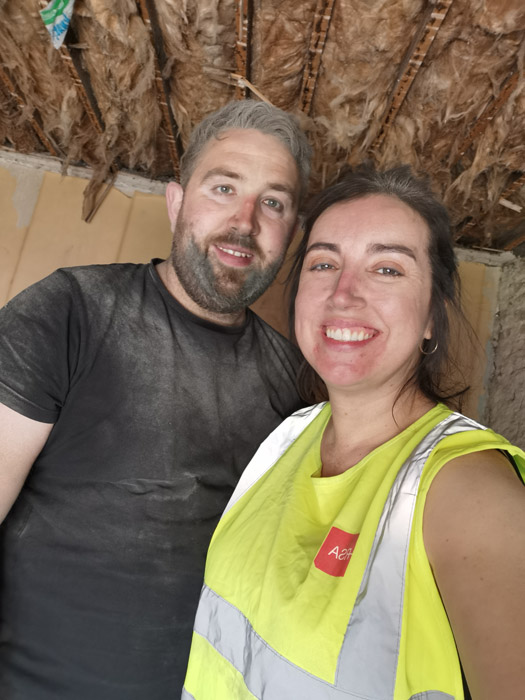
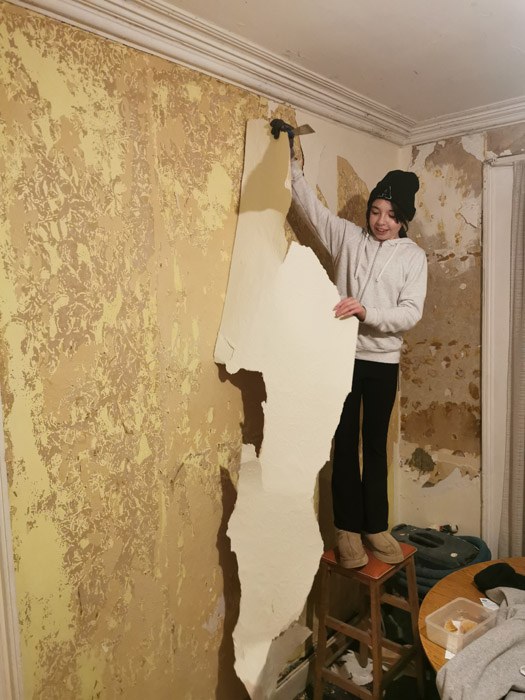
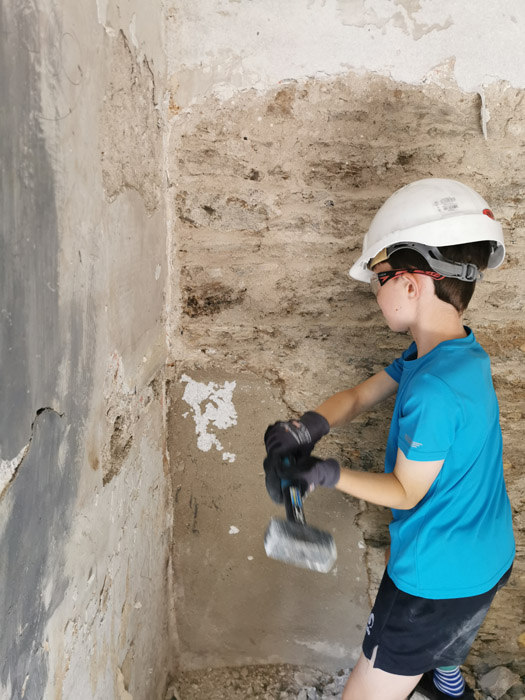
They put in back-breaking months of hard work, stripping decades of wallpaper layers and the plaster off to reveal bare walls, which they then dry-lined, angling the top of the partition back to the lower lip of the coving, in a way framing it.
They also pulled up timber floors to lay insulation between the floors for warmth and soundproofing and discovered dry rot in the door lintels, which had to be replaced.
Considered structural elements, it meant the house could be considered derelict and allowed them to receive a further €20,000 in a derelict home grant.
The kids helped out, too. Arron and Oscar sanded the kitchen and its countertops.
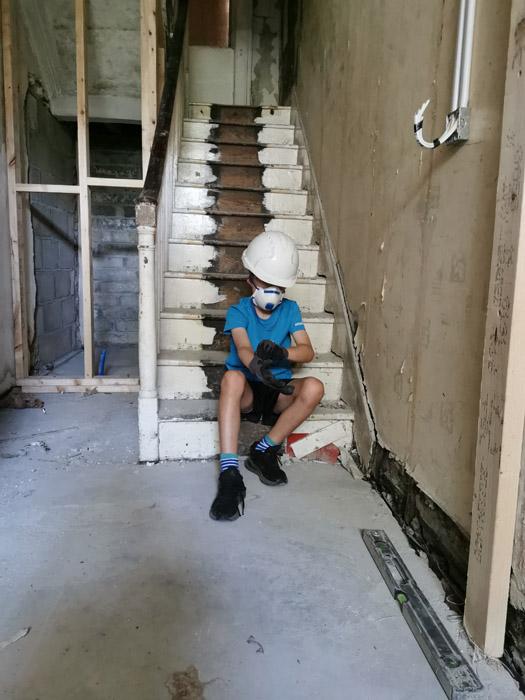
Oscar also had more than a go at plastering. Olivia helped with removing the layers of plaster. Everyone wore all the protective gear, steel-capped boots, gloves, goggles, when necessary, and hard hats.
“Kids are far more capable than people think.
We wanted to have them involved to see and learn first-hand how we created our dream home. It has instilled in them a strong work ethic and has taught them that we have to work hard for the things we want in life.
It has bonded us in ways that we never expected. We’re so proud of them,” Aileen says,
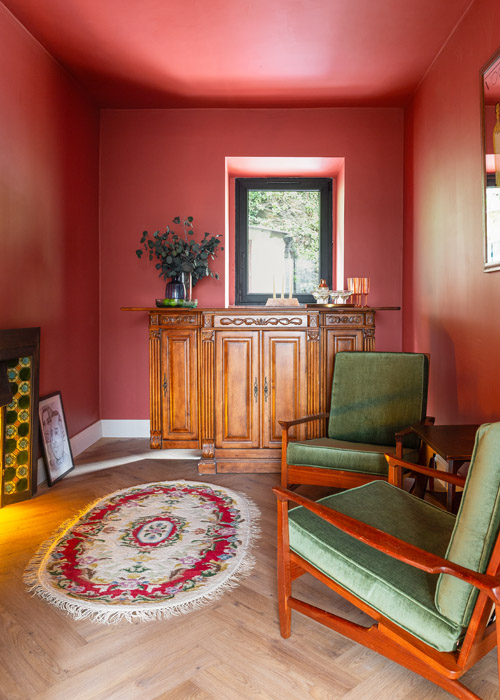
The house is still not finished, but they have an intergenerational home big enough for the kids to have their own room each, as well as a games room, which is painted Red Ochre from the Dulux Heritage range, as are all the paints featured, as the brand sponsors the show.
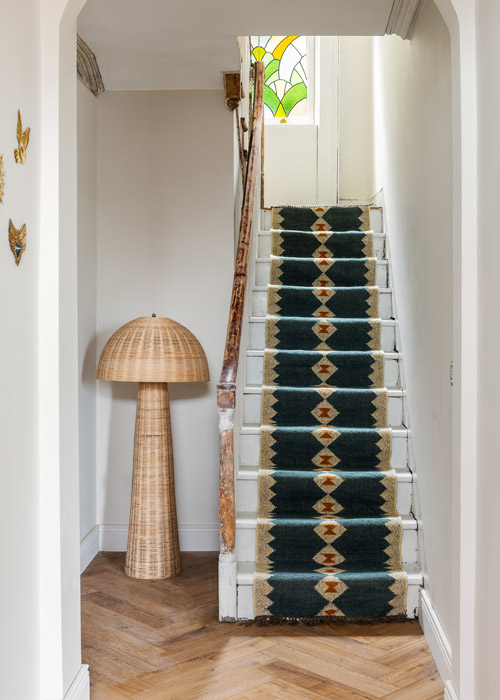
The hall stairs have a runner hand-made in Jaipur, which Aileen bought on Etsy.
For not budget would only allow for it to cover the first flight of stairs.
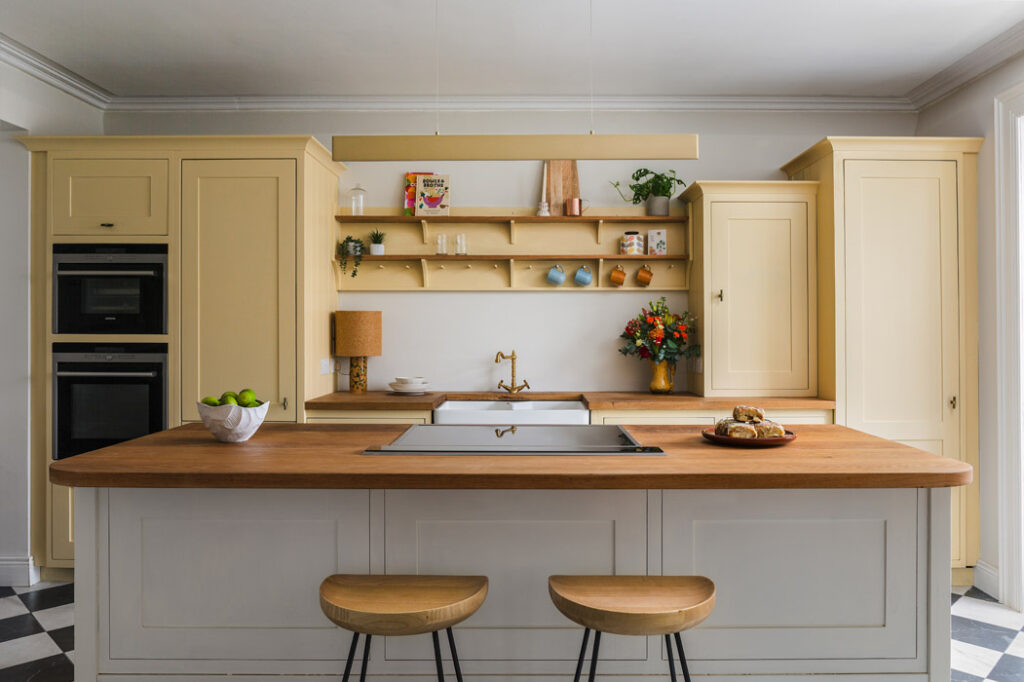
The kitchen was another Hugh suggestion.
He suggested flipping their original layout, moving its original position at the back of the narrower side of the house to the front, on the wider side, where it would be best positioned to get daylight.
The couple wanted a brand-new swanky model, but he suggested buying a second-hand one instead and using the money saved on getting the basics in the house right.
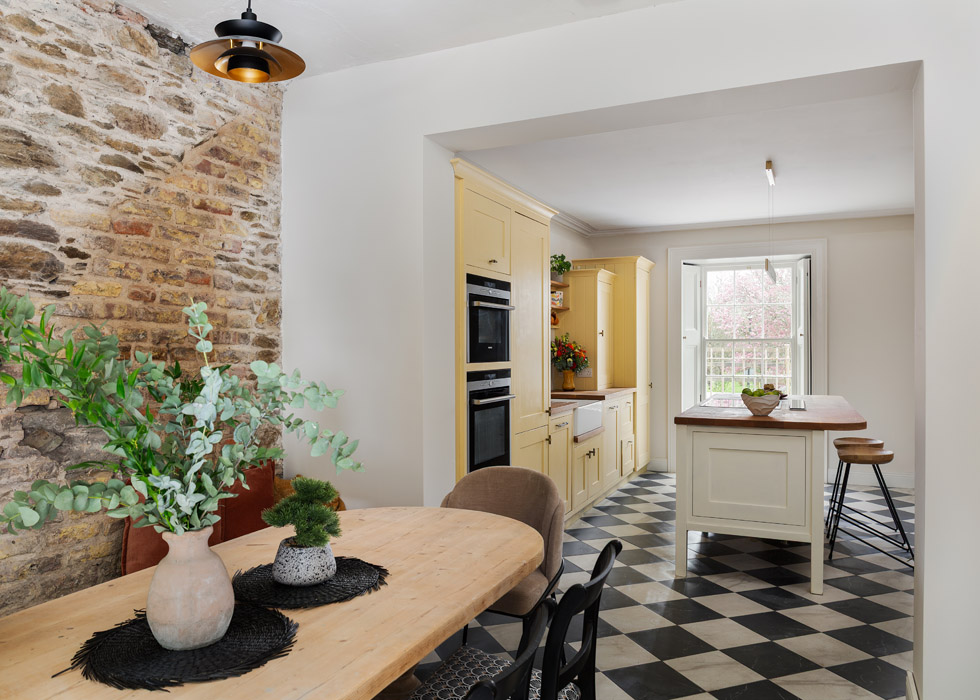
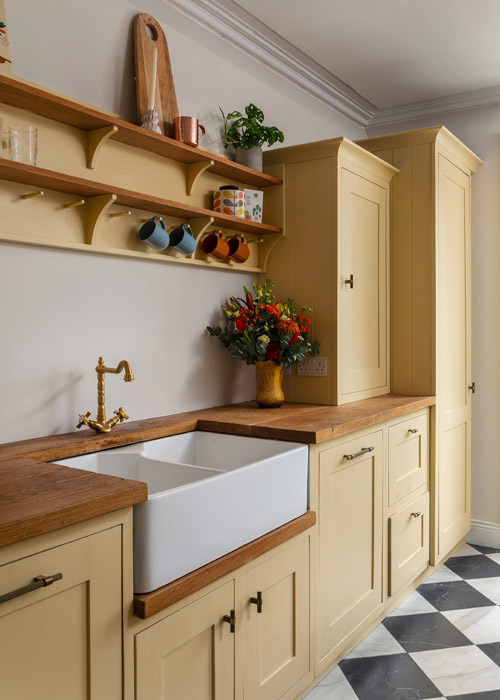
They found a shaker-style design, complete with a Belfast-style sink and appliances, on Facebook Marketplace, and paid €7.5000 for it, after measuring it up and hiring a van to collect it from nearby Wexford town.
It sat in storage until the room was ready for it. They then scrubbed and primed the fronts and worktops and had their friend Neil Kutay install them. It is now painted a soft butter yellow called Golden Ivory.
The dining table was found in a charity shop for about €120.
It too was sanded, now makes a stylish statement atop the black and white checkerboard tiled floor, something Hugh wasn’t a fan of, but with the mix of Sheker and vintage finds, it anchors the room beautifully.
They found the 60cm monochrome squares in the Bathroom and Tile Gallery in New Ross.
The windows and their surrounding window boxes have all been restored and refurbished by National Gates and Joinery.
With no money remaining for curtains or blinds, for now at least, they make full use of the shutters to close out the world.
When they started the project, the kids were 11 and 6. It has taken them about two years, and it’s still not quite there.
The house really isn’t yet habitable. The ground floor is done, save for the painting of the interior doors.
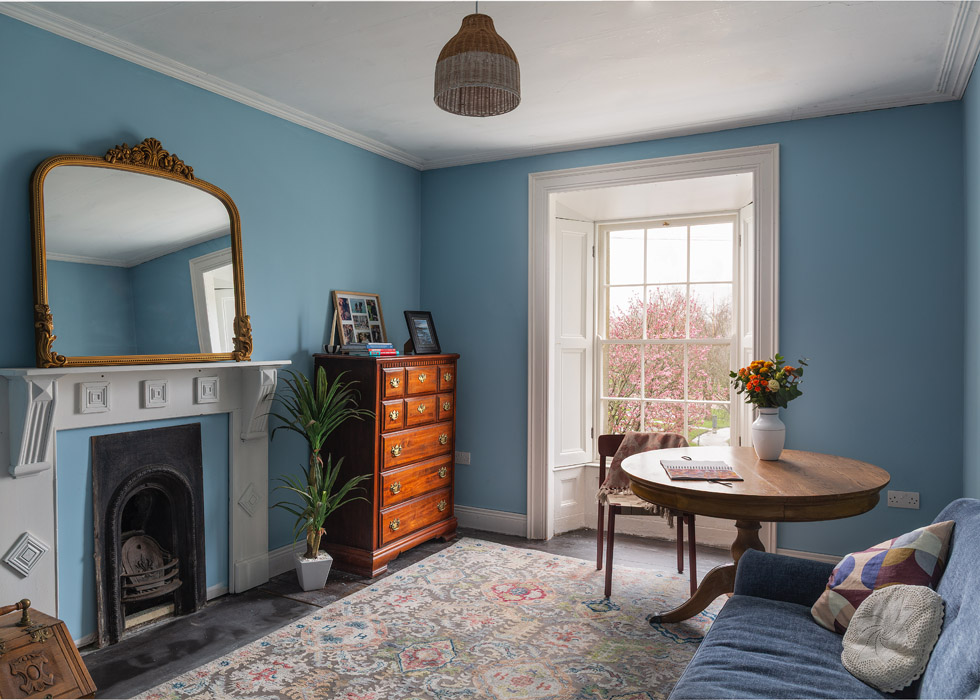
Joan’s bedroom, painted Country Sky, on the first floor, is done. So too is her sitting room, where the family was considering bunking down.
But they are waiting on the plumber to come back and plumb the shower.
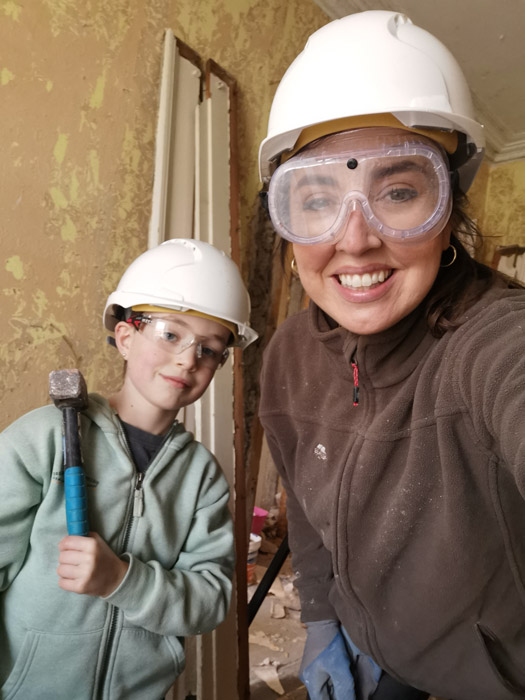
“We were naive,” Aileen says. “But we definitely had more skills than we thought we had.”
Some of the work, especially pulling down the lathe and plaster ceilings of the second floor, was “disgusting”, Arron admits. But they did it.
They estimate they saved between €30,000 and €40,000 by taking the hands-on approach.
All told, they went over their original budget, but thanks to the additional monies from the derelict home grant have come out about even.
The second floor still needs to be done.
This was real-life reality TV, where the house wasn’t finished by the time of the big reveal. This is how most people’s projects go, and it is refreshing to see it reflected on the small screen.
The Great House Revival airs Sundays at 9:30 pm, RTÉ One and RTÉ Player