Rathmullan-based architects Pasparakis Friel have received a prestigious award from the Architectural Association of Ireland for a new house on Cruit Island.
Pics: Peter Molloy
Bounded by the Atlantic on two sides and by Northern Ireland to the east and south, Co. Donegal has always marched to the beat of its own drum.
This is the county that gave us many, many musicians, from Clannad to Enya, Rory Gallagher, and Daniel O’Donnell, as well as writer Frank McGuinness, actor Ray McAnally, and soccer players Shay Given and Packie Bonner.
It was a refuge for those fleeing marching season during the Troubles, and outside of some blow-ins, like portrait and landscape artist Derek Hill, it was, until recently, undiscovered by the rest of Ireland.
Most preferred to seek the sun in Wexford, or bohemia in West Cork and Connemara.
The addition of an airport, one of the most scenic in the world, and COVID changed that.
Food culture is on the up, with a fusion of new thinkers and old traditions leading the charge, enriching every corner of the county. This is talent that had previously been lost to emigration,
The pretty tourist town of Rathmullan was the departure point of the Flight of the Earls, which ended Clan life in Ireland back in 1603.
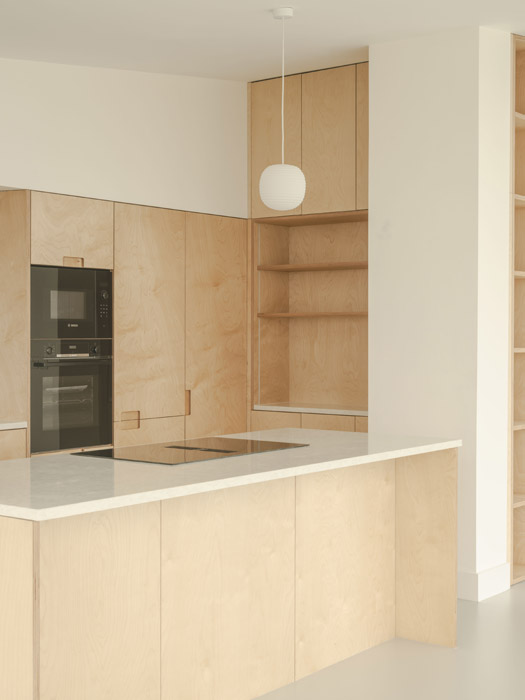
It is also home to Rathmullan House, whose lawns sweep down to the sea and up-and-coming practice, Pasparakis Friel Architects, which recently won an Architectural Association of Ireland award for its work on a house on Cruit Island.
For those that don’t know Cruit (pronounced Critch), it is a spellbinding spot in The Rosses, near Kincasslagh, Daniel O’Donnell country.
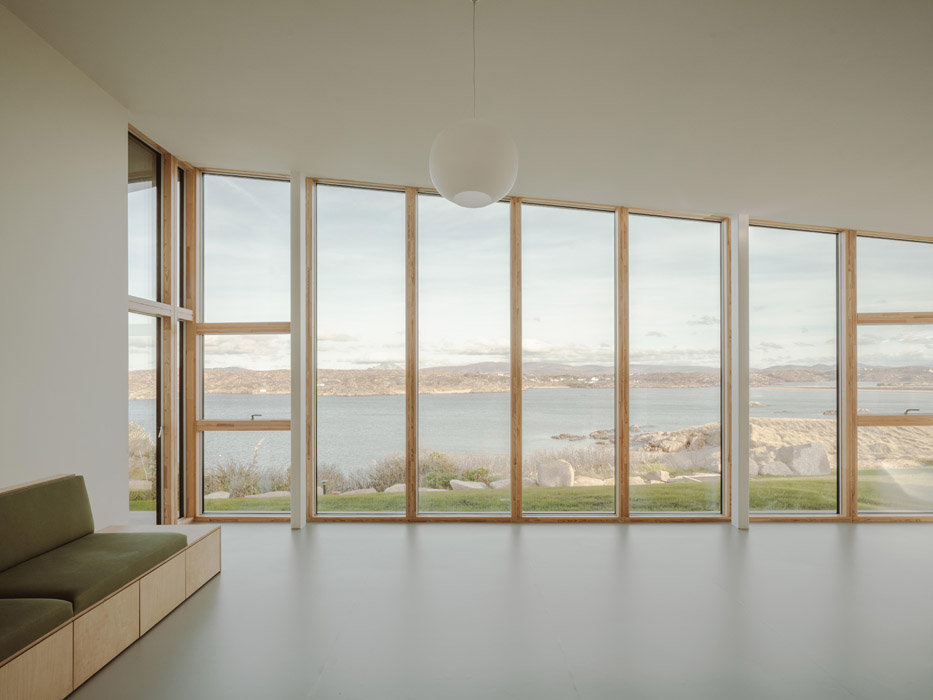
It is connected to the mainland by a small timber bridge, which makes the same kind of rumble as you drive over it, as the bridge to Bull Island in Dublin 3 does, but it is a much smaller affair.
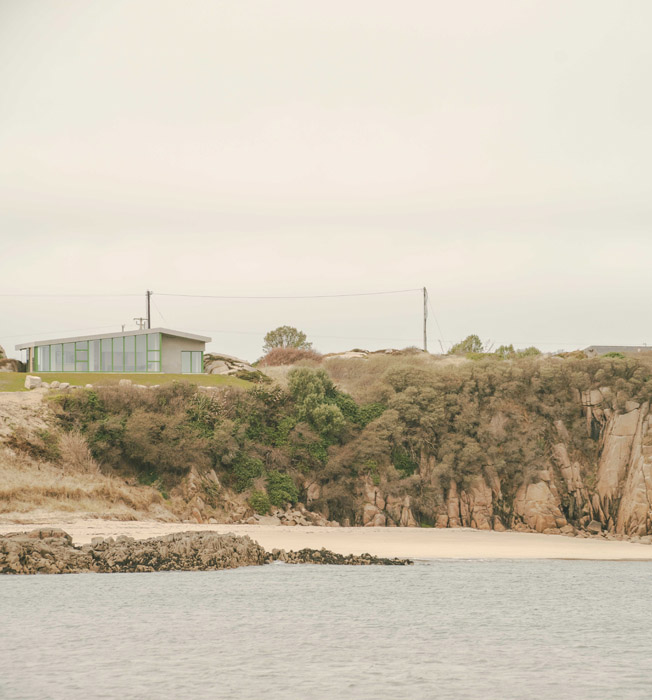
Heather caps the higher ground, and big granite boulders and outcrops form much of the windswept landscape.
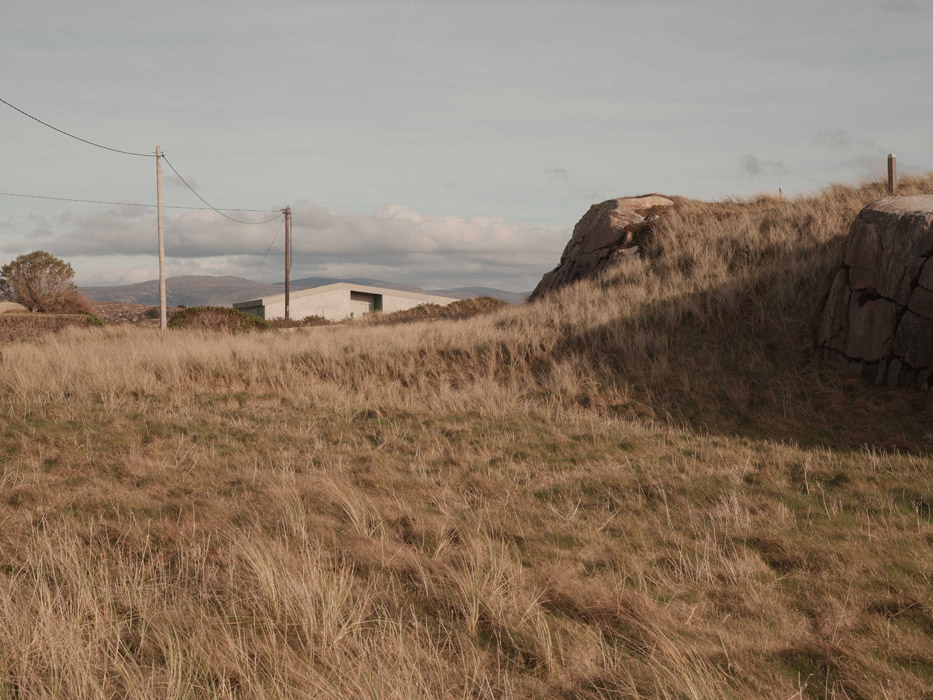
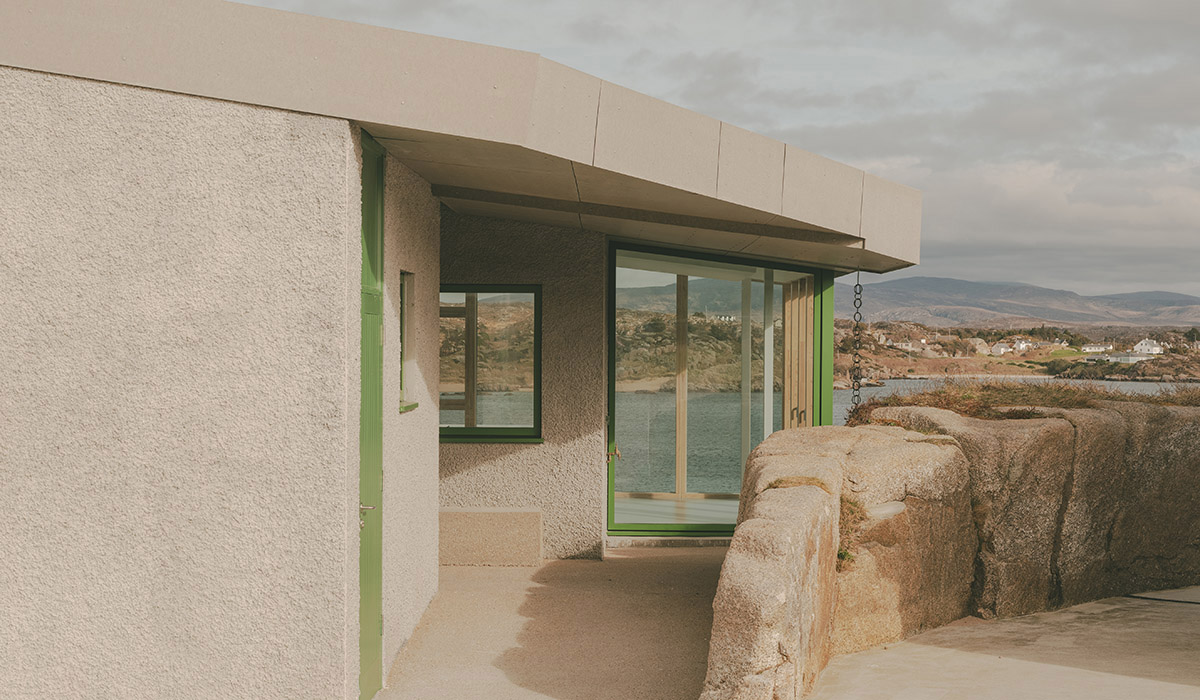
The house has been designed with its surroundings in mind. Its roof planes are extensions of the rock outcrops.
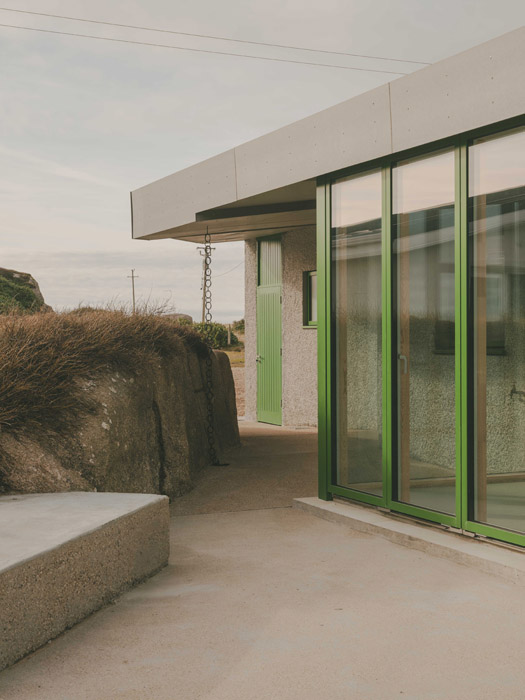
Monotone, muted tones of roughcast rendered walls and corrugated fibre cement roof panels enable the house to integrate quietly into its geologically rich setting, the couple explains in their methodology statement.
Grass green windows and doors evoke the island’s marram grass.
On the western side, which faces the road, mimics the adjacent rocks. This hard face offers privacy and, more importantly, protection from the more exposed side of the island. The wind blows hard around these parts.
A fully glazed facade overlooks the bay to the east. From the crescent of beach below, it sits down into its site.
The living spaces are in the heart of the house and are planned as a social hub for the multiple generations of the family to gather together.
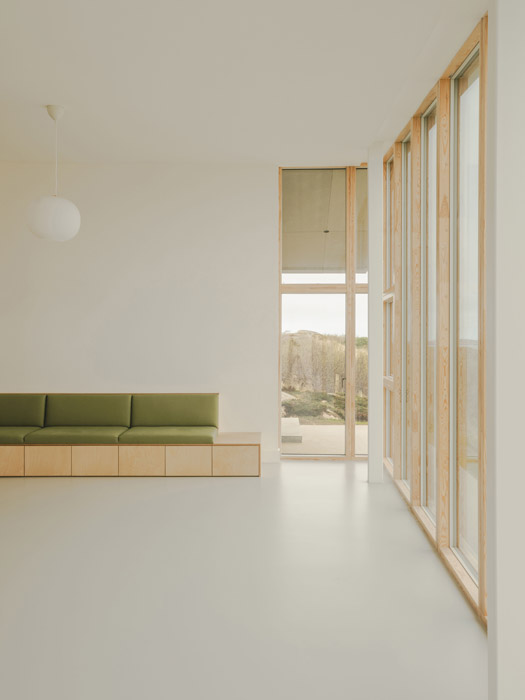
The house is as hardwearing as the surrounding landscape, inviting bare sandy feet and large post-beach day family gatherings.
Bedrooms are wrapped around this.
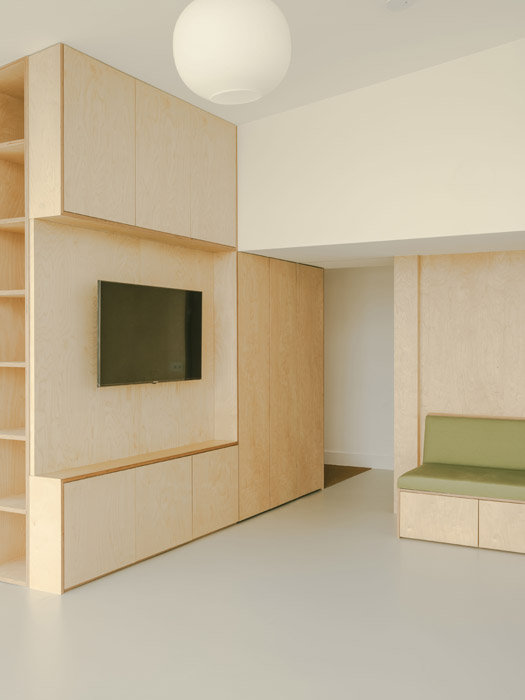
The RIAI has highly commended several other projects by the practice, including the Killybegs regeneration strategy and Saltpans Cottage.
For the latter, they approached the design of the existing cottage as that of a museum piece, restoring it to its original character.
The contemporary form and materiality of the extension contrast with the historic structures, and in doing so, facilitate what they describe on their website as "a simple chronological reading of the collective".
There were five AAI awards given this year.
The other notable practices in residential were New Wave House by rising London-based talent, Thomas McBrien Architects, and Suburban Family House in Co. Tipperary by Dublin-based T O B Architect.
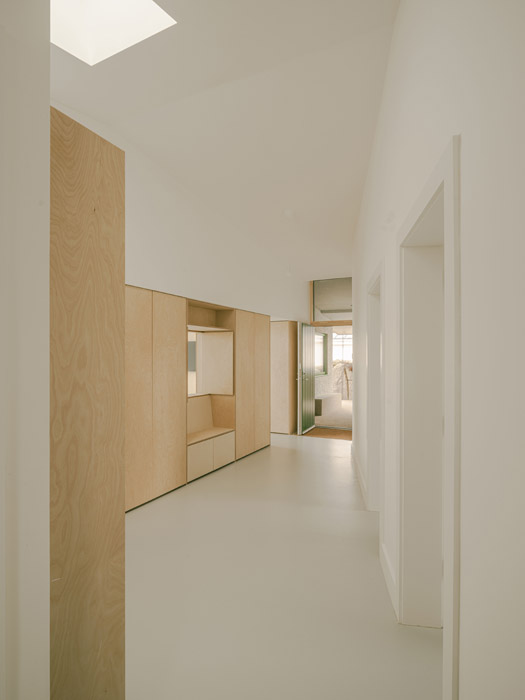
Bog Bothy, a partnership between 12th Field and the Irish Architecture Foundation, wasn't a building in the conventional sense.
The idea was to create a place to pause, meet, listen, and rethink the relationship we have with our peatlands, landscapes that have shaped lives for generations and are now at the centre of urgent ecological change.
Bucholz McEvoy Architects received an award for its Civic Workspace in the Ravine Woodland.
This practice also did the entrance pavilion at Leinster House.
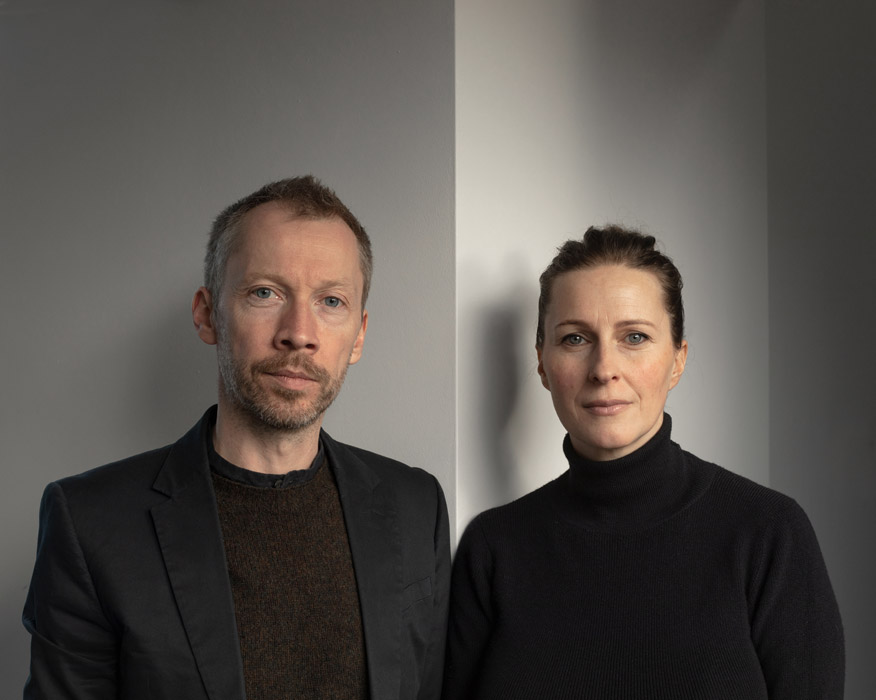
There were also some special mentions. Two went to Reir for its residential work on Bellevue Heights and on Scoil Mhuire in Borrisokane, Co. Tipperary.
Gottstein Architects was called out for Reimagining Logistics Architecture, while Bernard Seymour Landscape Architects was mentioned for its very fine work on the convivial planting and seatingscapes on Dublin 1’s Capel Street.
For more, visit Pasparakis Friel and the Architectural Association of Ireland.