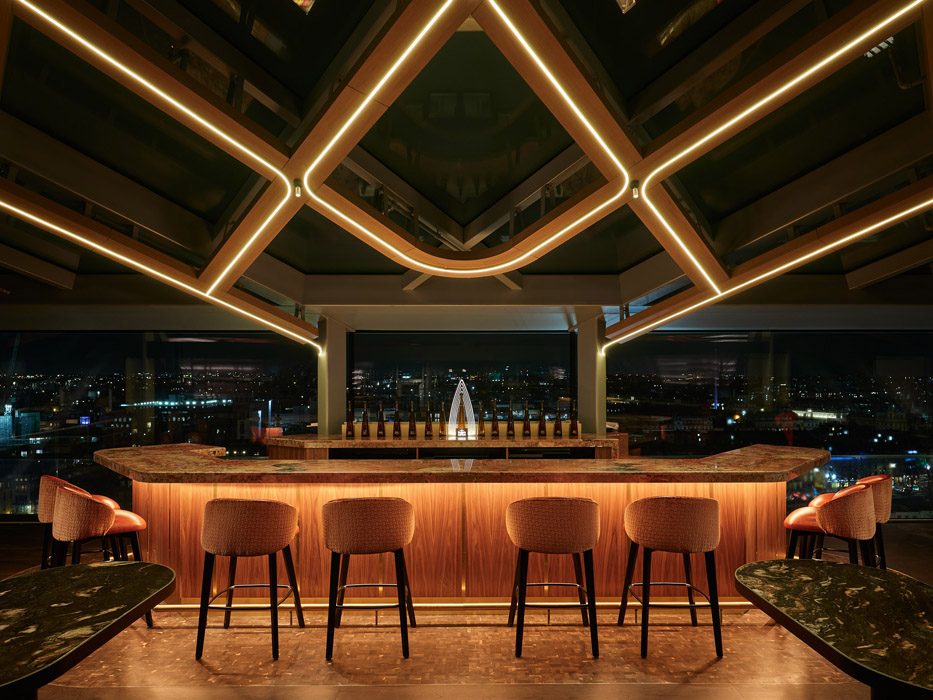
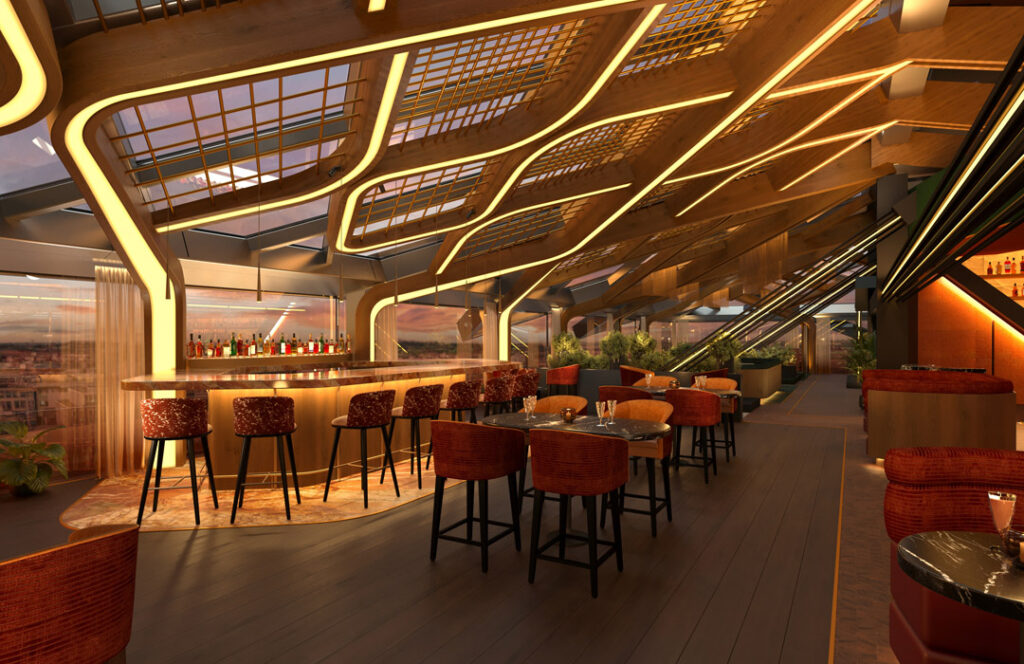
A place to pose, hang out, see, and be seen, Dion is the place to spend the golden hour and beyond, offering sights to behold, from its 360-degree diamond roof vista.
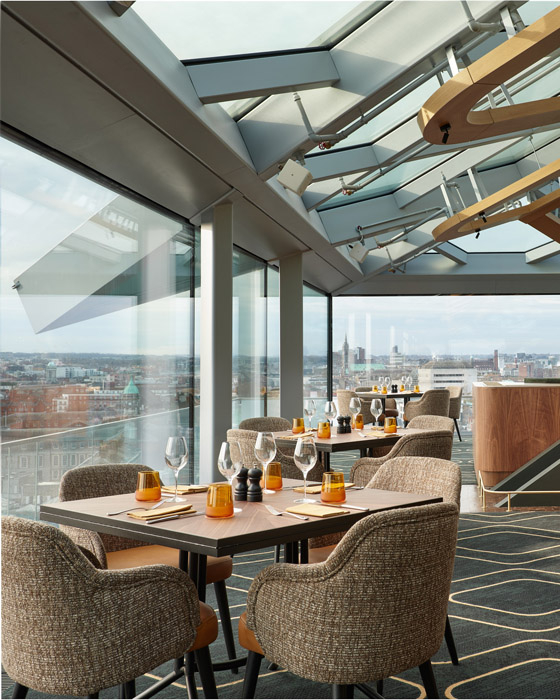
Overlooking Dublin’s quays, its Georgian heart, with sightlines all the way west down the river to the Wellington Monument in the Phoenix Park, Dion, the city’s newest place to people watch, is a sight to behold.
It looks like an alien spaceship landed atop architect Sam Stephenson’s brutalist building and took up residence there.
And in a way it has. In collaboration with architects Henty J Lyons, Pure Fitout and concept designers ICrave, a journey studio in New York, the space has been repurposed and reimagined.
The storied property, designed by architect Sam Stephenson and once home to the Central Bank, commands a whole plaza on Dame Street.
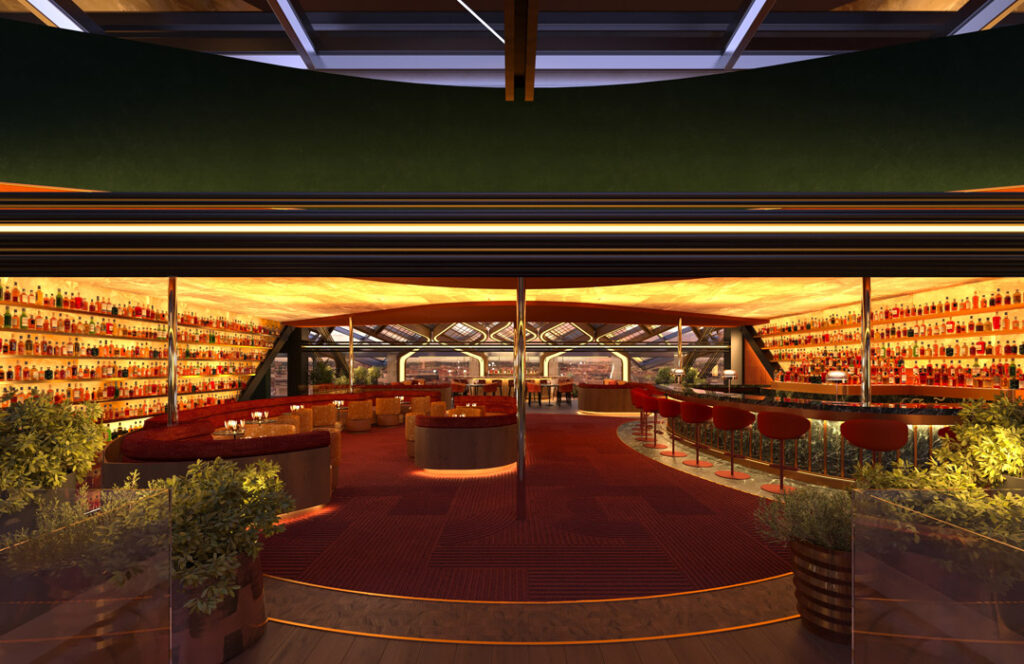
It is now home to Dion, a series of bars and a restaurant that turns the practice of sundowning, having a cocktail to mark the end of the day, at the time of sunset, into a catwalk.
Banking halls have become dining halls.
You enter the building on the lower ground floor, where the host will greet you from behind a custom-built desk topped with a slab of Connemara marble.
Eileen Gray’s Bibendum chairs line the womb-like red space, its walls upholstered in sound-dampening textured paper.
From here, the lifts beam you up to the building’s 9th floor.
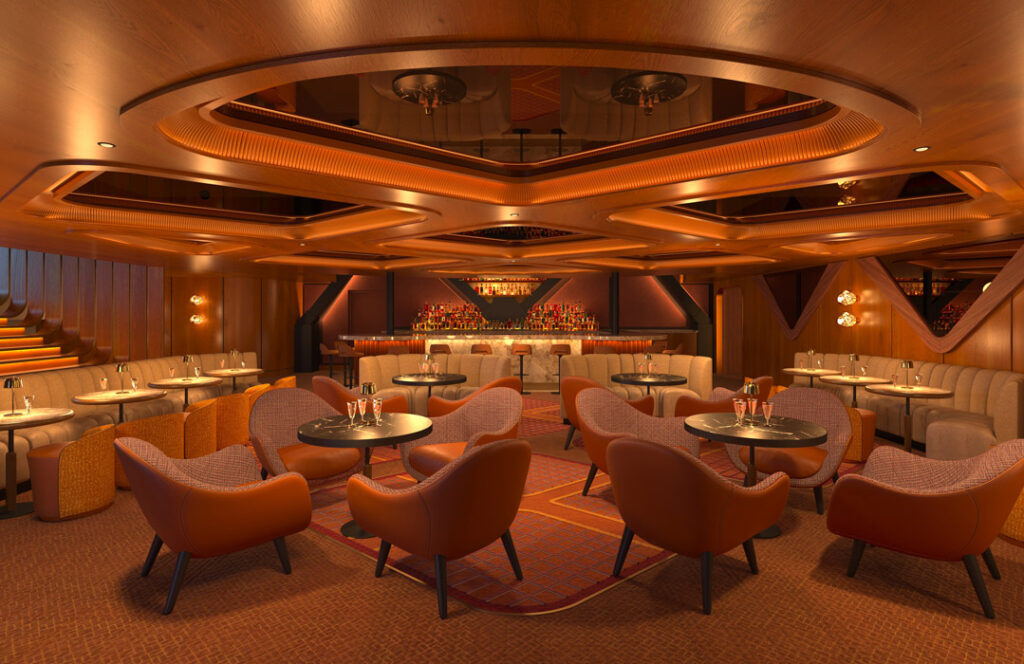
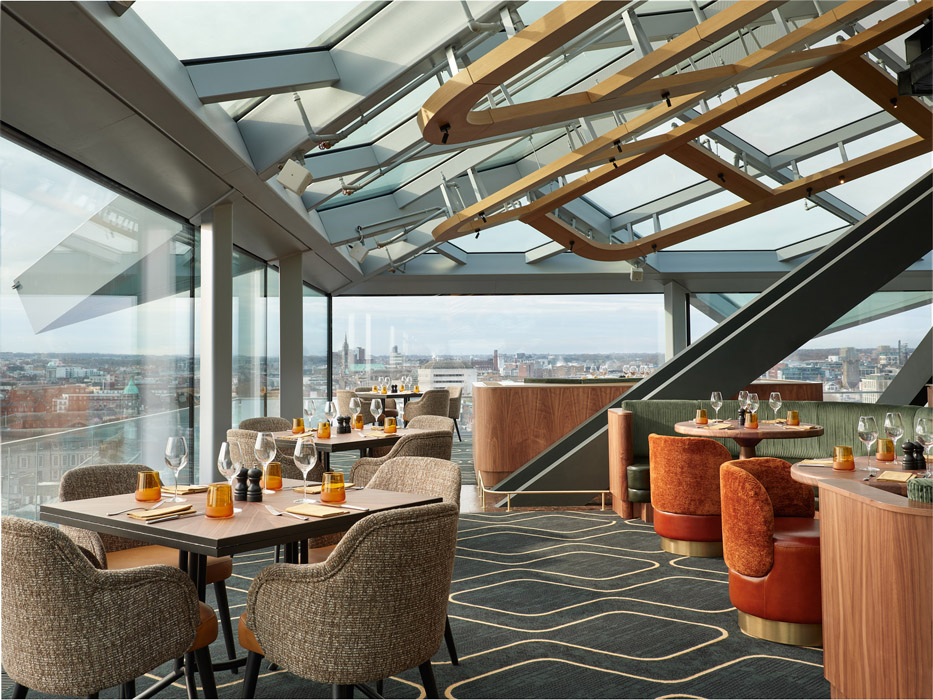
The rooftop space spans the property’s 9th and 10th floors and is bedecked in a sunset red and green accented colour palette, all enrobed in rich walnut walls and undulating stairs.
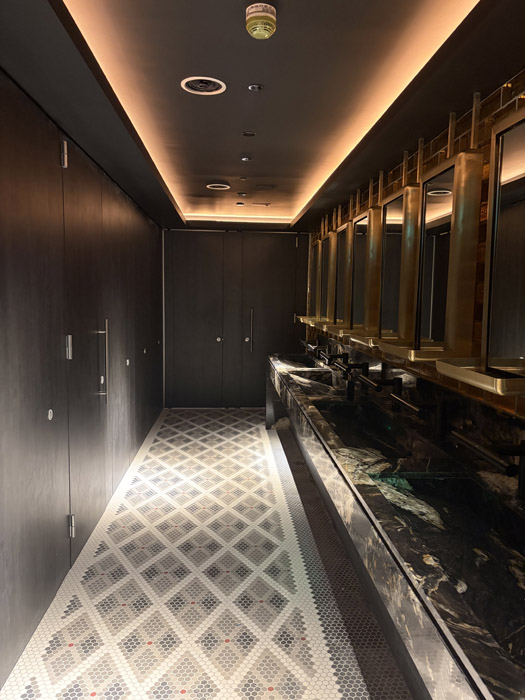
Expect to overhear the juiciest gossip in the bathrooms where an amber glass block wall divides na mná from na fir, although you can see shadows of people crossing the spaces.
Richly veined marble sinks face the stalls. The lighting is deliberately low. Expect to see lots of shots of this in your social feeds over the next while.
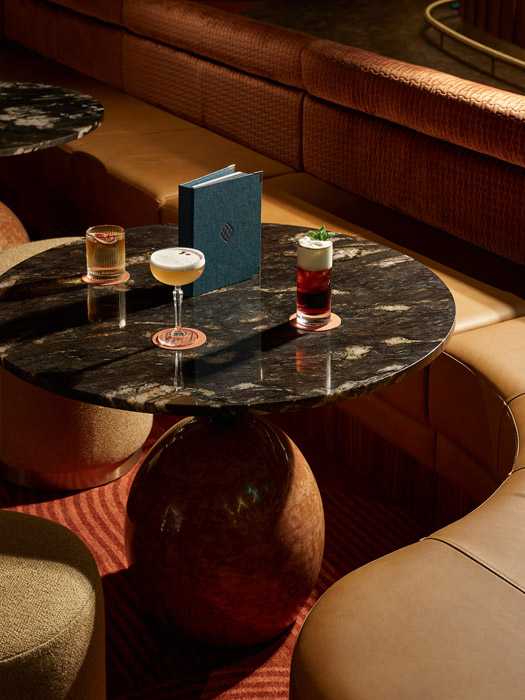
The 9th floor is a bar with deep-pile Winton carpets and marble-topped counters.
But it is only when you ascend the 10 steps that you really get to see what all the fuss is about.
This is where the outdoor terrace crowns the building. This is where you can walk around the building and survey the sights.
To the east, you can see the Ringsend Towers, Liberty Hall, and Trinity College, which looks like a set – in fact, you can see over Trinity College and into Front Square.
You can see Cleary’s and the towers being built by Stephenson.
On the north side, you can see the Spire, Temple Bar, which looks like Toytown, and all the way down the Liffey to the Wellington Monument in the Phoenix Park.
After dark at rush hour, the red taillights of traffic snaking along the river as far as the eye can see.
Dublin Castle, City Hall, and the spires of Christchurch and St Patrick’s can be picked out on the western front.
So too are Stephenson’s civic offices for Dublin City Council on Wood Quay, denounced by many as "the bunker".
“Dion was an opportunity to reimagine a Dublin landmark from the ground up, blending the building’s rich 1970s heritage with a modern, warm, and inviting experience,” says Eva Williams, design director at Henry J Lyons, a practice that also did the Montenotte Woodland Suites, in Cork and Google Flour Mills, Bolands Mills and Pembroke Glass Bottle apartments in Irishtown to name just a few projects.
It’s work on the Central Plaza, the name for the entire building, was shortlisted for the World Architecture Awards in 2023.
Originally constructed in 1972 using then innovative “top-down” methods by Stephenson, the building features a distinctive structure supported by two central columns and a series of external Macalloy steel bars encased in metalwork.
These are still proudly on view.
Another seven steps take you to the top of the house.
Here, the bar has a leather finish to its green marble countertop.
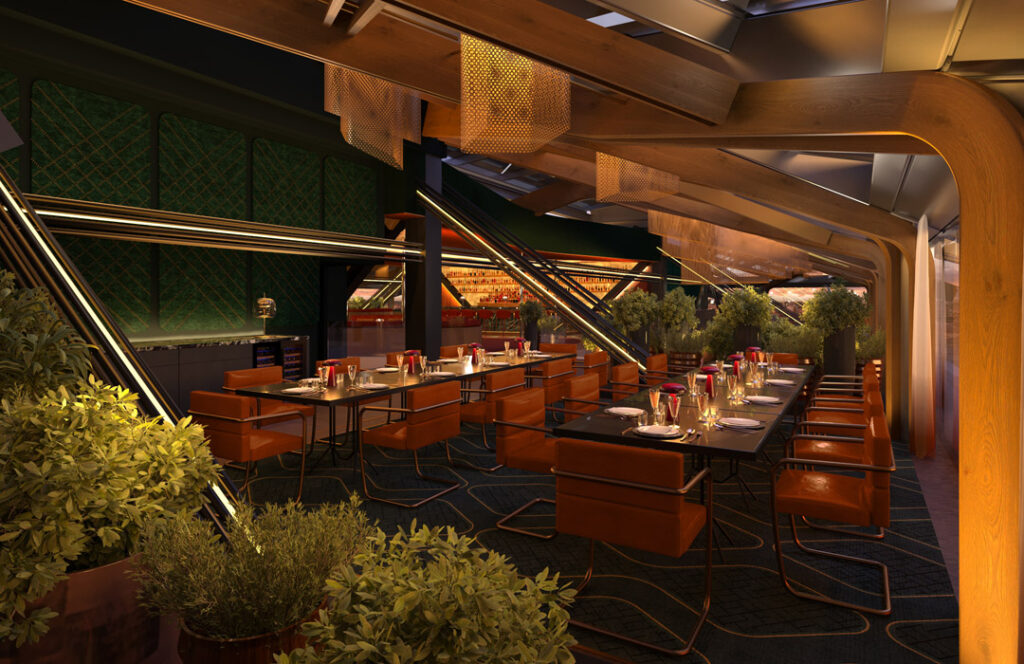
There are semi-private dining spaces in the north-east corner, secluded but not utterly removed from the action.
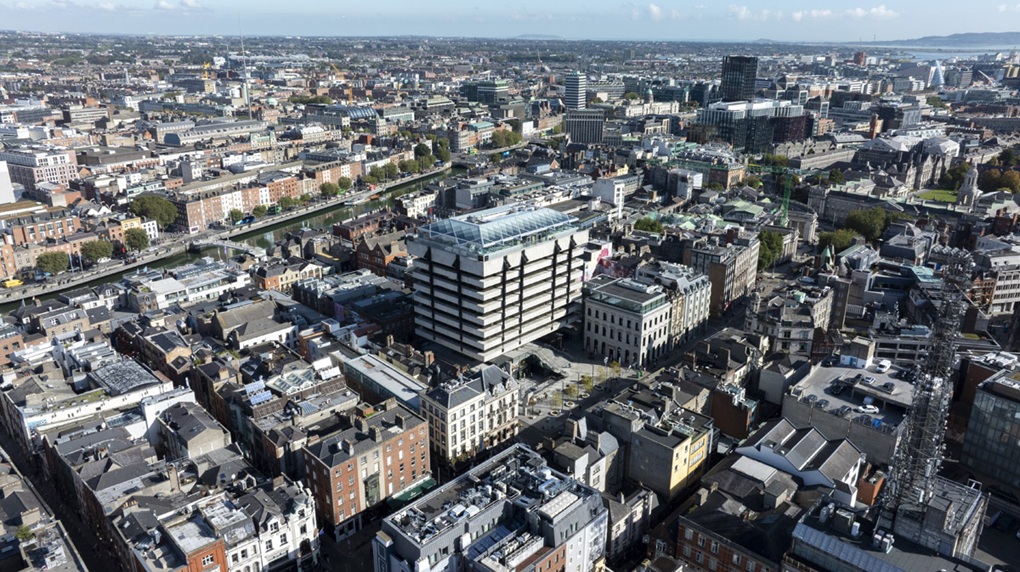
The golden hour bar is due north and the place to watch the sun go down. If dining with a group of eight or more, ask for table number one, which occupies the northwest corner and is the best seat in the house, boasting the most compelling view.
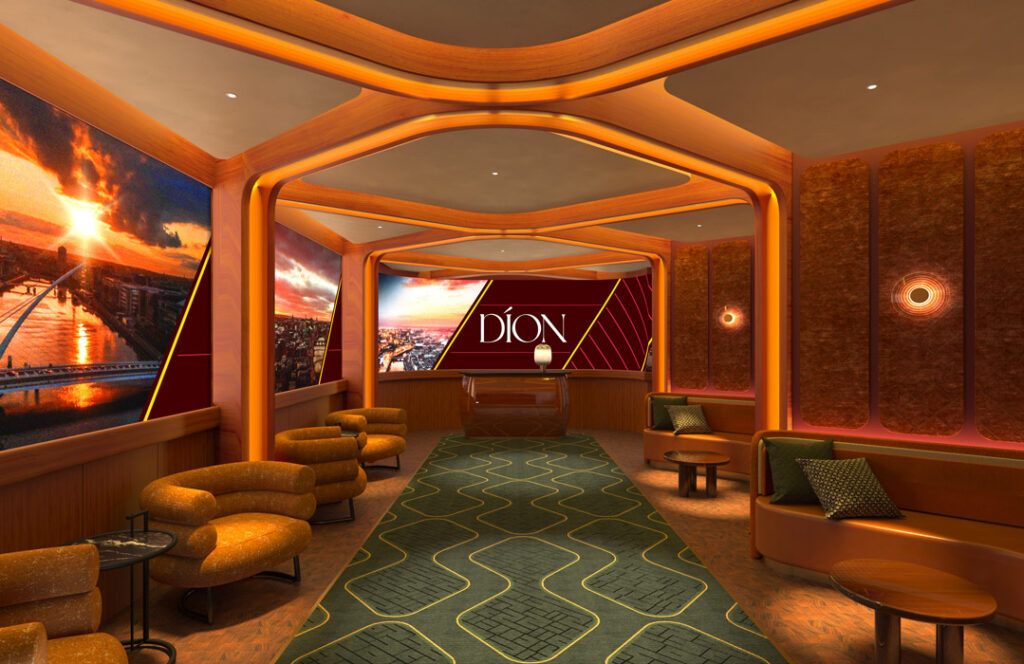
The volume of Dion has been etched out above in LED strip lighting, all in flatteringly warm shades that are designed to make everyone look good.
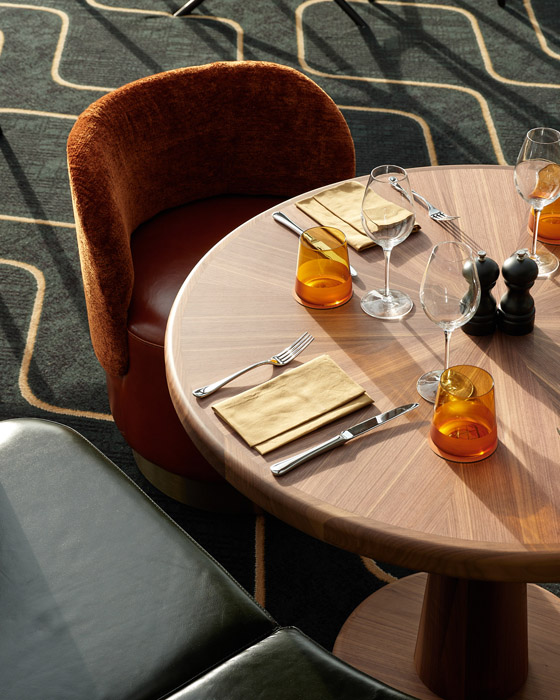
There are nods to the 1970s and to Art Deco in the walnut wood, a decorative feature used throughout.
A less obvious feature is the diamond-shaped pattern in the glass roof above.
The design team describes it as “diamonds in the city”.
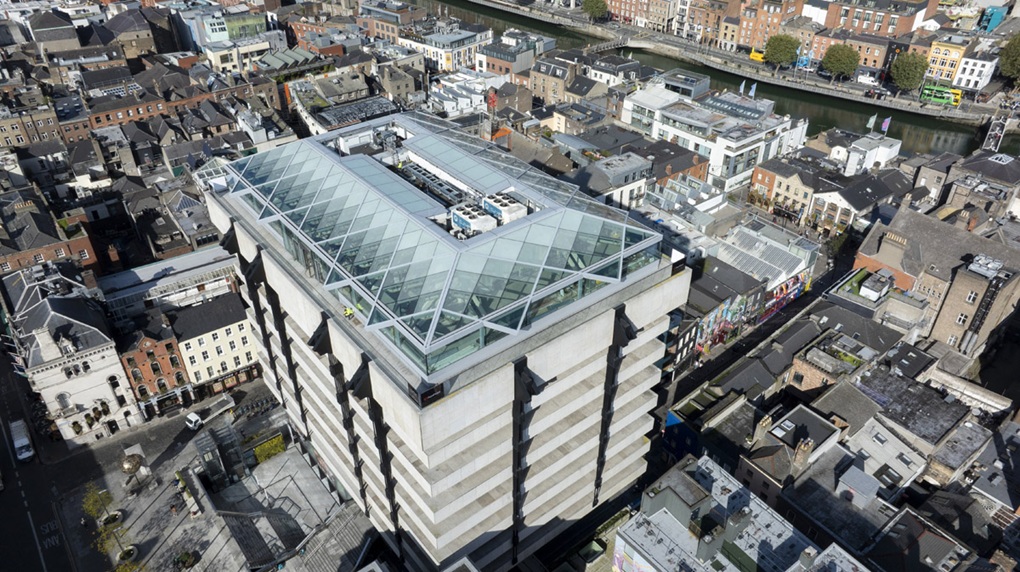
And while the space isn’t quite finished, what it offers is already a gem – a place to come, see and be seen.
We all need more talking point places to hang out and strike a pose.
What would Sam Stephenson make of it all? He had a keen interest in interiors.
You can read more about one of his late residential properties that recently came up for sale here.