Thirty kilometres north of Dublin city centre is a pirate’s cove that was beleaguered by Jack the Bachelor in the 18th century.
Today, it’s a place a family could drop anchor and explore this four-bedroom detached bungalow seeking €645k.
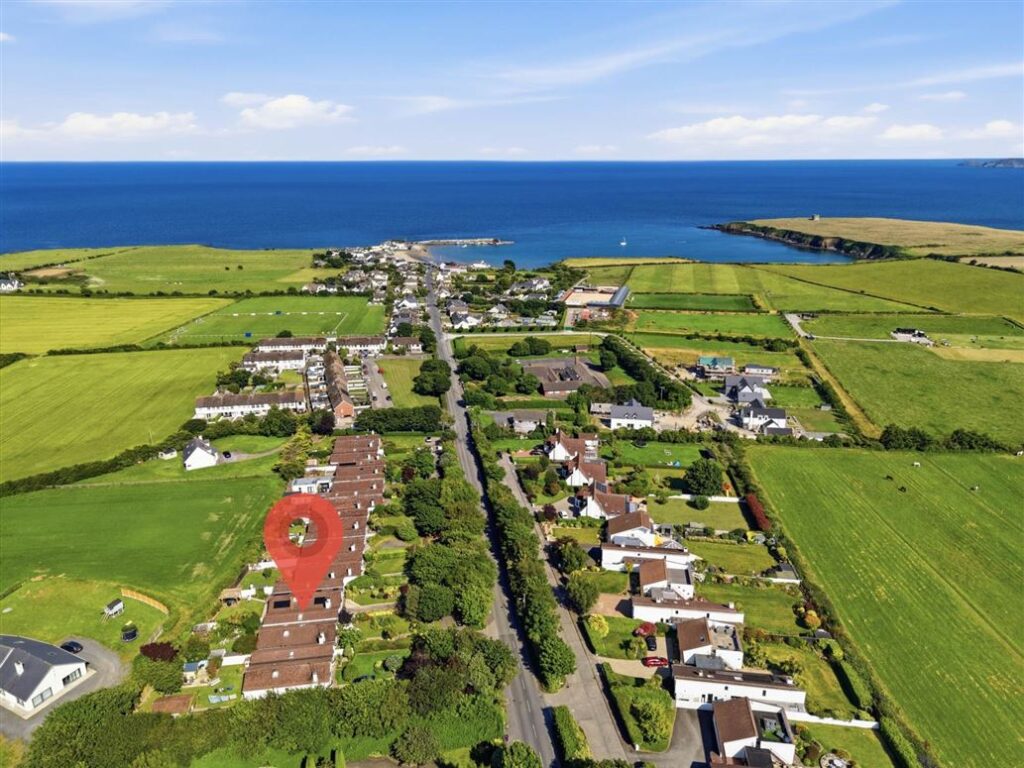
With a population of about 800 people, Loughshinny is one of the last true coastal villages of County Dublin.
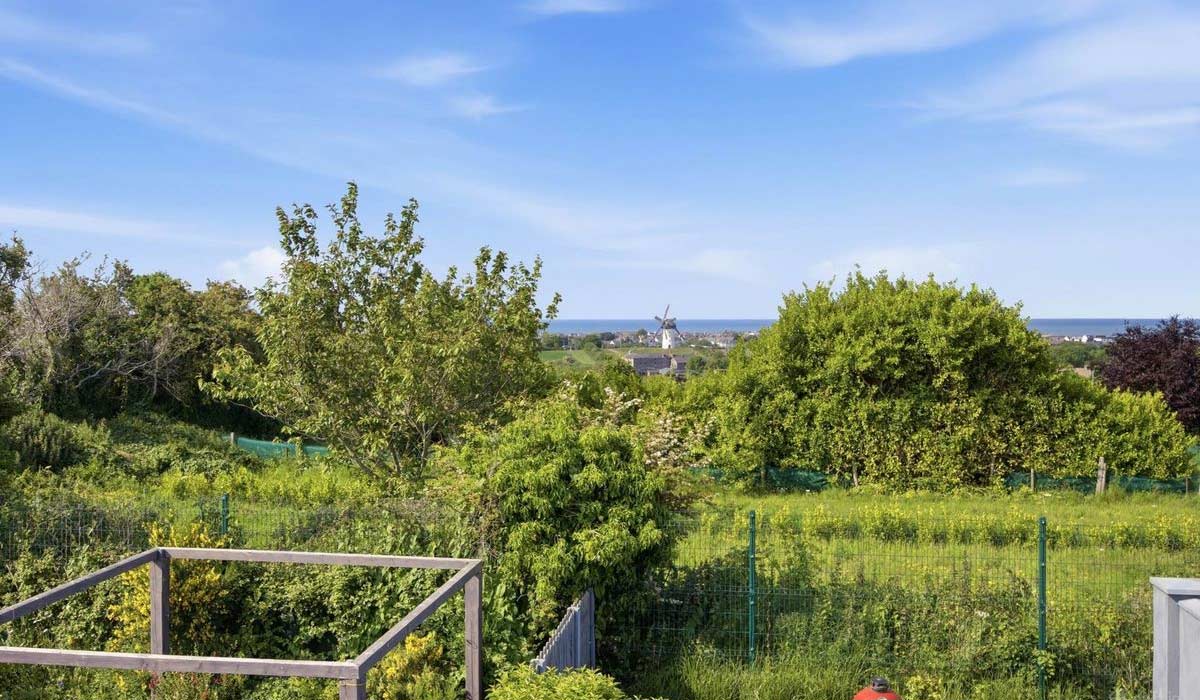
Situated between Skerries and Rush, it has a crescent-shaped strand and an active fishing harbour where you can ask the boatmen what their catch of the day is. It’s a place where dog walkers amble along the strand, horse riders take their mounts for a cooling dip at high tide on these hot summer evenings, and a family looking for space to grow could drop anchor.
Address: 3 Seacourt, Loughshinny, Skerries, County Dublin, K34 YY42
Asking price: €645,000
Agent: Flynn & Associates, Swords
It’s also a place with a past that dates to the Iron Age. Drumanagh Head is home to one of the most significant Iron Age sites in Ireland. A more recent addition is its Martello tower, one of 12 built in 1805 at twelve strategic points along the coast of Fingal to defend against a Napoleonic invasion.
During that same period of history, the British had to contend with another threat of encroachment, for these were pirate-infested waters. From the watch towers, they peered through spyglasses to try to catch a very different Captain Jack than the Johnny Depp character in the Pirates of the Caribbean film franchise, fictitiously located some 3,650 nautical miles to the southwest.
Jack O’Connor, nicknamed Jack the Bachelor, was a scourge to Ireland’s seafaring overlords and not even a single man, as it turned out. He had five children and amassed a fortune by smuggling alcohol, tea, tobacco, and lace, all of which he stashed in what was known locally as The Smuggler’s Cave.
The most famous of the local buccaneers made his name in the Americas. During the American Revolutionary War, the privateer Luke Ryan, from nearby Rush, commanded privateers—most notably the Black Prince – which he operated under a letter of marque authorised by one Benjamin Franklin, a founding father of the U.S.
Loughshinny still bears witness to that period of its history. Along the cliff face just north of the harbour is O’Connor’s cavern, a place where stolen cargo was stored by many smugglers in the 18th and 19th centuries. Just south of the harbour is a smaller unnamed sister cave that leads into the cliff face that may have had the same use.
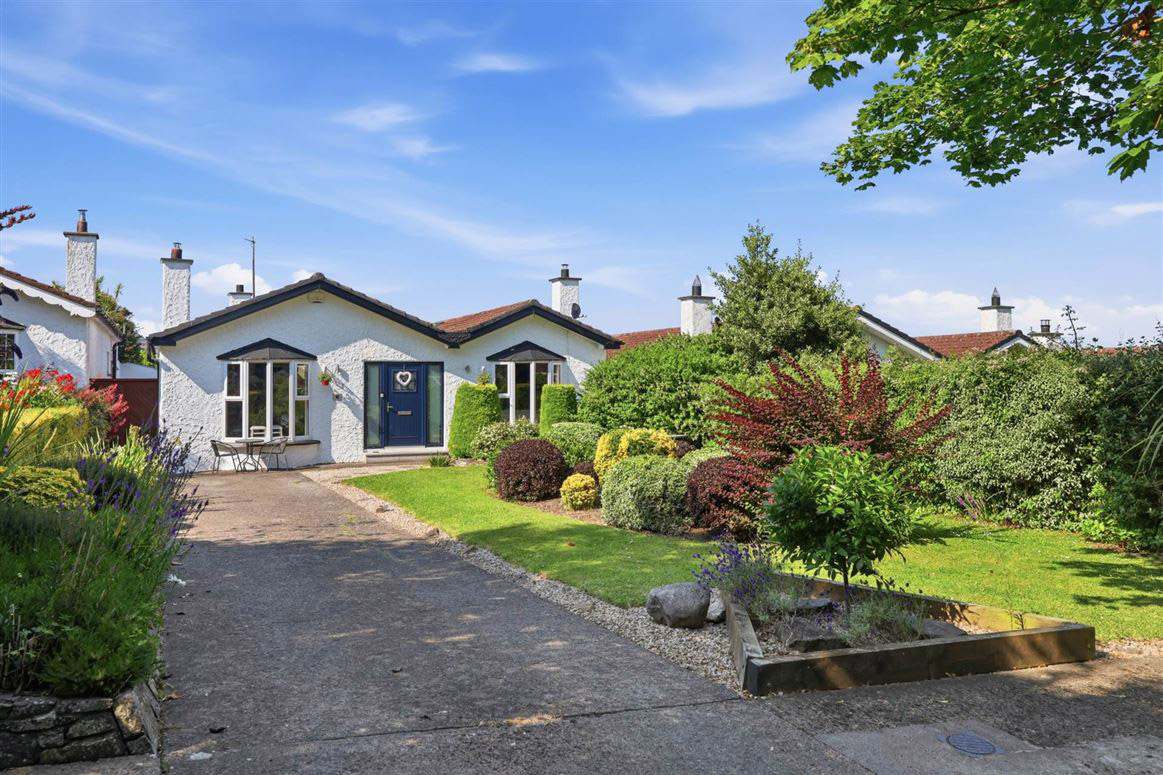
About a seven-minute walk from the sea is a striking double-fronted four-bedroom bungalow where a salty dog and its brood could come ashore.
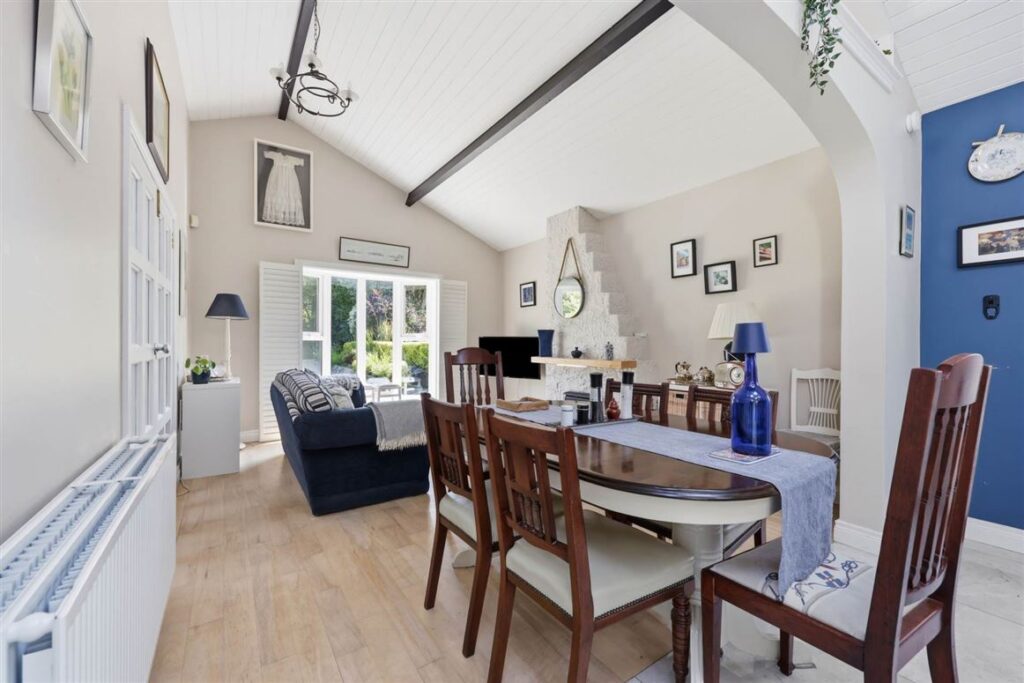
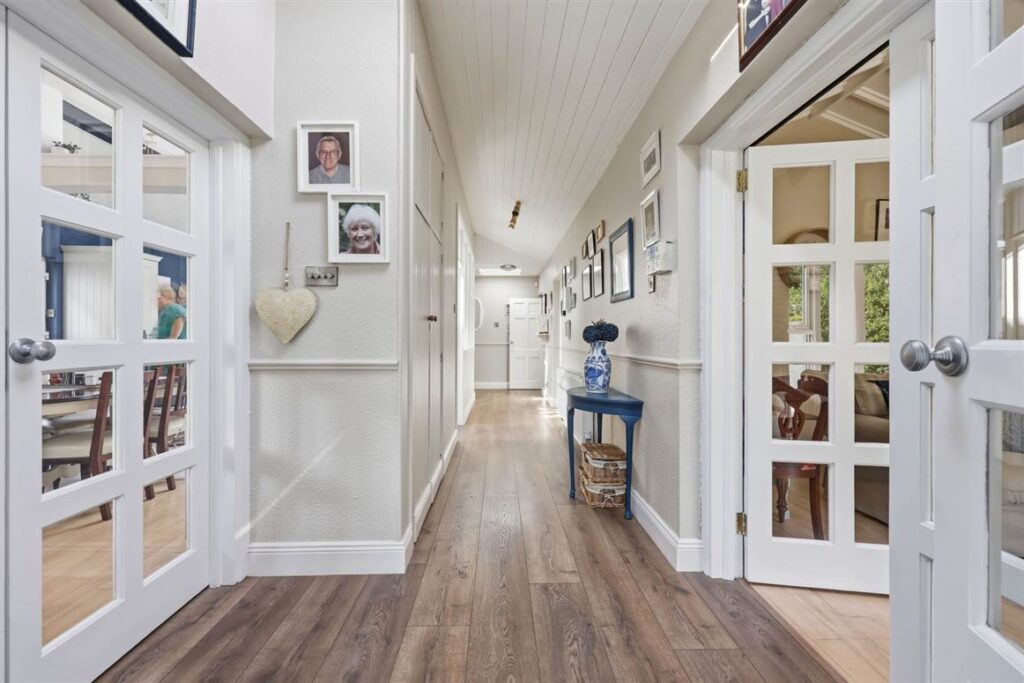
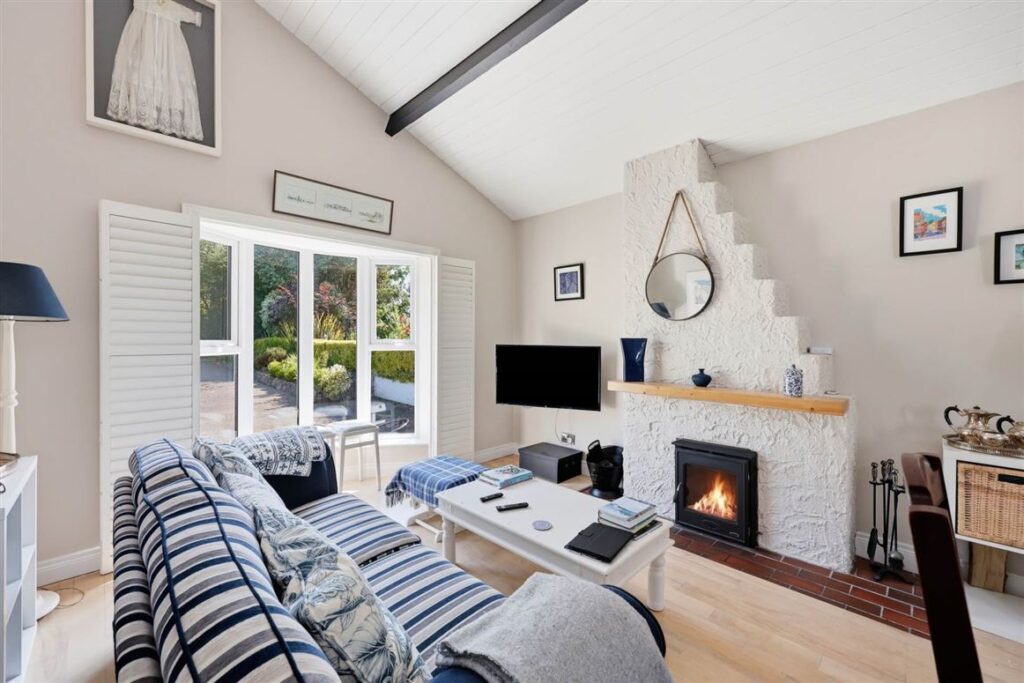
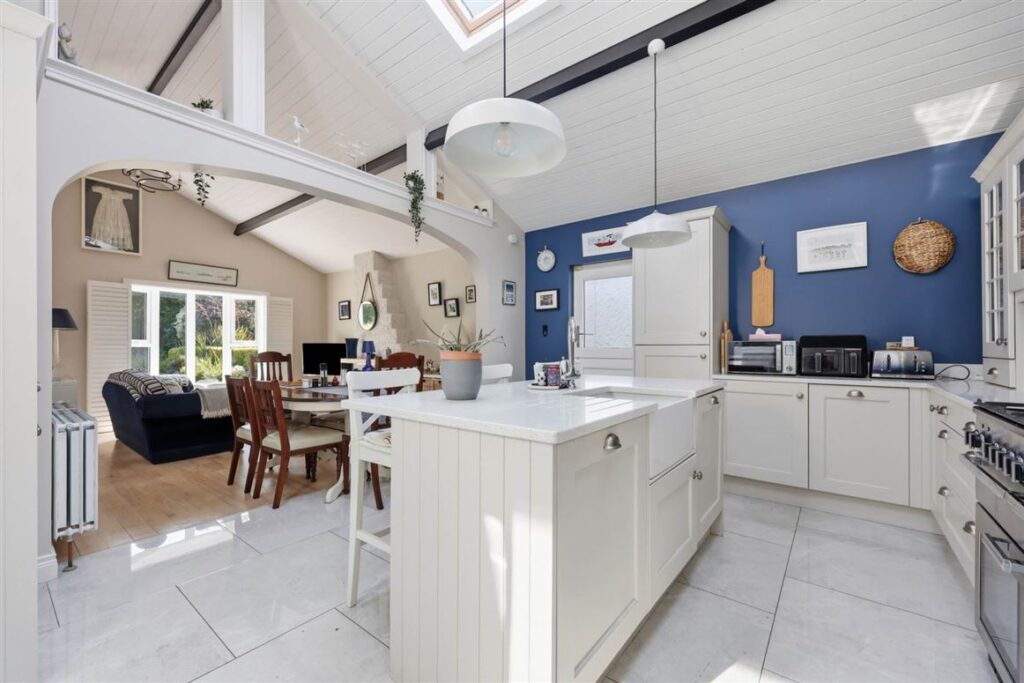
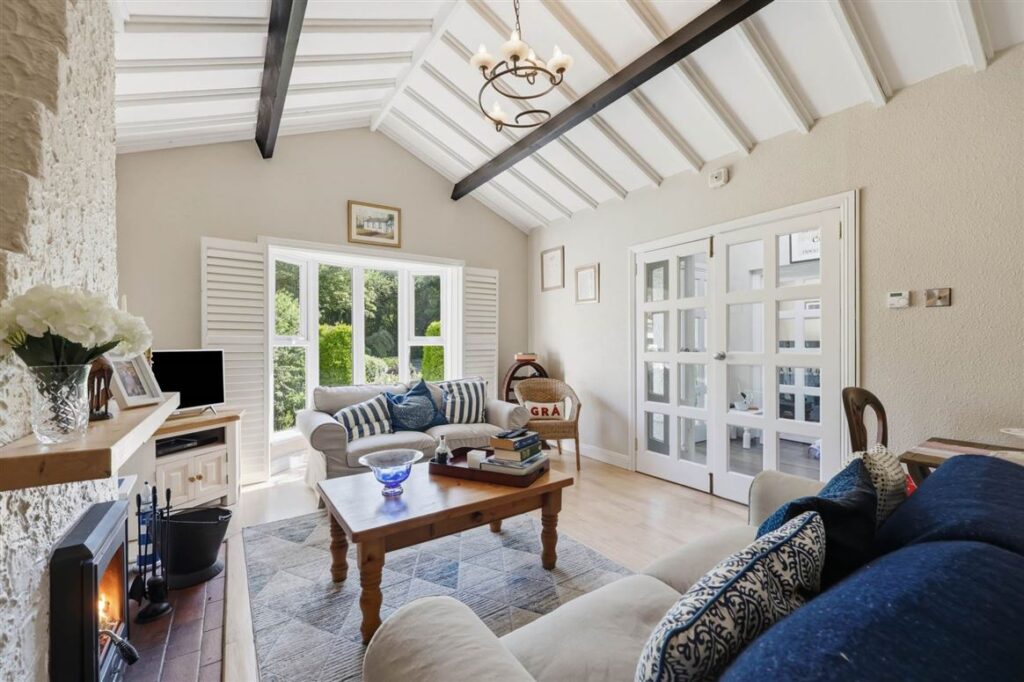
The double-bay-fronted property was built in 1979 and extends to 144 square metres. It opens into a roomy hall with a smart open-plan kitchen cum dining cum family room that is well-zoned. Vaulted and beamed ceilings overhead add height and personality. A nautical striped sofa faces a wood-burning stove in the family area.
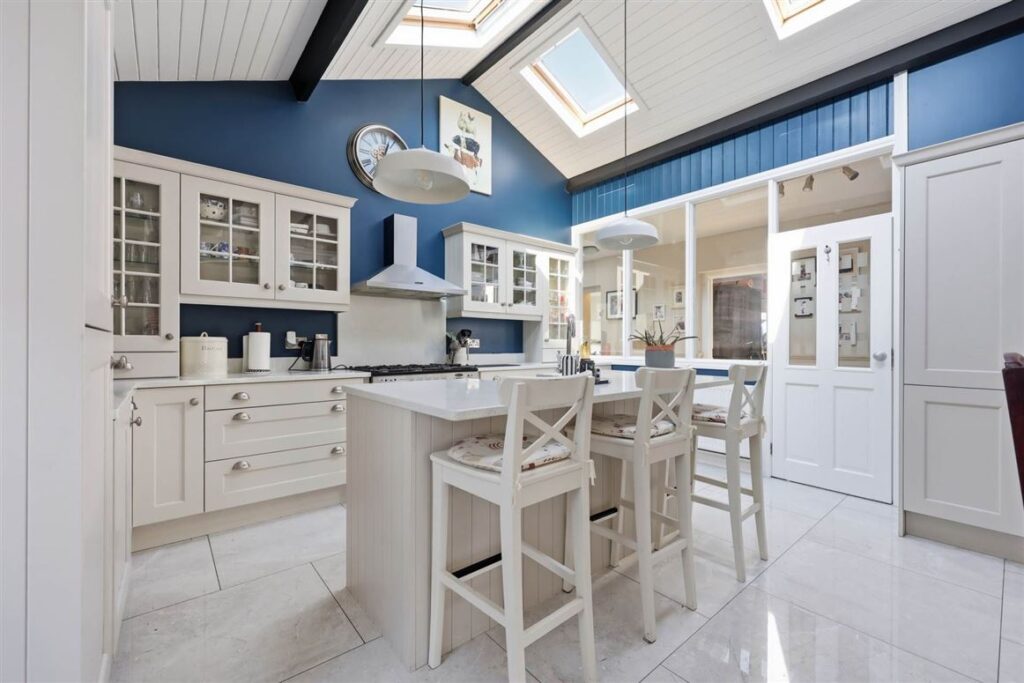
The kitchen is bedecked in traditional maritime colours; its walls are painted blue, and the cabinetry is white. A Belfast-style sink sits atop the clinker-like panelled island.
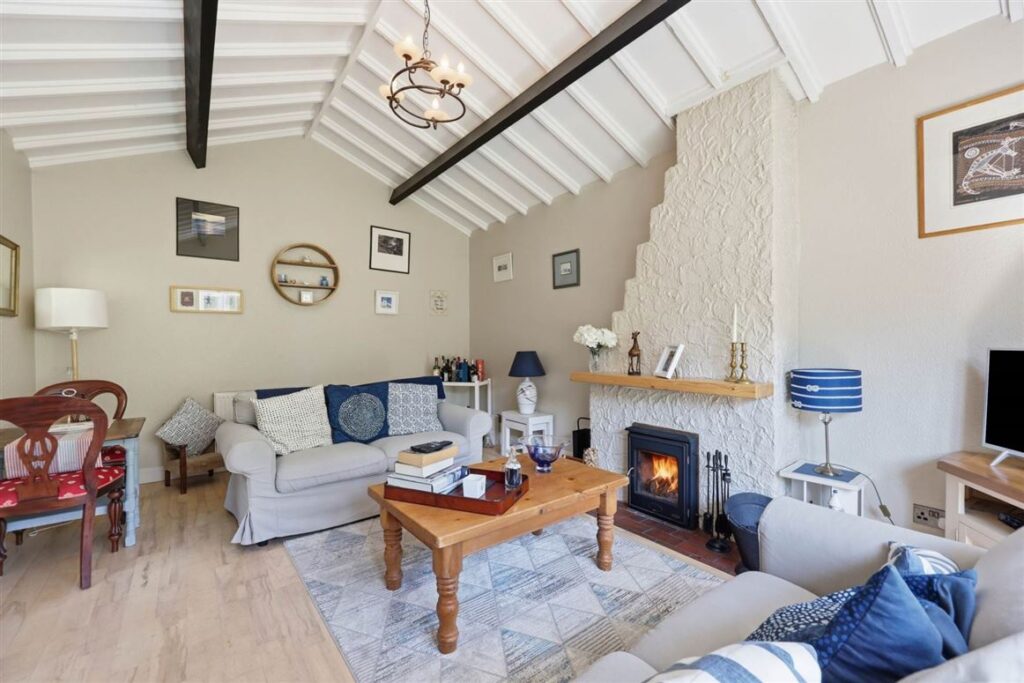
Across the hall is a lounge that enjoys the same lofty ceiling heights and whose sofas are arranged around a wood-burning stove.
A country-style farmhouse half-door opens out to the back garden, which is north-facing but is big enough to get sun.
The house has four generously proportioned bedrooms, three spacious doubles and a large single, which is currently used as a home office.
The principal bedroom is en suite and has French doors opening out to the garden.
A thatched private residence on the main street is a village landmark. There is also a national school.
Bare Acre Farm is a local farm shop that sells weekly vegetable boxes, fresh bread and eggs, along with great coffee and other baked goods and preserves.
Agents Flynn & Associates, Swords, is seeking €645,000 for the C1 BER-rated residence, which has off-street parking at the front.