Aisling Healy of O’Donnell O’Neill serves up a slice of posh country life at five-star resort Mount Juliet, where the comforts have to be experienced to understand the nuanced difference. Here's a first look.
Barry English, who acquired the Mount Juliet resort in Thomastown in Co Kilkenny in late 2024 for around €50 million, has been on a spending spree, splashing a cool €8 million on upgrading the Georgian mansion.
Having been a home to the Butler and later McCalmont families, he wanted to retain its period good looks and its history as a family home, interior designer Aisling Healy, a director at O’Donnell O’Neill, explains.
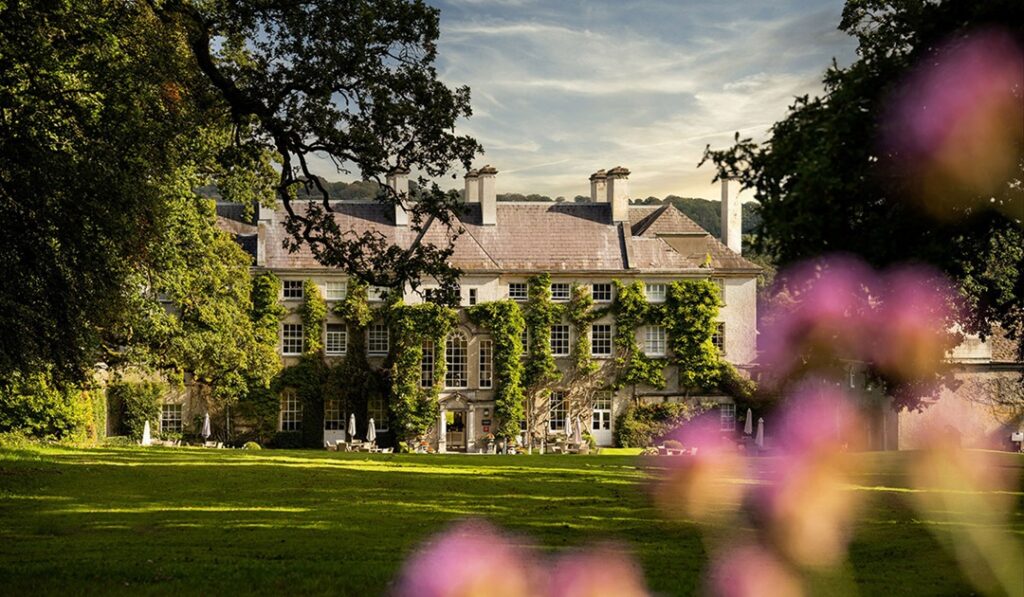
“Part of the brief was to explore how they lived and welcomed guests,” she explains.
“He and his wife, Catherine, wanted to bring it back to life as an Irish country manor house. Home comforts needed to be brought back in.”
The design firm delivered the sleek interiors of the Dean Hotel Group, from the Dean, on Dublin’s Harcourt Street, to its baby brother, the boutique Devlin in Ranelagh, complete with a micro cinema in its basement.
The company’s hospitality flexes include the colour-saturated textured spaces of The Leinster, housed in the former nightclub Howl at the Moon, on Mount Street Lower.
It also worked on The Mayson on North Wall Quay and The Marlon on Bow Lane East, all in Dublin, and on Glasson Lake House.
They didn’t want it to look like a generic hotel, she says. Luxury was the byword, but there needed to be a balance between aesthetics and function.
"A lot of the fabrics and finishes are the type you’d put in your own home."
Only in this instance, contract grades have been used.
“Guests at this level want to stay in a house with history, which is nicer than their own home. The modern traveller expects there to be a lighting strategy that will flatter and is easy to use, and that the tech in the room is not overly complicated.”
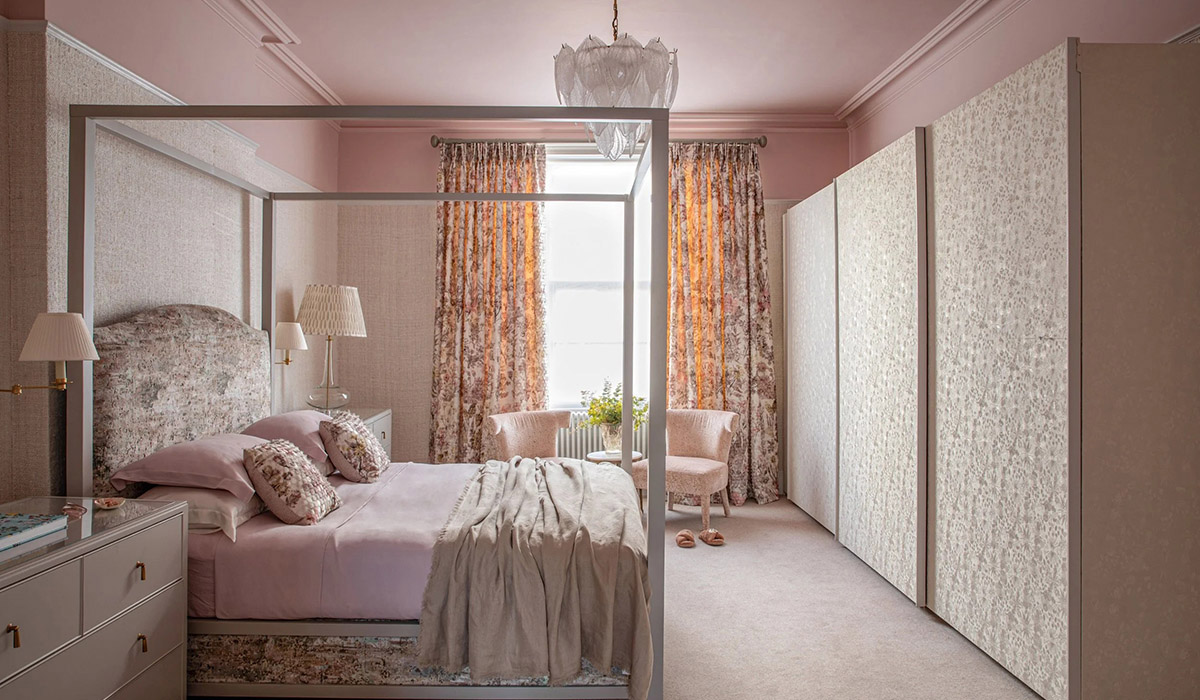
You can close and open the curtains from bed with the simple push of a button. The Fabulous Fabric Company made the curtains while Somfy supplied the motorised rails.
They were designed to deliver a complete blackout.
“All the floors were off, so there was a lot of adjusting to the drops, so there was no light leakage.”
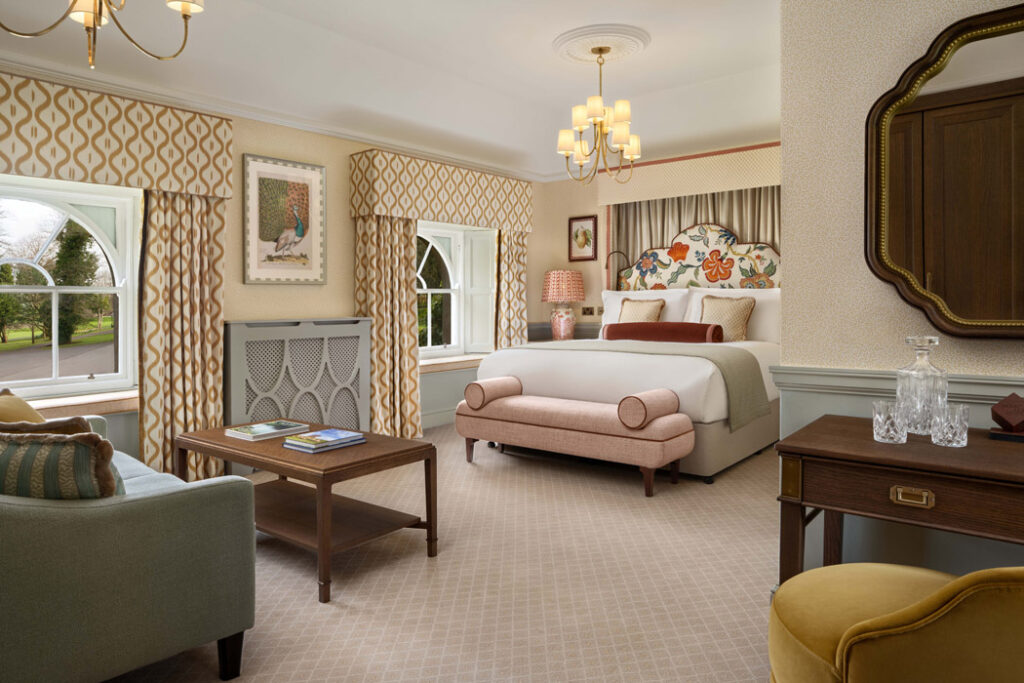
All the bedrooms are slightly different, she explains.
“They’re all different shapes and sizes, with different architectural features and quirks. There were lots of quirks that you don’t want to get rid of. They contribute to the sense that you’re staying in a room that is 200 years old.”
Respa Beds supplied the mattresses with bedding and pillows from Vision Linens.
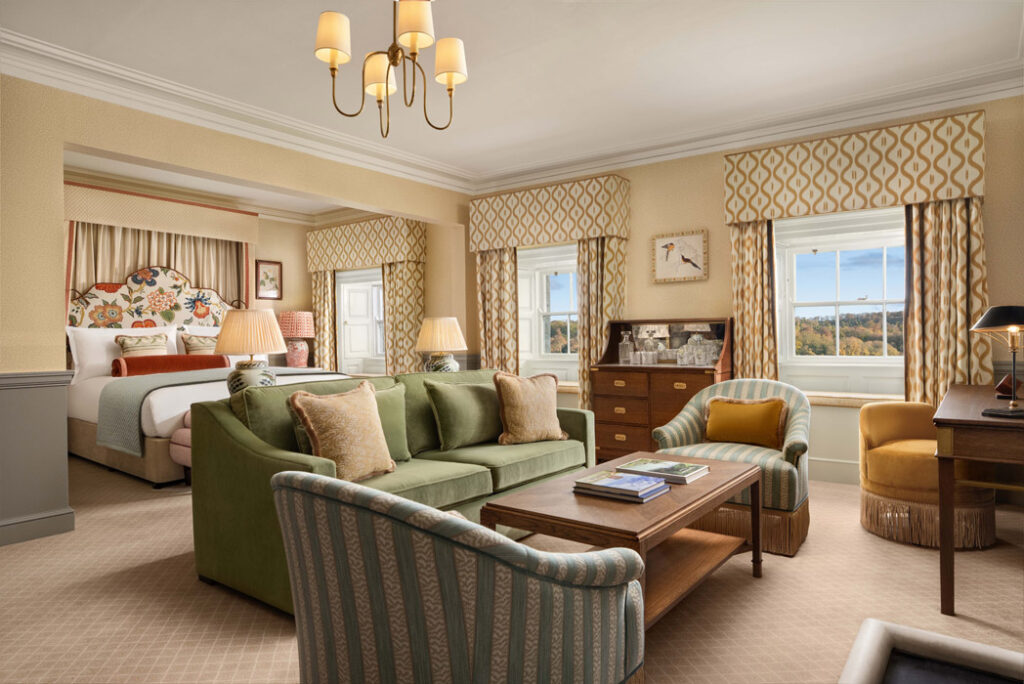
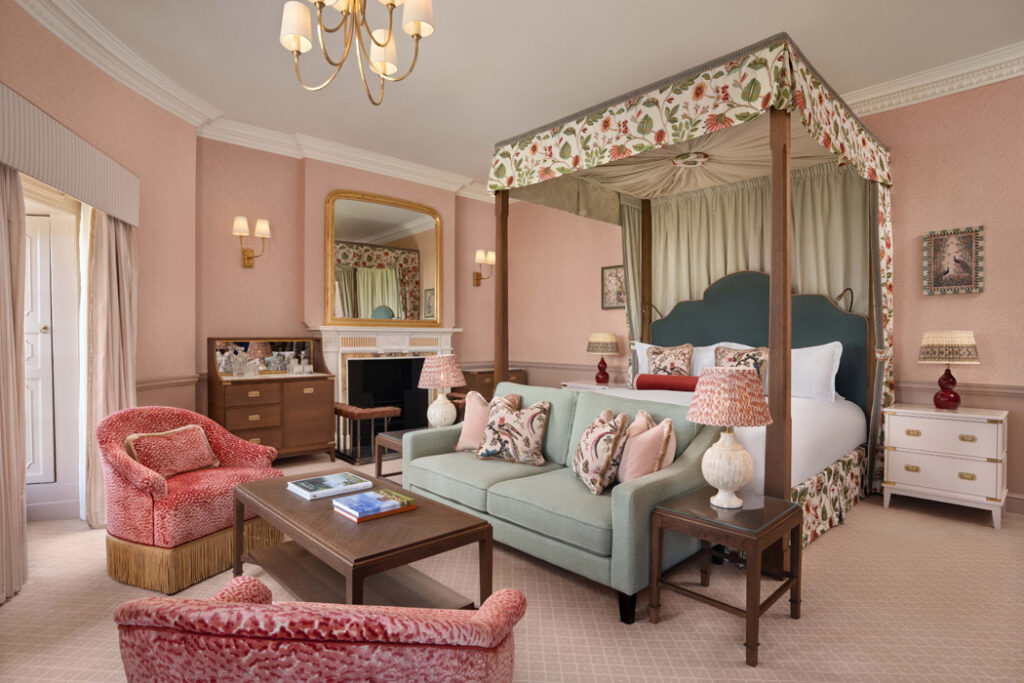
Dressed to the nines. Some have canopies, the junior suites feature what’s called a half-tester and appear to have a curtain behind the headboard, which is upholstered in a Schumacher fabric, Hot House Flowers, in the Spark colourway.
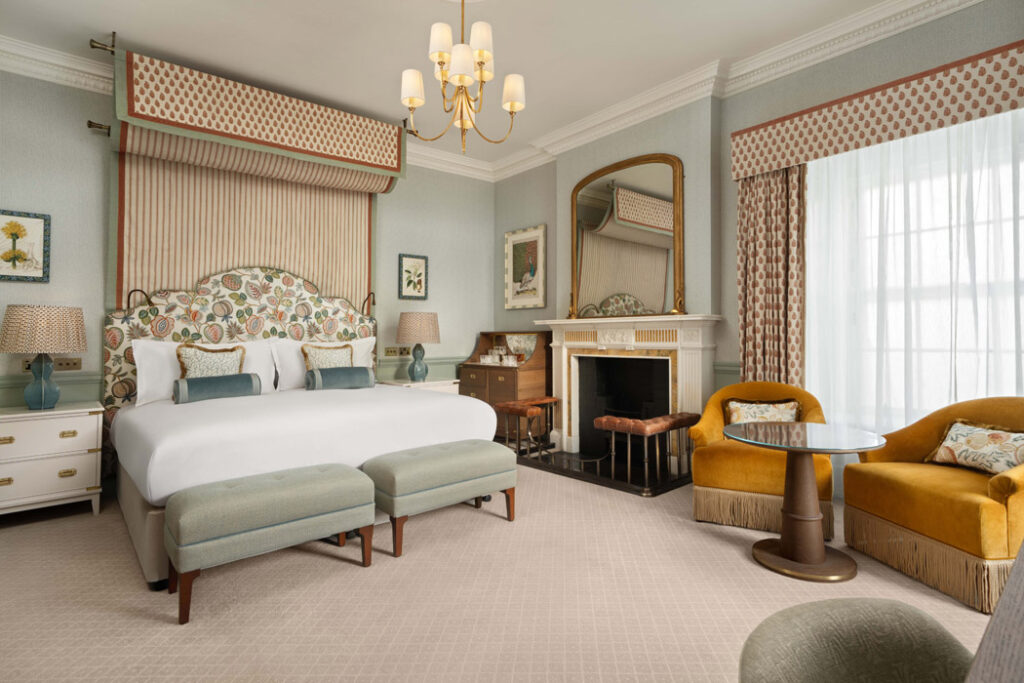
The suites have four-poster beds with pinch pleats drawn to the centre of the underside of the canopy.
This is extravagantly capped with a button.
The cocktail stations and mini bar are housed within a campaign-style cabinet, with brass pulls. These were custom-made by Castlebrook Furniture and Design.
Special attention was paid to dialling down noise transference between rooms.
Floorboards were lifted to insulate and eliminate sound transfer. The walls were all plastered, and soft furnishings further absorbed any sound.
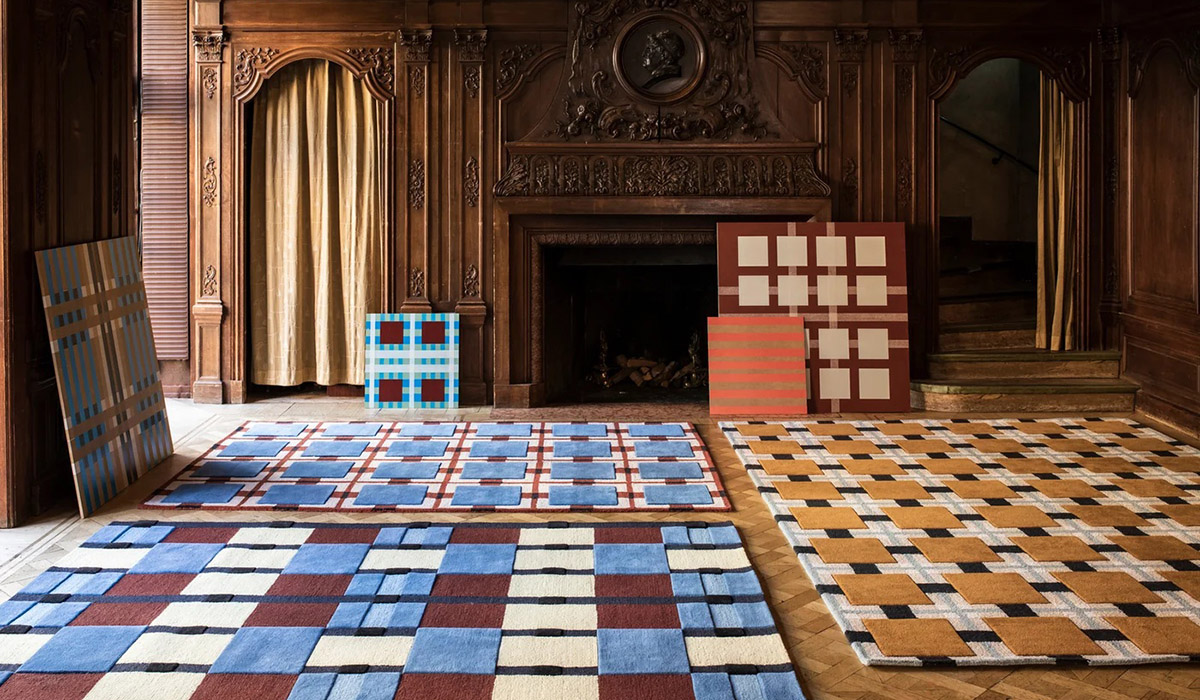
Underfoot, many swatches of underlay were examined for thickness and for compression before selecting the optimum one to go underneath the Axminster carpets.
This means that when you pad around the room in your stockinged feet, the "foot feel" is ultra luxurious.
The corridors required similar levels of attention. These high-traffic areas have to withstand footfall and the wheeling of luggage, and so demanded an especially dense option.
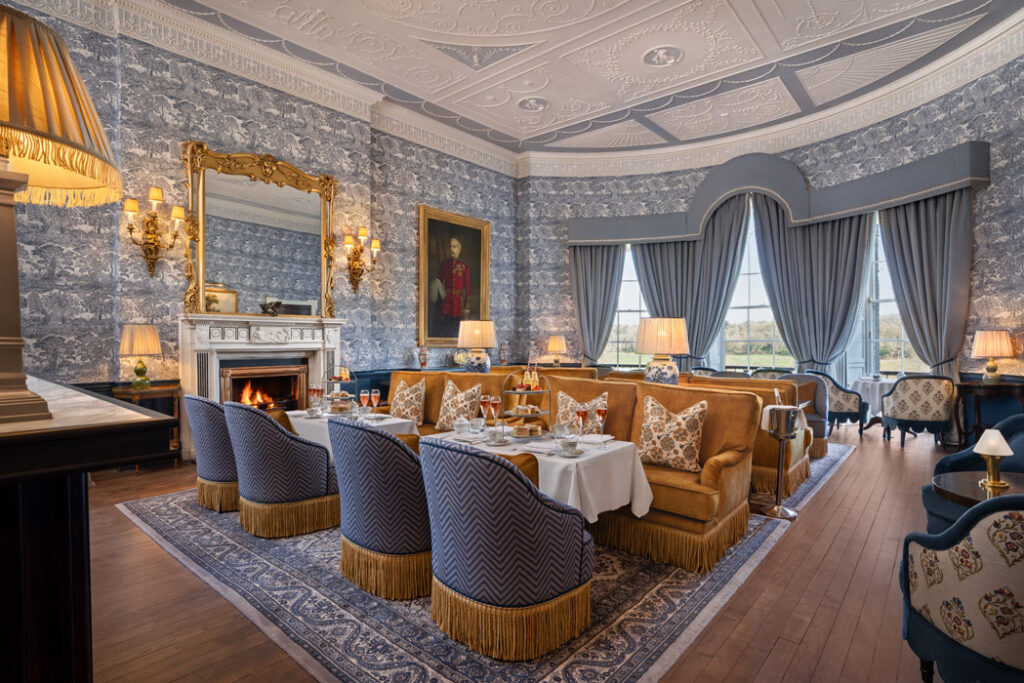
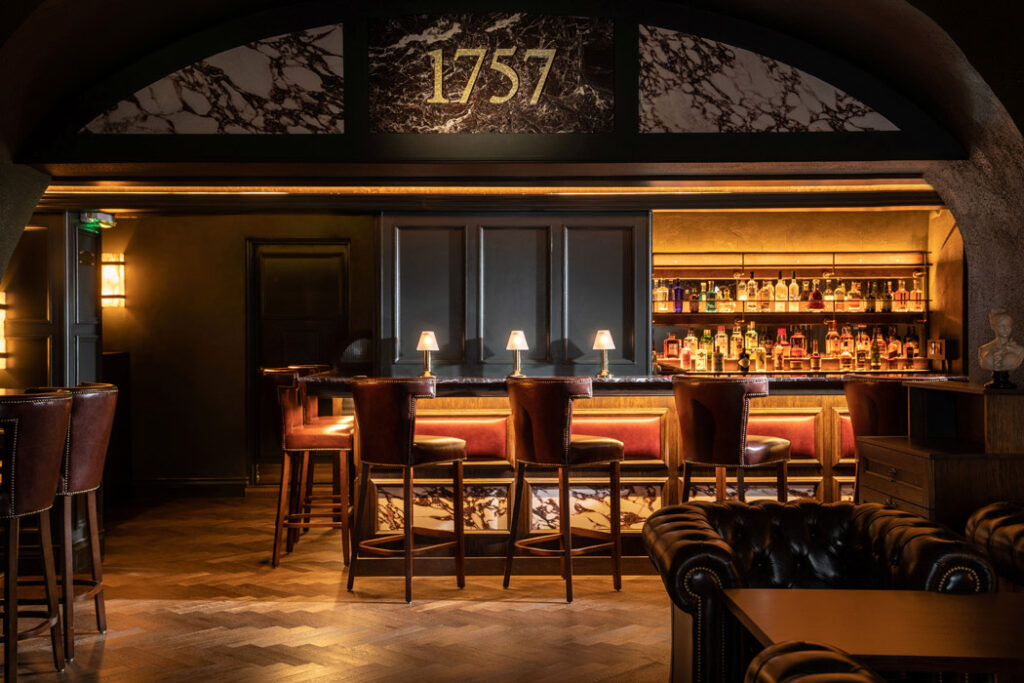
In The Captain’s Bar, the walls are covered in a Sanderson paper, Highgrove toile, in Tetbury blue. Landmark features from King Charles ’ private residence have been added to an authentic archival toile.
It includes hand-drawn yew tree hedges and other botanical elements of the fine country house, many of which are also seen in this parkland setting.
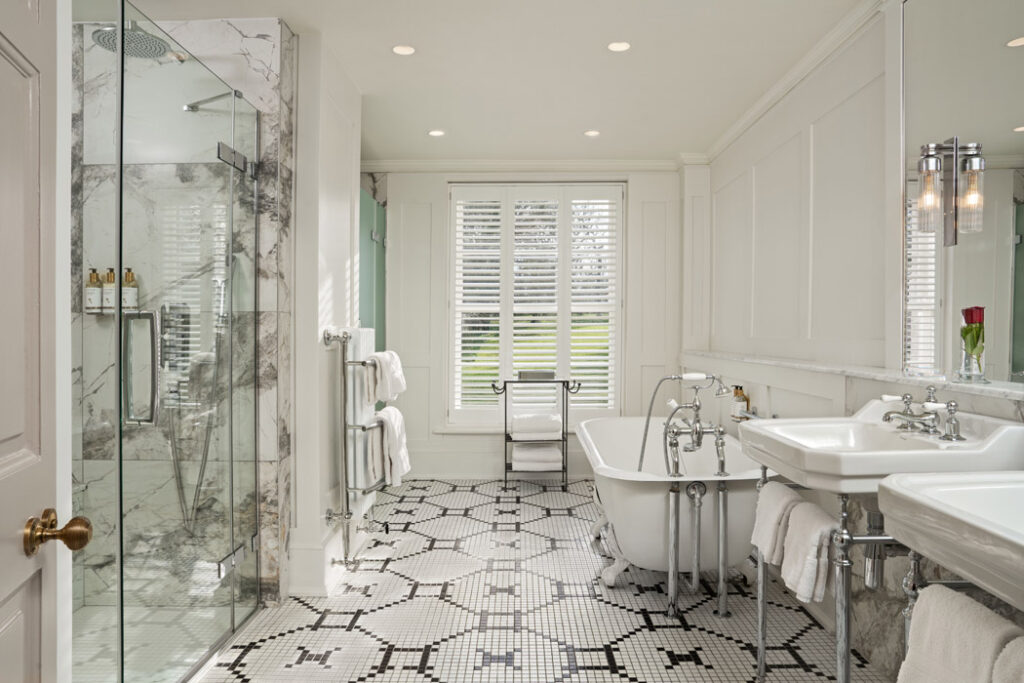
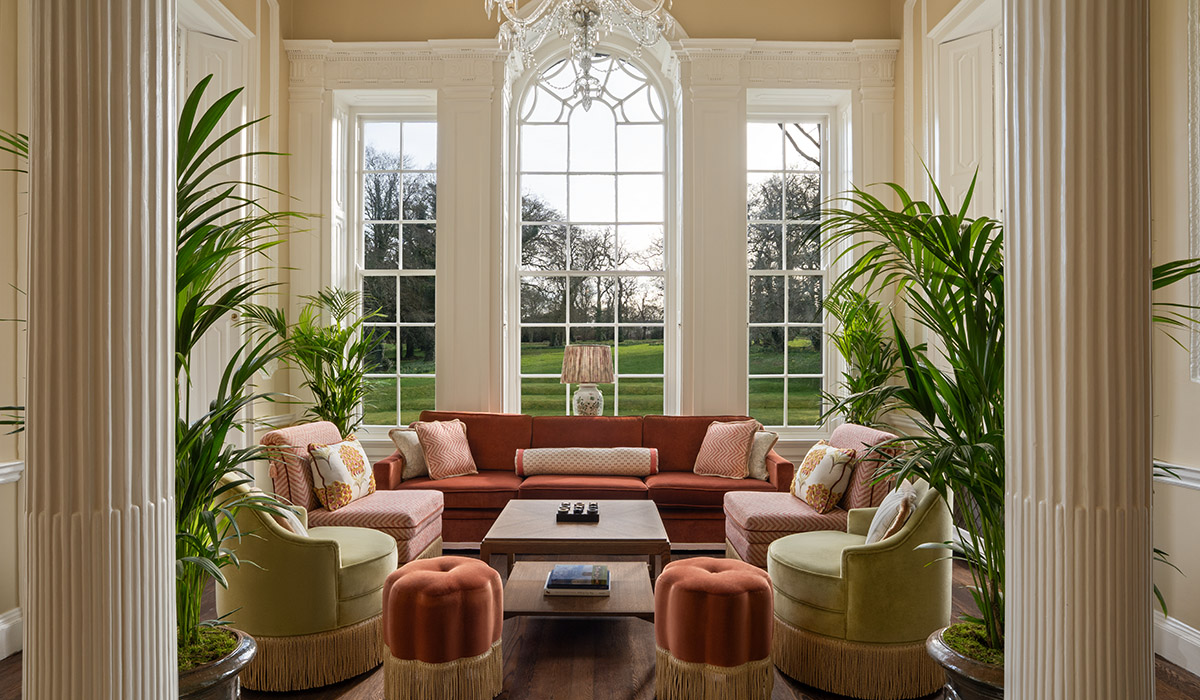
Much of the bespoke furniture is all Irish-made. The chairs were all made by Clontibrit, Co Monaghan-based McGuigan, while Emo, Co. Laois-based Finline Furniture made all the sofas.
The geometric fable weave fabric on the chairs is from Linwood. Below, the seating all sports lustrous metallic bullion fringing from Samuel & Sons that would make Claudia Winkleman jealous.
All the plasterwork and mouldings were stripped and repaired by Carlow Cornice, removing decades of paint.
Where necessary, with fresh coats of paint, some featuring Farrow & Ball, some Zoffany, some Colourtrend.
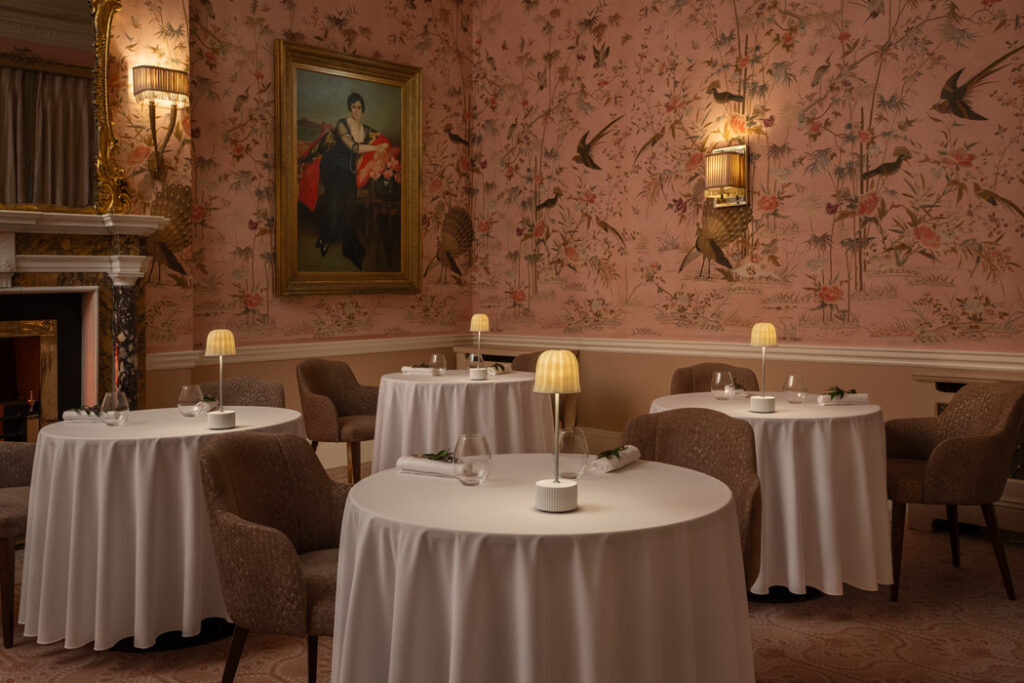
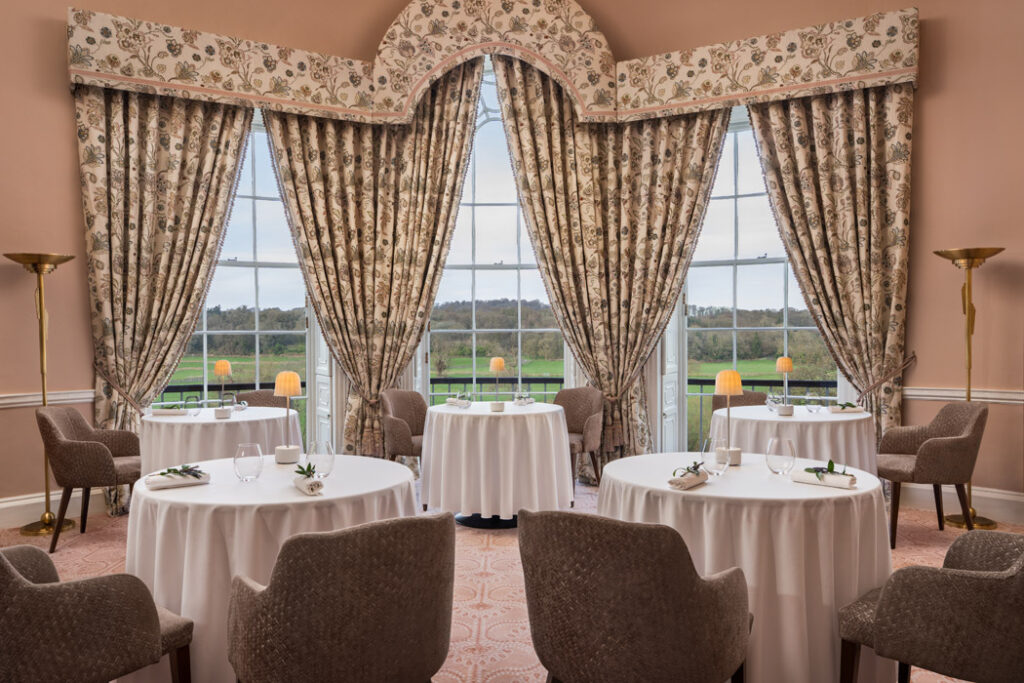
The Lady Helen dining room is a Michelin-starred establishment whose walls are painted in Templeton Pink.
An ante room to it had only ever been used if the restaurant was full, and guests often felt put-out at being what they perceived to be a downgraded experience.
Now called the Parlour, the room has been given a glow-up and features swishy silk curtains whose lustre shines after dark.
It is clad in a hand-painted pale pink wallpaper, Chinoiserie Garden by Sandberg, a print featuring swooping birds and blooming roses.
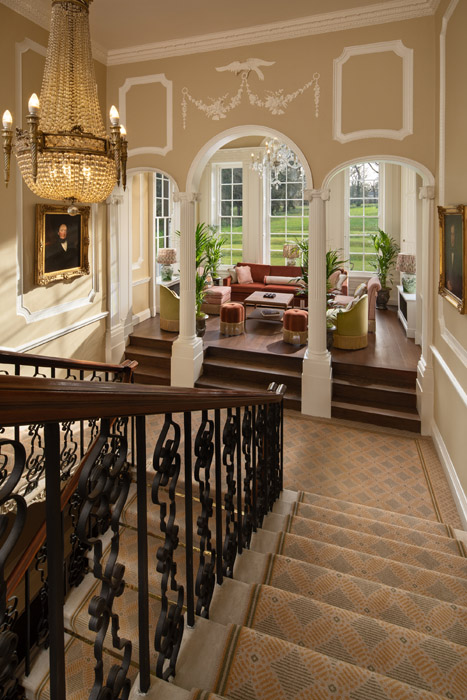
The stairwell is painted in Straw, a colour by Zoffany.
On the half landing as you climb to the piano nobile level, there is now a viewing gallery. Overlooking the River Nore, it is now a place to pause and survey the grounds, while enjoying tea or maybe some fizz.
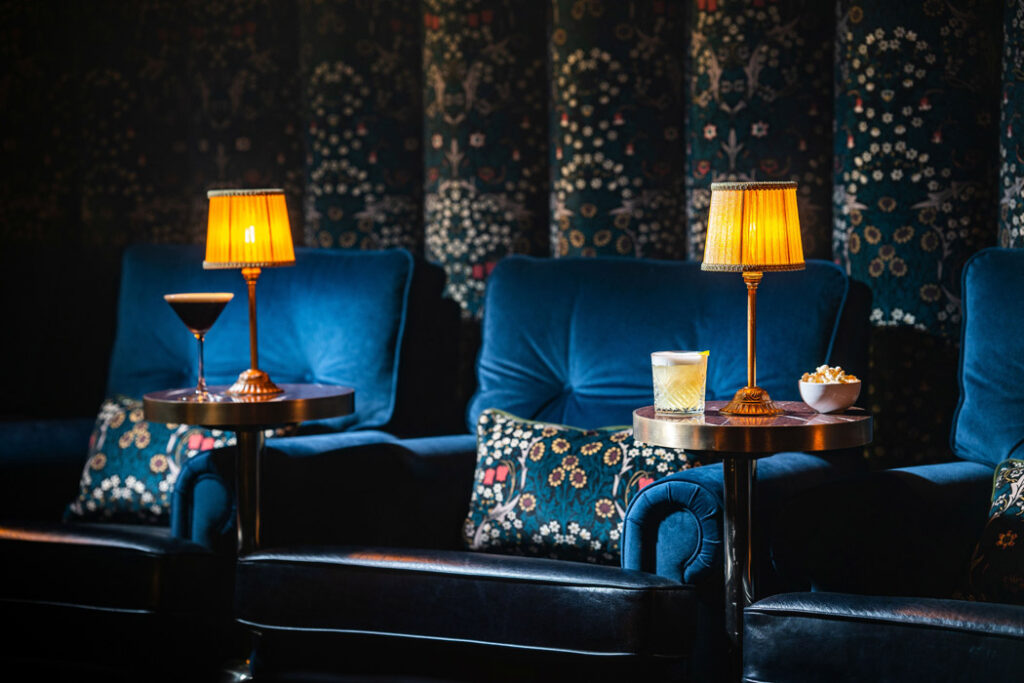
And if you want to explore the 500 acres of parkland, there is a boot room, complete with suitable footwear for all sizes. In the evening, you can descend to the luxurious cinema in the basement.
Manor suites at the Manor House at Mount Juliet Resort cost from €700 per night B&B