Forget the Fr Ted script. The parochial house can be a canny buy, if you put in the work. Saying no to a honeymoon to roll up sleeves and strip plaster and learn pointing shows the true belief David and Eleanor from The Great House Revival showed.
The presbytery or priest’s house has played a key role in Irish history and popular culture.
It was in the parochial house on Craggy Island, where much of the action took place, in the hit comedy TV series, and where the priest’s housekeeper, Mrs Doyle, performed her tea duties.
More recently, in Sally Rooney’s 2021 novel, Beautiful World, Where Are You, the house by the sea her character Alice rents is an old presbytery, and she fills its defunct and potentially haunted rooms with paperback books, cartons of ice cream, and sumptuous dinner parties.
As a style of property, they tend to look bigger on the outside than they are inside, but are still relatively sizeable, extending way beyond the needs of bachelor priests.
“Most parochial houses are in really good locations, in towns and village centres. Most no longer come with land but may still have decent-sized grounds.
"Most are traditional in style and layout; two good rooms at the front, one for the priest, the other for the public and a relatively basic kitchen at the back," explains Cianan Duff, divisional director at estate agents Savills.
Last June, he brought a very fine example of the style to market.
The Presbytery, at Crosschapel, outside Blessington, Co. Wicklow, was a detached three-bedroom, three-bathroom house with a stable block and yard, on about 22 acres. Seeking €895,00, it is listed as having sold for €694,000 in February of this year, according to the property price register, but this price does not include the land.
One more in keeping with Duff’s appraisal of the house style, and set on the edge of Gortnahoe village, east of Thurles, Co. Tipperary.
The four-bedroom, four-bathroom detached parochial house of 254 square metres. was seeking €475,000 through agents Sherry FitzGerald Gleeson.
It is on two acres of grounds that include courtyard buildings
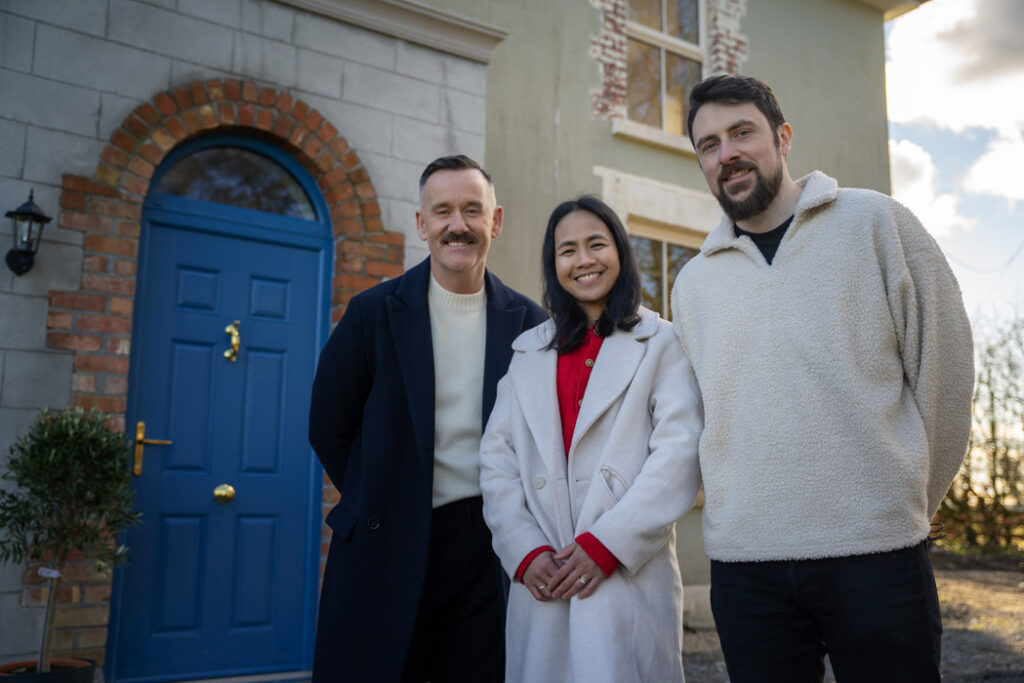
Eleanor and David Shannon, who were featured on RTE’s The Great House Revival last night, had a more modest budget when they were home hunting.
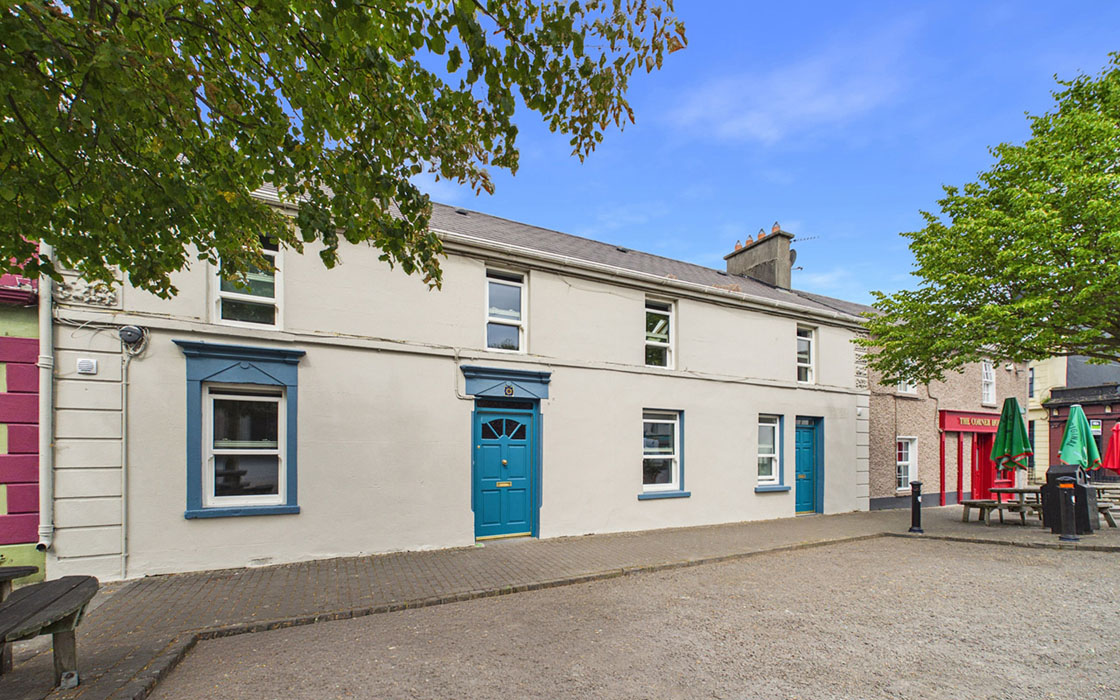
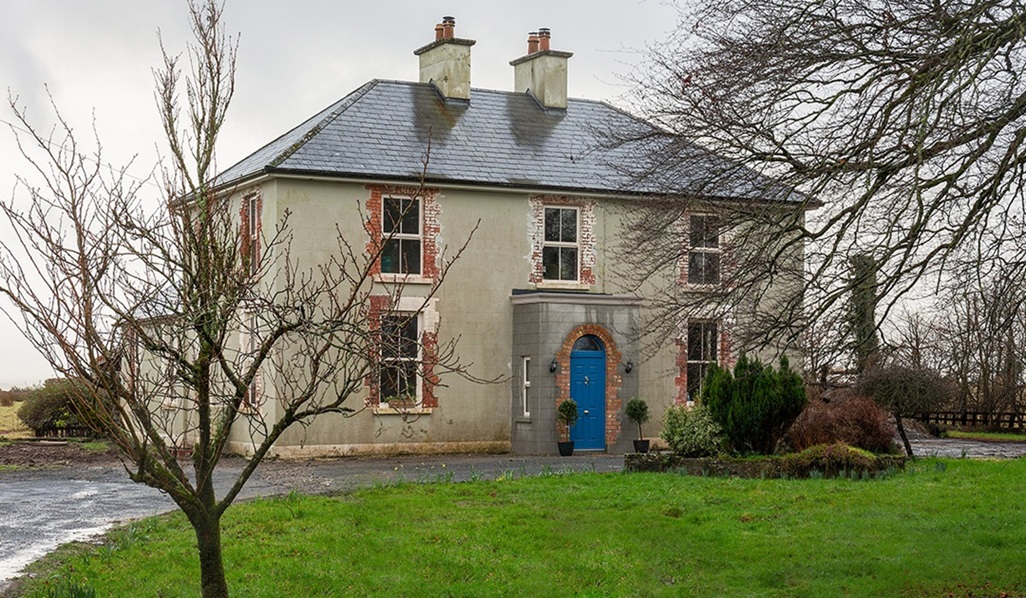
Price-driven, they recently bought their first home, the Old Presbytery in Caltra, Co. Galway.
The small village is between Ballinasloe and Castleblakeney. They paid €235,000 for it in 2024. It came to the market seeking €195,000.
David is originally from Roscommon town, while Eleanor grew up about an hour outside vibrant Manila in the Philippines.
That the couple met at all was a sort of divine intervention for Eleanor, who was on a train when her dating app pinged.
David didn’t hesitate. Having tied the knot, they put their honeymoon plans on hold while they tackled the 189 square metre 1860s-built house.
Neither had any background in construction, and wanted to remain faithful to the layout, save for adding a porch.
They have a budget of €150,000 that Hugh feels is “exceptionally tight”. He says it would cost €600,000 for a turn-key finish.
They dug a French drain around the house to draw moisture away from the property. But it wasn’t enough.
"You’re going to have to take the plaster off," Hugh said when they raised the issue of damp.
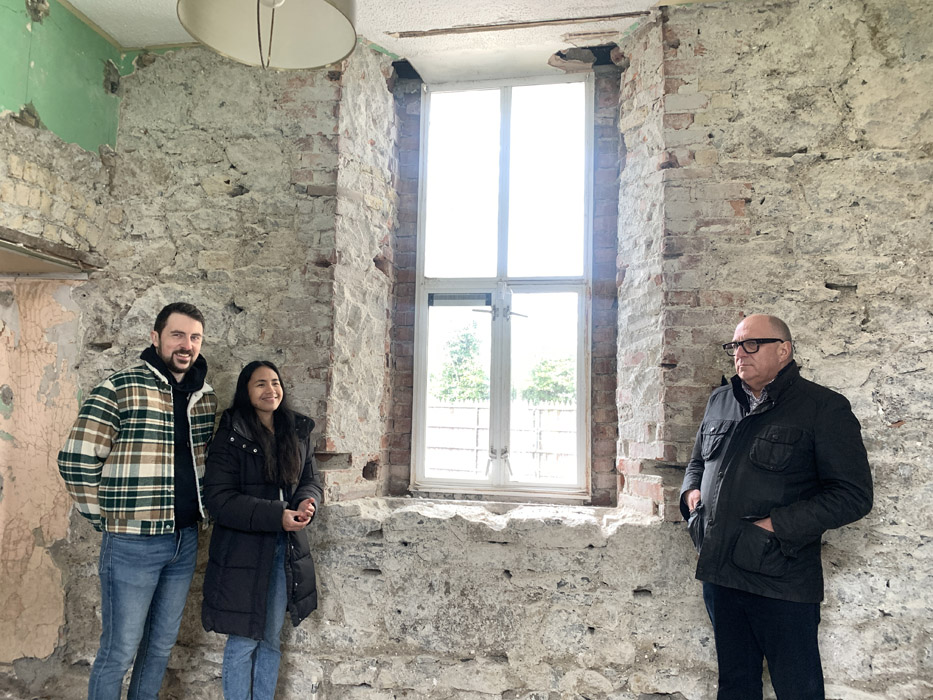
Kango hammers were used to remove the old plaster, and Eleanor attended two one-day courses on lime plastering run by Madigan Traditional Masonry, also learning about pointing stone and brickwork.
They spent about two months removing plaster. David consulted AI for advice. Not always factually correct, he double-checked the responses.
The house is now insulated using woodfibre panels.
It had an institutional vibe, David said.
“It had had generations of priests, but there was a transience to it. It had been no one’s home for life. They wanted to change that.
“It was just the two of us and the work was major,” says David. “We wanted it to be our project, to touch every inch of it, the roof, attic, floorboards. It was more intimate than we’d have liked.
They wanted a hobby, he explains. “The house is a major ongoing hobby. We’ve discovered it doesn’t make you stronger; it wears you down.”
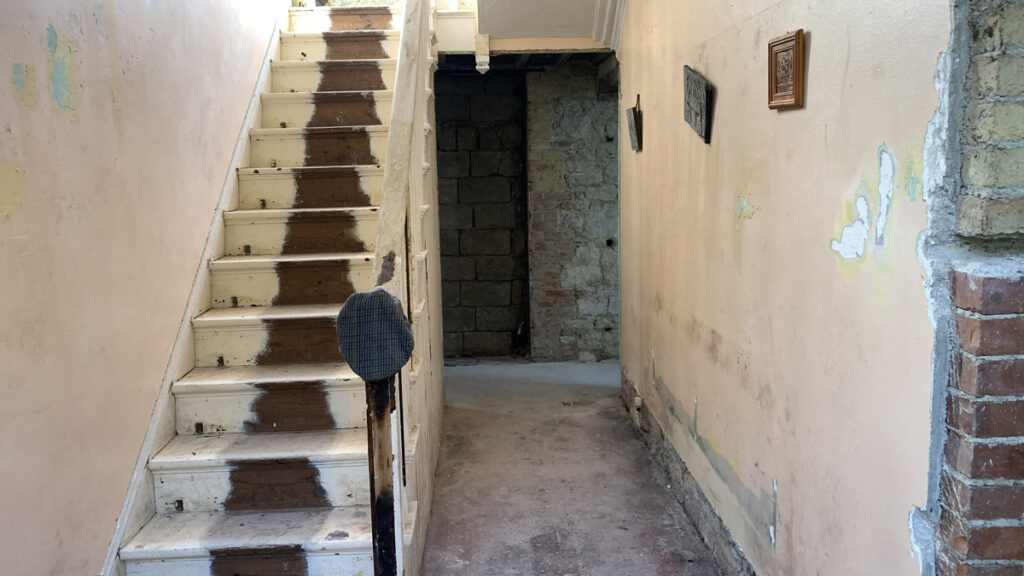
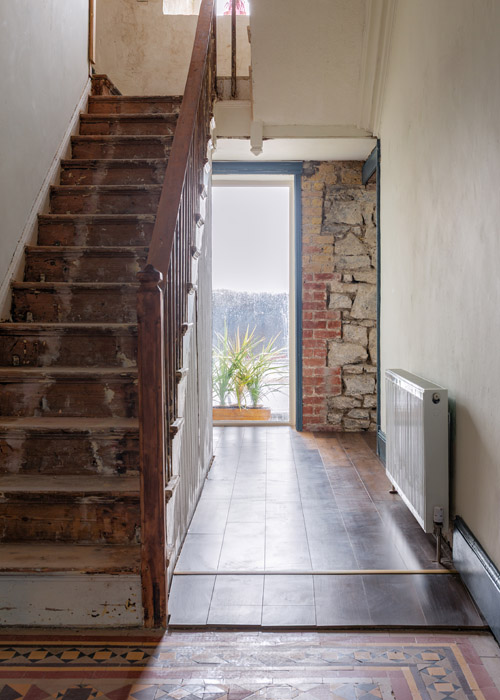
The transformation impressed Brendan Courtney. The entrance hall had lovely Victorian tiling that they’ve kept. A door at the end of the hall had been blocked up.
It had accessed a small oratory. Hugh convinced them to put a window in the doorframe, and the decision has been transformative.
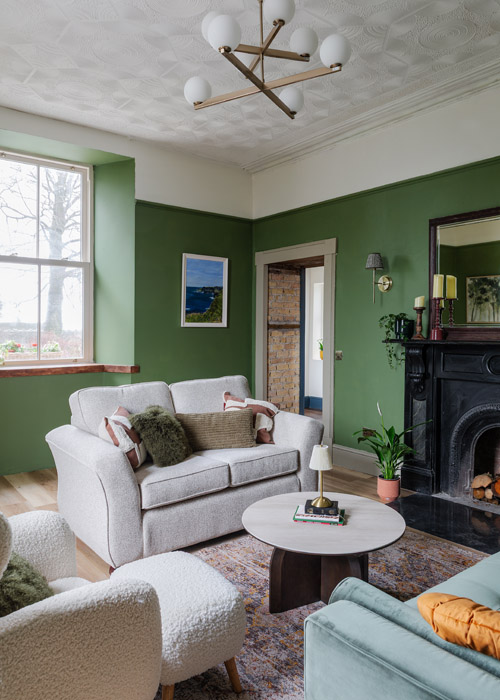
The sitting room is now on the right. The largest space in the house, it features sofas from EZ Living Furniture.
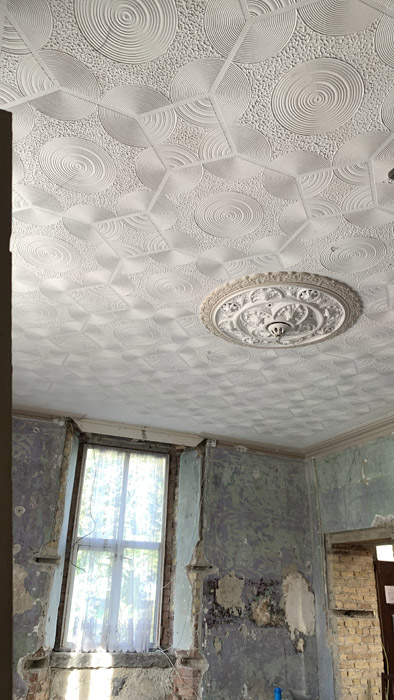
Very few original features remained. One more recent addition from the 1970s was Artex ceilings in these two rooms. With some applications potentially containing minor amounts of asbestos, they decided to leave them.
“We wanted to preserve as much of the house,” David explained.
Against Hugh’s counsel, they added a porch. He felt the didn’t have the budget for it.
“We wanted to put our stamp on it,” David explained.
The dining room is to the left of the hall.
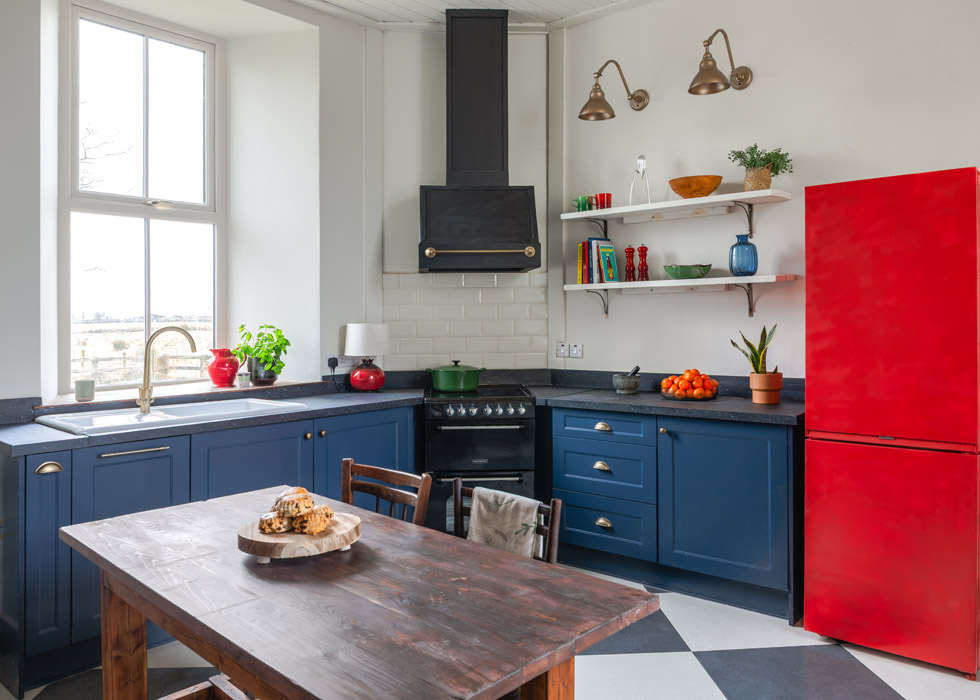
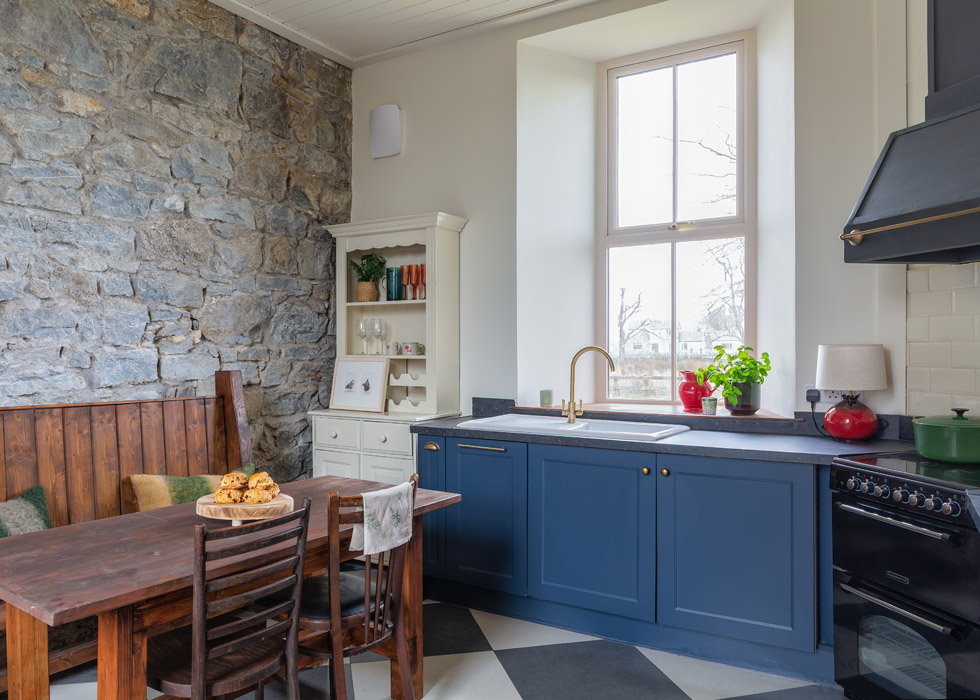
The kitchen is at the back. They bought the kitchen from B&Q on sale. It cost €2,500, including appliances. Eleanor spraypainted the fridge a primary red.
The effect of it, with the cadmium blue of the units and the white walls, is like a Mondrian painting. David fitted it himself. “I’m happy with it, if you don’t look too closely.
From the window above the sink, you see sheep in the fields.
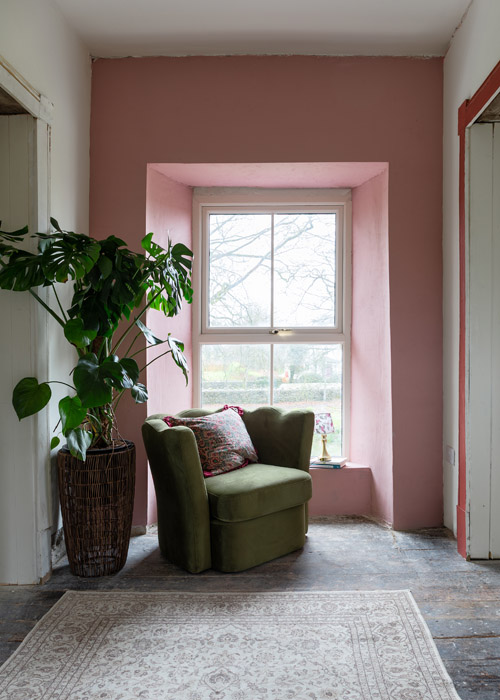
Up on the landing, the walls are painted a Schiaparelli pink, from the sponsors of the show, Dulux Heritage. It’s called DS Blossom and contrasts with a moss green shell-back chair that they bought from Next, which sits next to a window.
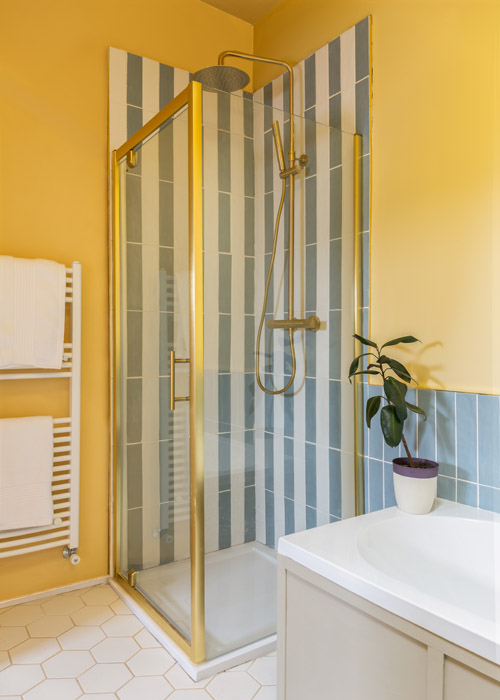
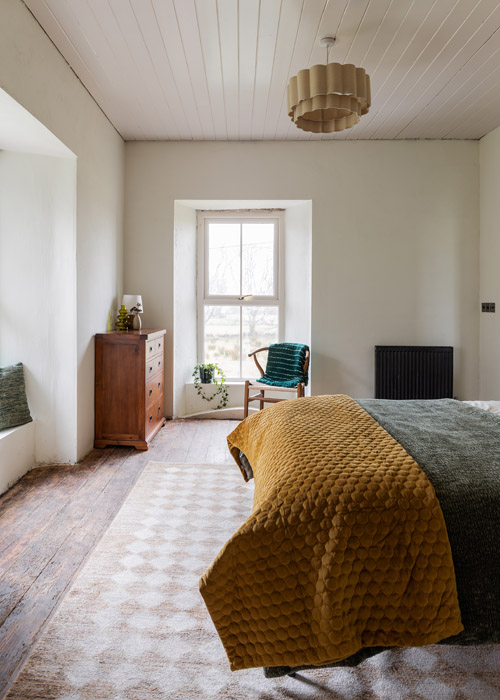
There are three bedrooms, two of which are dual aspect. They halved the size of the main bathroom to give them an ensuite bathroom.
From dealing with rusty nails in the timber, they both had to get Tetanus shots and spent many hours in the local hospital in Roscommon.
They got a top-up mortgage of about €110,000 and have spent about 160,000, using their savings to fund the rest, as they wait for €50,000 in a grant.
Eleanor is a community nurse nearby and knows everyone in the village and its environs. Some people have even made house calls. Others offered furniture. She knows more people than I do. People know her from the show. She’s like a little celebrity, David said, proudly.
You can watch this episode and the rest of the series of The Great House Revival on RTE Player. The last two episodes of this series of The Great House Revival will air later this year.